

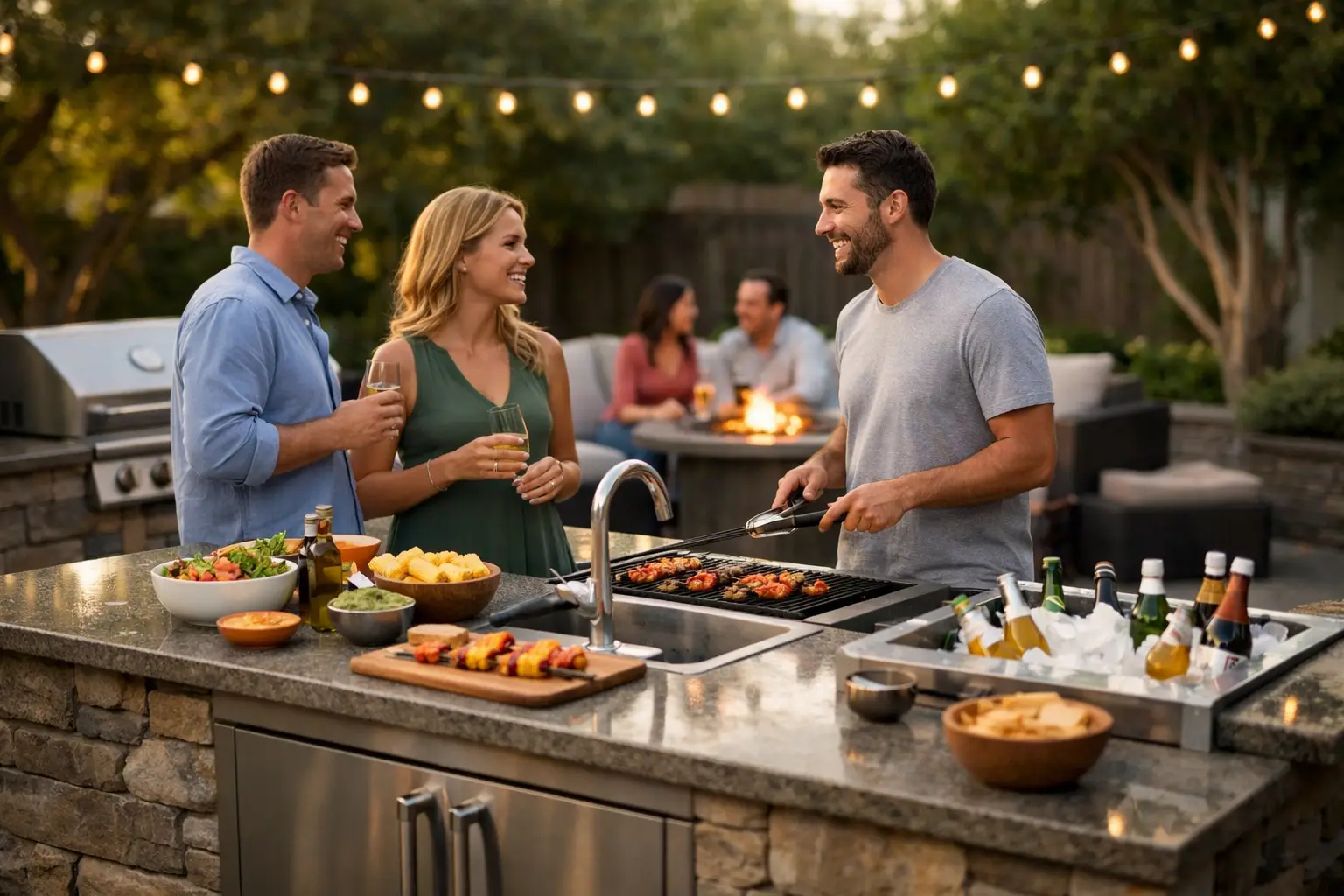
The best outdoor kitchen islands do more than hold a grill and a few bar stools. They create the place where someone pours a drink while dinner is cooking, where kids linger after swimming, and where a quiet weeknight meal feels a little more like a getaway. In a thoughtfully designed backyard, the island becomes a natural center for connection without taking away from the calm that makes the space feel like home.
For Florida homeowners, that center has to work hard. It needs to welcome a crowd on a bright Saturday afternoon, stand up to heat, rain, humidity, and salt air, and still look beautiful beside a pool, patio, fire feature, or waterfall. The difference is not simply choosing more appliances. It is designing a kitchen that belongs to the landscape around it.
Start With the Experience You Want to Create
Before selecting a grill, countertop, or cabinet finish, consider how you want the backyard to feel when people are using it. A kitchen island designed for weekend entertaining has different priorities than one built for intimate family dinners. Both can be beautiful, but the layout, seating, storage, and scale should support the way you actually live.
Some homeowners want a lively gathering point with generous counter space, an oversized grill, a beverage refrigerator, and seating for guests. Others want a quieter cooking area that faces a pond, fountain, or lush planting bed, allowing the cook to stay part of the conversation without turning the entire patio into a busy bar scene.
That distinction matters because an island can either invite people to gather or create a wall between the cook and the rest of the space. Seating on the outer side of the island often keeps guests close without putting them in the cooking zone. A lower dining-height section can make the area feel especially comfortable for long meals, while a raised counter offers a casual spot to lean, snack, and talk.
Outdoor Kitchen Islands Need a Purposeful Layout
A beautiful island still needs to function when the grill is hot, the counter is full, and several people are moving around the patio. The most successful designs make room for preparation, cooking, serving, and cleanup without forcing the homeowner to walk back and forth across the yard.
Give the cook room to work
A grill should have usable landing space on both sides. There should be a clear area for platters, utensils, and food coming off the heat, along with a dedicated prep surface that is not constantly occupied by guests. If a sink, ice maker, refrigerator, or pizza oven is part of the plan, each feature needs enough room to be used safely and comfortably.
Traffic flow deserves the same attention. Guests should be able to reach seating, the pool, or the fire pit without passing directly behind someone handling hot food. This is particularly valuable around pools, where wet feet and active children add movement to the space. A professional site plan considers not only the island itself, but the walkways, patio edges, doors, views, and gathering areas surrounding it.
Size the island for the patio, not the appliance list
It is easy to overbuild an outdoor kitchen when every available feature sounds appealing. A large island can feel impressive in a showroom, yet overwhelm a modest patio or block a favorite view of the water. On the other hand, a narrow grill surround may feel cramped once friends begin arriving with bowls, drinks, and serving dishes.
The right scale depends on the available footprint and the role the island will play. A compact cooking island with a grill and modest counter space can be ideal near a dining patio. A larger L-shaped or U-shaped arrangement makes more sense for homeowners who frequently entertain and want multiple cooking zones. Keeping a comfortable path around the structure is just as important as adding another appliance.
Materials Matter in the Florida Climate
Southwest Florida weather is part of the design brief. Direct sun, summer storms, moisture, and coastal conditions can be hard on finishes that were not selected for outdoor use. Materials should be chosen for their ability to age gracefully, stay manageable to clean, and complement the rest of the landscape.
Natural stone brings depth, texture, and a sense of permanence to outdoor kitchen islands. It can echo a flagstone patio, rock waterfall, pool coping, or garden wall so the kitchen feels built into the property rather than placed on top of it. Stone does vary in porosity and maintenance needs, however, so the right selection and sealing plan matter.
Porcelain and certain engineered outdoor surfaces can offer a clean, refined look with dependable performance in sun and rain. Stainless steel appliances and access doors are popular for good reason, but not all stainless is created equal. In humid or salt-influenced areas, higher-quality marine-grade materials and regular cleaning can help reduce staining and corrosion.
Countertop color is another practical decision. Very dark surfaces can become uncomfortably hot in full Florida sun, while heavily textured materials may be harder to wipe down after cooking. Lighter, mid-tone, or shaded counter surfaces often provide a better everyday experience. The goal is not to avoid personality. It is to choose finishes that still feel good to use in July.
Connect the Kitchen to the Rest of the Backyard
An outdoor kitchen is most inviting when it feels like one part of a complete retreat. A grill island set alone on a slab may be useful, but a kitchen surrounded by purposeful hardscaping, planting, water, lighting, and seating has a different emotional pull. It encourages people to slow down and stay outside.
A flagstone patio can create a warm, natural foundation beneath the kitchen. Layered landscaping softens the edges of masonry and cabinetry, while a privacy screen of plants can make the cooking area feel more secluded without closing it in. Near a pool or spa, the kitchen can become the bridge between active afternoons and relaxed evenings.
Water features are especially effective in this kind of setting. The sound of a waterfall or pond can soften nearby neighborhood noise and give an entertaining space a more peaceful rhythm. A kitchen positioned to face a koi pond, fountain, or rock waterfall offers the cook a view worth looking at, not just a blank fence or the back of the house.
Lighting should carry the space beyond sunset. Task lighting helps with cooking, while low landscape lighting can define paths, highlight stone textures, and make the surrounding garden feel welcoming. Soft light under a counter or along a seating wall adds atmosphere, but it should never replace practical illumination at the grill and prep surfaces.
Decide Which Features Earn Their Space
Every appliance adds cost, utility requirements, maintenance, and visual weight. The best approach is to invest first in the features that will truly be used. For many households, a quality grill, generous prep area, outdoor-rated refrigeration, and concealed storage create a strong foundation.
A sink can be worthwhile for homeowners who want to avoid constant trips inside, especially when the kitchen is far from the house. A beverage station helps keep guests out of the primary cooking zone. Pizza ovens, smokers, side burners, and ice makers can be wonderful additions, but they make the most sense when they support a real cooking habit rather than a one-time wish list.
Storage is often underestimated. Weather-resistant drawers and cabinets keep grilling tools, serving pieces, fuel connections, and cleaning supplies close at hand. They also reduce visual clutter, which matters when the goal is a peaceful, polished backyard rather than an outdoor utility area.
Build for Comfort, Safety, and Easy Care
Shade can determine whether an outdoor kitchen gets used in the middle of the day. A covered patio, pergola, or carefully planned shade structure can make cooking and dining more enjoyable, but it must be designed with proper ventilation and clearance around heat-producing appliances. This is not a detail to improvise after the grill is installed.
Utilities also need careful coordination. Gas, electric, water, drainage, and appliance ventilation should be planned early, before patios and stonework are completed. A properly built kitchen accounts for local requirements, access for service, and the realities of storm season. Durable construction behind the finished stone is what protects the investment over time.
Maintenance should feel manageable, not like a second job. Wiping counters after use, cleaning grill components, checking seals, and occasionally refreshing stone protection are usually enough when quality materials and correct installation are in place. A well-designed kitchen is made to be lived in, not admired from indoors because it feels too precious to use.
The most memorable outdoor kitchen islands are not the ones with the longest appliance list. They are the ones that make a family want to eat outside one more night, invite neighbors over, and linger near the glow of the landscape after dinner. When the kitchen is designed as part of a complete backyard sanctuary, it becomes a lasting reason to come home, step outside, and enjoy the space you have created.