

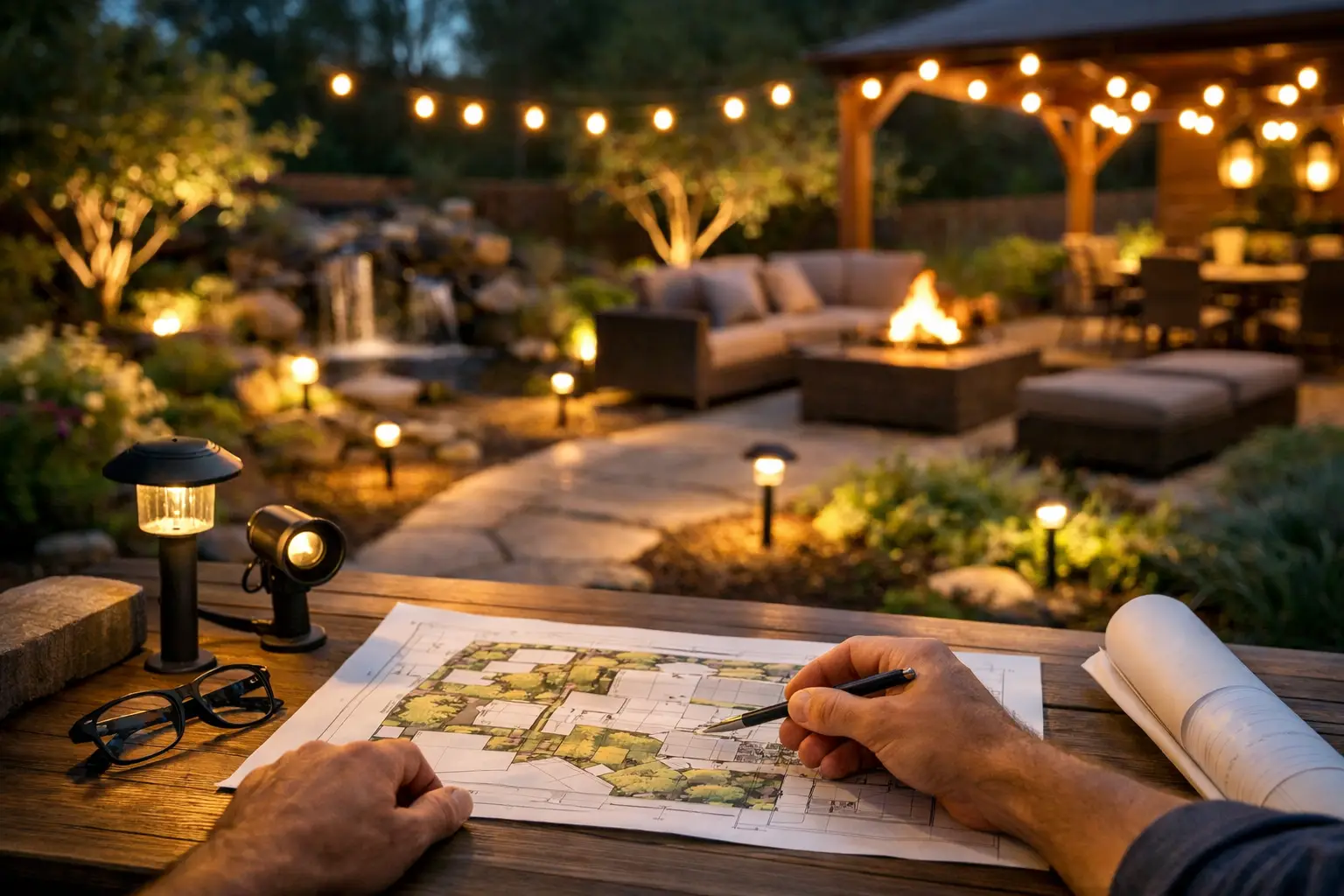
The best backyard lighting does not start with fixtures. It starts with the moment you want to create – dinner under soft light, a safer walk from the patio to the pool, or the quiet glow of a fountain after the house settles down for the night. If you are figuring out how to plan backyard lighting, the goal is not to make the yard brighter. It is to make the space feel more welcoming, more useful, and more like a retreat.
That distinction matters. A backyard can have plenty of light and still feel harsh, flat, or unfinished. Good lighting shapes the experience of the space. It guides where people gather, softens transitions, brings out texture in stone and planting, and extends the hours you can enjoy your outdoor living area without sacrificing comfort.
How to plan backyard lighting with the space in mind
Before you think about fixture styles or bulb output, walk the yard at dusk. Stand on the patio, look back at the house, move toward the pool, and follow the same route guests would take. The dark areas will tell you a lot. So will the parts of the yard that already feel naturally inviting.
Start by identifying how each zone is used. A dining patio needs a different kind of light than a koi pond, fire pit area, or garden walkway. If your backyard includes multiple features, lighting should support each one without treating the whole property the same way. Uniform brightness is rarely flattering outdoors. The better approach is to create layers and let some areas stay quieter.
This is especially true in backyard designs built for relaxation. A sanctuary-style space should not feel like a parking lot. It should feel calm, intentional, and easy to move through. That usually means stronger functional lighting where safety matters and softer decorative lighting where mood matters more.
Begin with function, then build atmosphere
The most effective lighting plans start with practical needs. Safety comes first, particularly around steps, changes in elevation, pathways, pools, and transitions between surfaces like grass, stone, and decking. These are the places where enough light makes the yard easier to use and more comfortable for everyone.
After that, focus on task areas. Outdoor kitchens, grilling stations, dining tables, and seating areas all need light that supports activity without overwhelming the rest of the landscape. For example, a cooking area may need clearer illumination, while a lounge area near a fire feature usually benefits from a lower, warmer glow.
Once those basics are covered, atmosphere takes over. This is where backyard lighting becomes memorable. Uplighting can bring depth to palms and specimen trees. Soft washes of light can reveal the texture of natural stone walls or flagstone patios. Subtle accents around a waterfall or fountain can turn moving water into an evening focal point. These details are what make a backyard feel finished instead of merely lit.
Think in layers, not single fixtures
If there is one idea that simplifies how to plan backyard lighting, it is this: use layers. Outdoor spaces feel best when several types of light work together.
Ambient lighting creates the overall sense of glow. This may come from patio lighting, pergola fixtures, or carefully placed downlighting from trees or structures. Task lighting helps people cook, dine, and move safely. Accent lighting draws attention to standout features like water, rock work, architectural plants, or a beautiful garden edge.
The balance between those layers depends on the yard. A compact backyard with a patio and spa may need only a few well-placed elements. A larger property with pathways, multiple seating zones, and water features needs a broader plan so the experience feels connected. Either way, restraint usually works better than excess. When every plant and corner is lit, nothing stands out.
Match the lighting to the features you want people to feel
A backyard is emotional as much as it is functional. The right lighting helps define what each feature should feel like after dark.
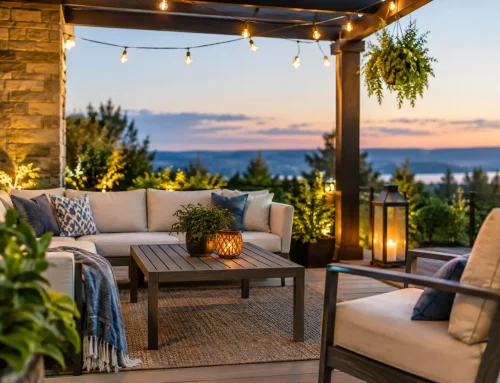
Patios and outdoor kitchens should feel social and comfortable. Lighting here needs enough clarity for meals, conversation, and movement, but it should still flatter faces and materials. Warm color temperatures generally feel more inviting than stark white light.
Paths and walkways should feel easy to follow, not overexposed. The goal is guidance, not spotlighting. Spacing and height matter here. Too many path lights can create a cluttered runway effect, while too few leave gaps that feel uncertain.
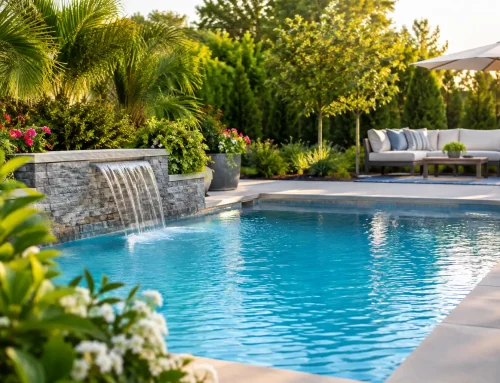
Water features deserve special attention because they change dramatically at night. Moving water catches and reflects light in a way that brings a backyard to life. A pond, waterfall, or fountain often looks best with a controlled, layered approach rather than one bright fixture aimed straight at it. Glare can flatten the effect, while subtle lighting creates shimmer, depth, and movement.
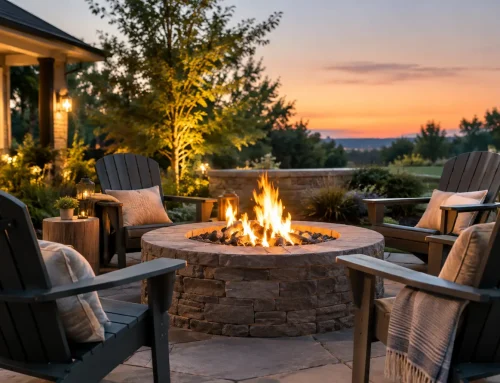
Fire pits and lounge spaces usually benefit from the least amount of supplemental light. Fire already creates a natural focal point. Too much nearby lighting competes with it and can make the space feel less intimate.
Avoid the most common planning mistakes
One of the biggest mistakes homeowners make is trying to solve everything with brightness. More output does not automatically mean better visibility or better design. In fact, too much light creates glare, harsh shadows, and a washed-out atmosphere that can make premium materials look less refined.
Another common issue is installing lights too early in the planning process. If you are adding a patio, pool, kitchen, or water feature, the lighting plan should be part of the larger design conversation. It is much easier to create a cohesive result when wiring, placement, and sightlines are considered before construction is complete.
Fixture placement is another detail that affects the final feel more than people expect. A poorly aimed spotlight can shine into seating areas or house windows. Path lights placed in rigid, evenly spaced rows can look forced. Even beautiful fixtures lose their value if they are not positioned with the real nighttime experience in mind.
Maintenance should not be ignored either. Outdoor lighting systems need durable components and thoughtful placement so they continue to perform in heat, rain, irrigation zones, and active family spaces. In Florida, where outdoor living is a year-round part of life, longevity matters just as much as appearance.
Choose a style that fits the backyard, not just the catalog
Lighting should support the character of the landscape. In a backyard built around natural stone, planting, and water, the best fixtures often disappear into the design during the day and let the effect take over at night. This keeps attention on the environment rather than the hardware.
Finish, scale, and color temperature all play a role. Warmer light tends to complement stone, wood, and greenery more naturally. Cooler tones can work in some contemporary settings, but they often feel less restful in residential backyards designed for relaxing and entertaining.
It also helps to think about what the yard looks like from inside the home. A well-lit backyard should feel inviting from the kitchen window or living room, not just when you are standing outside. Evening views back into the landscape can become part of everyday enjoyment, especially when key features are highlighted with intention.
When to bring in a professional lighting and landscape team
Some backyard lighting projects are straightforward. Others are part of a much larger outdoor living vision. If your space includes a pool, spa, outdoor kitchen, custom stonework, or a signature water feature, lighting is too important to treat as an afterthought.
A professional team can help you see how the pieces work together. That includes the amount of light needed, how to avoid hot spots and glare, where to hide fixtures, and how to make the yard feel cohesive from one zone to the next. For homeowners creating a true outdoor retreat, that design-level coordination makes a visible difference.
At Uni-Scape, that kind of integration is what turns a backyard from a collection of features into a place that genuinely feels restorative. Lighting is part of the atmosphere, but it is also part of the architecture of the experience.
The best backyard lighting plan feels effortless
When backyard lighting is planned well, you do not notice the system first. You notice how the patio feels easier to linger in. You notice that the path to the spa feels safe without being stark. You notice the sound of water, the texture of stone, and the way the whole yard seems to settle into a calmer rhythm after sunset.
That is the real answer to how to plan backyard lighting. Start with how you want to live outside, then let the lighting support that experience with warmth, purpose, and restraint. The right plan does more than brighten a yard. It gives the evening a place to land.