

A well-designed pond should feel alive from the moment you step outside. Water catches the light, stone edges soften into the landscape, and carefully chosen plants make the whole setting feel settled rather than newly built. The best pond plants do more than add color. They create shade, movement, texture, and a sense of privacy that turns a backyard water feature into a place where family and friends want to linger.
For homeowners in Southwest Florida, plant selection also has a practical side. Our warmth, long growing season, intense sun, and sudden summer rains can help the right plants thrive, but they can overwhelm the wrong ones. A beautiful pond is not simply filled with greenery. It is composed in layers, with each plant earning its place.
Start With the Role Each Pond Plant Will Play
Before choosing varieties, look at the pond itself. Is it a natural-style pond with boulders and a waterfall? A formal fountain feature near a flagstone patio? A koi pond designed to be enjoyed from an outdoor kitchen or pool deck? The shape, depth, sun exposure, and viewing angles all influence what will look and perform best.
Pond plants generally fall into four roles: floating plants, deep-water plants, marginal plants that grow along the shelf or edge, and moisture-loving plants that live just beyond the waterline. A balanced design uses several of these roles without packing every available space. Open water matters. It gives fish room to move, reflects the sky, and lets the sound of a waterfall remain part of the experience.
A good rule for sunny ponds is to provide enough surface coverage to shade part of the water while leaving plenty of open areas. Too little shade can contribute to warmer water and algae growth. Too much coverage can make the pond look crowded and reduce oxygen exchange. The right balance depends on the pond’s size, circulation, fish load, and daily sunlight.
The Best Pond Plants for Beauty and Balance
Water lilies
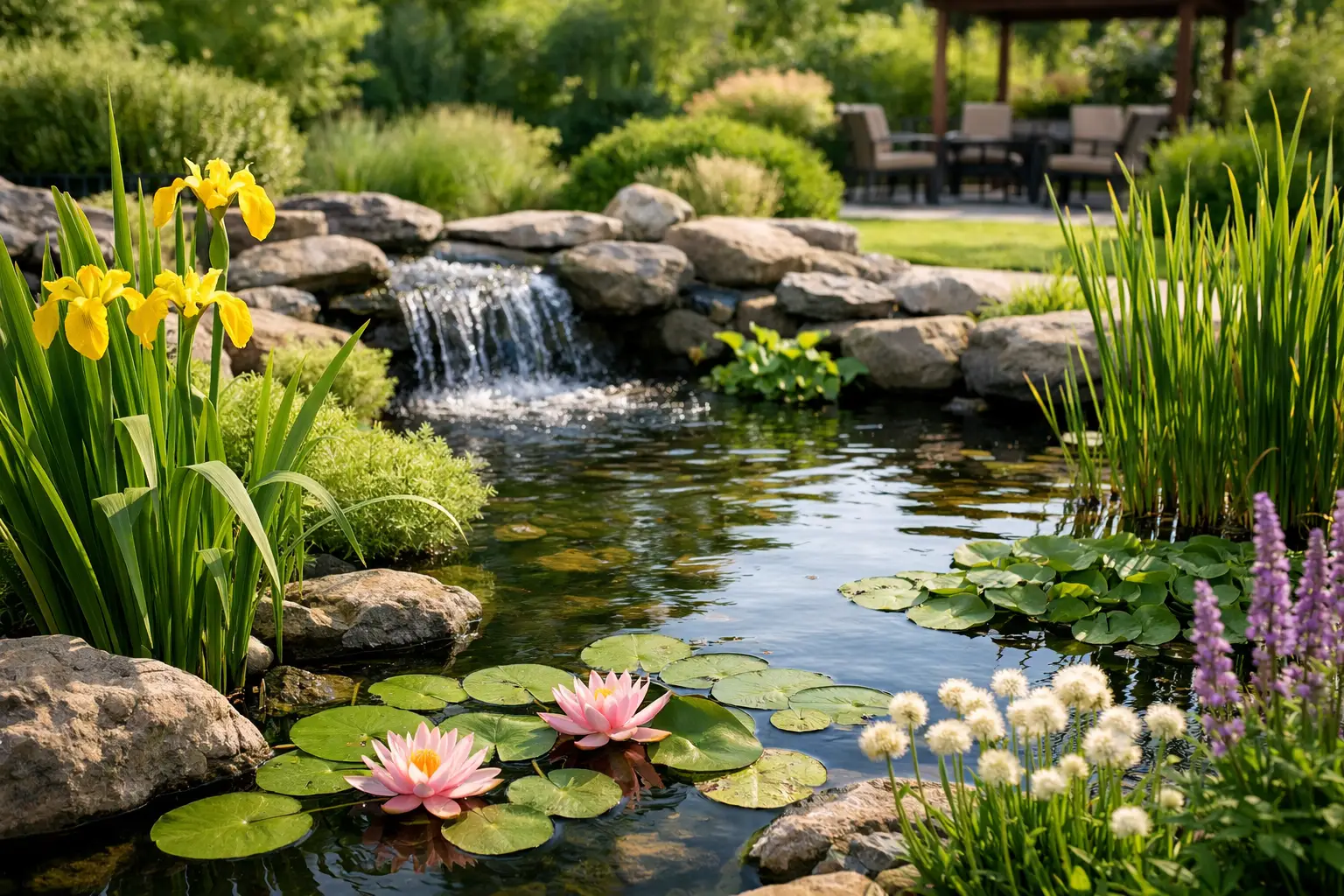
Water lilies are often the first plant homeowners picture, and for good reason. Their round leaves float quietly across the surface while blooms add a focal point that feels classic, elegant, and unmistakably peaceful. Hardy and tropical varieties are both available, although tropical water lilies are especially suited to Florida’s warm conditions and can offer larger, more dramatic flowers.
Place lilies in deeper, stiller sections of the pond where their leaves can spread naturally. They work especially well when viewed from a patio, seating area, or picture window. Give them room. A lily that is squeezed between rocks, skimmers, and other containers cannot create the relaxed, natural effect it is known for.
Lotus
Lotus makes a bolder statement than a water lily. Its leaves rise above the water, its blooms are architectural and showy, and its presence can make a pond feel like a private garden retreat. It is best used as a feature plant in a larger pond, where its scale has room to breathe.
The trade-off is that lotus is vigorous. In a small pond, it can quickly dominate the composition and hide the water you worked to create. It is a beautiful choice when planned from the beginning, not added as an afterthought.
Pickerelweed
Pickerelweed brings upright form and soft violet-blue flower spikes to the pond edge. It is a natural fit for ponds with a more relaxed, lush landscape style, especially where stonework transitions into planting beds. Pollinators are drawn to its blooms, adding another layer of life to the backyard.
This is a strong marginal plant for sunny conditions, but it should be periodically divided or trimmed to keep the edge from becoming too dense. Used in a few generous groupings rather than a continuous row, it creates a more refined result.
Arrowhead and duck potato
Arrowhead, sometimes called duck potato, has distinctive pointed leaves that bring a fresh, sculptural look to shallow shelves and pond borders. White flowers appear above the foliage, and the plant fits naturally into informal pond settings.
Because it can spread, arrowhead is best for homeowners who appreciate a slightly wilder, naturalized look or have enough pond edge to let it develop in contained groups. It pairs beautifully with boulders, gravel, and cascading waterfalls where a perfectly manicured planting would feel out of place.
Blue iris
Blue iris can provide one of the most memorable spring displays around a pond. Its tall, blade-like foliage gives structure even when it is not blooming, making it useful for framing a waterfall, concealing equipment, or giving the pond edge a sense of height.
Choose iris carefully for your specific site and avoid treating every variety as interchangeable. Some spread more aggressively than others, and a pond border can become crowded if plants are not divided as they mature. In a designed landscape, iris works best as an accent with a clear visual purpose.
Sweet flag
Sweet flag offers narrow, grass-like foliage that moves gently in the breeze. Variegated varieties can brighten a shaded or partly shaded pond edge with creamy stripes, creating contrast against dark stone and deep green foliage.
It does not bring the dramatic blooms of a lily or lotus, but that is part of its value. Sweet flag is a quiet supporting plant. It helps connect the pond to surrounding beds, patios, and pathways without competing for attention.
Horsetail reed
For a modern or tropical-inspired setting, horsetail reed creates clean vertical lines that look striking beside fountains, contemporary coping, and simple stonework. It can make a water feature feel more intentional and tailored, particularly when repeated in a few disciplined clusters.
It also needs containment. Horsetail reed is persistent and can spread beyond its intended area. Use it in pots or defined planting zones rather than allowing it to roam freely through the landscape.
Papyrus
Papyrus has instant presence. Its tall stems and umbrella-like heads add movement, texture, and a tropical resort feeling around ponds in warm climates. It is especially effective near the back of a pond, where it can soften a privacy wall, create a living screen, or give a waterfall more scale.
In Florida, papyrus can grow quickly and large. That makes it a wonderful choice for generous spaces, but a less practical one for a compact courtyard pond. Regular trimming keeps it handsome and prevents it from shading smaller plants.
Cardinal flower and other flowering accents
A few flowering edge plants can make the pond feel connected to the rest of the garden. Cardinal flower offers vivid red blooms that stand out against green foliage and natural stone, while other moisture-tolerant flowering perennials can be selected to complement the colors used in nearby planting beds.
These accents should support the pond rather than turn it into a collection of unrelated colors. Repeating one or two bloom colors elsewhere in the backyard helps create the polished, cohesive atmosphere of an outdoor sanctuary.
Choosing Plants for a Koi Pond
Koi add personality and movement, but they also change the planting plan. They may nibble tender roots, disturb containers, and stir sediment while foraging. Planting directly into loose gravel is rarely the best approach for a koi pond. Containers with stable aquatic soil, topped with larger smooth stones, are often more reliable.
Give koi shade with lilies and well-positioned floating coverage, but do not block every viewing area. The pleasure of a koi pond is seeing the fish glide through clear water, especially when the pond is illuminated at night. Thoughtful planting should frame that view, not hide it.
Avoid relying on fast-spreading floating plants as an easy solution for shade. Some can take over quickly, interfere with skimmers, and require frequent removal. Invasive aquatic plants can also cause serious environmental problems if they escape into local waterways. A professionally planned plant palette is safer, easier to maintain, and far more beautiful over time.
Design for the View From the House
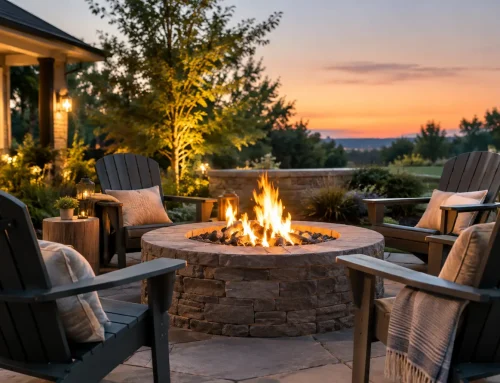
The most successful pond planting is designed around how you will experience it. From the kitchen window, you may want water lilies and open reflections. From a fire pit or outdoor dining area, tall papyrus and iris can create privacy without closing in the space. Along a walkway, lower marginal plants can soften the edge while keeping sightlines clear.
Think about evening, too. Landscape lighting can catch the shape of papyrus, highlight a flowering iris, and make leaves shimmer near the water’s surface. The pond becomes more than a daytime feature. It becomes a calm backdrop for dinner outdoors, a family gathering, or a quiet few minutes at the end of the day.
Plant growth is part of the design, not a surprise to manage later. A pond that looks perfect on installation day should still have room to look graceful a year or two from now. That means choosing the right scale, leaving open water, and planning for seasonal trimming, dividing, and maintenance.
A custom pond deserves plants that make it feel like it has always belonged in your backyard. With the right mix of lilies, marginal texture, tropical height, and open reflective water, the space can become the retreat you look forward to coming home to. Uni-Scape can help shape that balance into a pond landscape that feels peaceful, personal, and built for the way your family lives outdoors.