

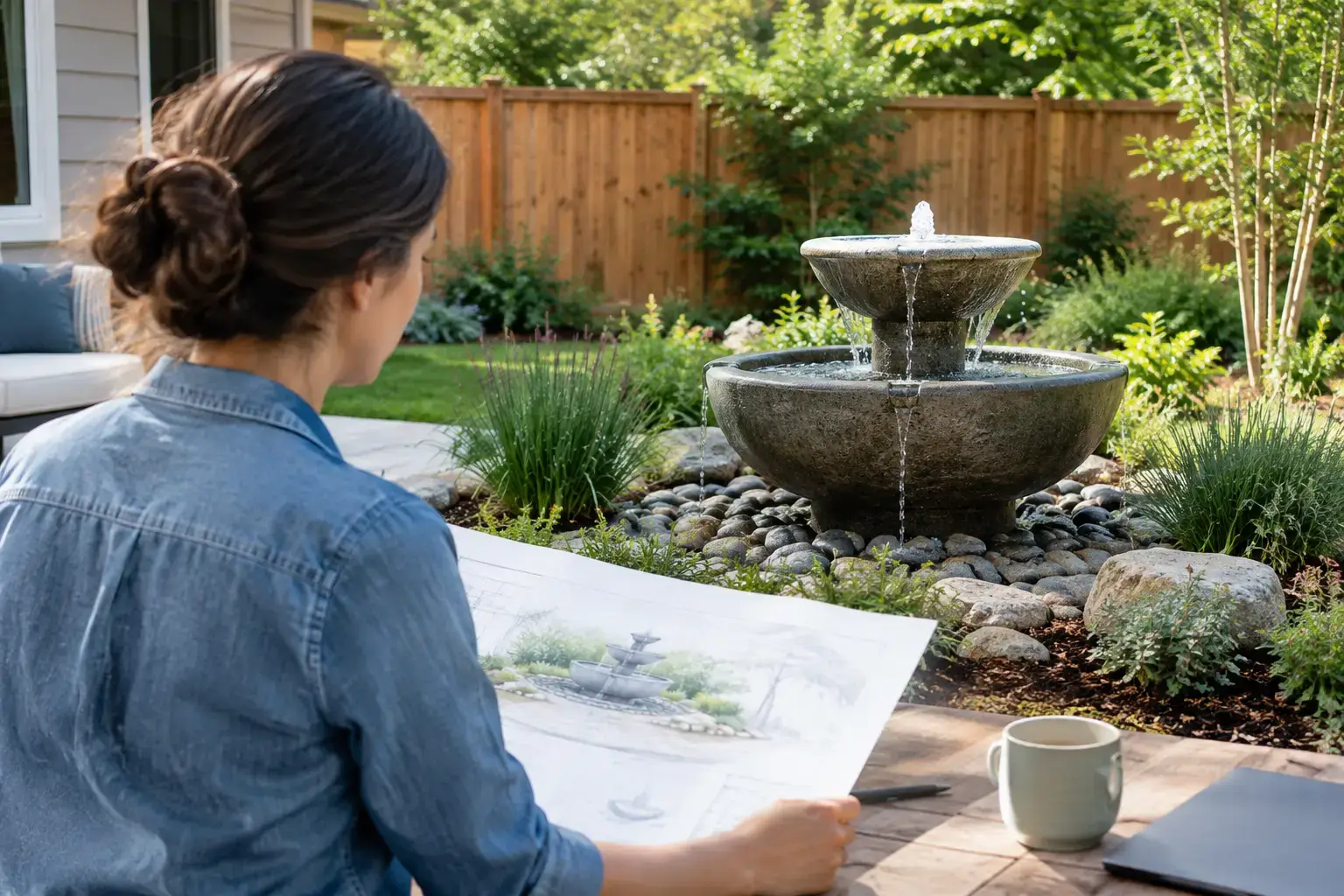
A fountain can change the feeling of a backyard before anyone has taken a seat. The soft movement of water helps soften traffic noise, creates a focal point from the patio, and gives the landscape a sense of calm even on a busy afternoon. This backyard fountain installation planning guide will help you make the decisions that turn a beautiful idea into a water feature that feels naturally at home in your outdoor retreat.
A fountain is not simply an object placed in the garden. Its sound, scale, stonework, lighting, and surrounding paths all affect how you and your guests experience the space. Planning those details early helps avoid a feature that feels too small, too loud, or disconnected from the rest of the backyard.
Start With the Experience You Want to Create
Before choosing a fountain style, picture the moments it will serve. You may want a quiet view from the kitchen window, a welcoming feature near the front entry, or a soothing backdrop for evenings around a fire pit or outdoor dining area. Each purpose suggests a different location and design.
A formal tiered fountain can bring structure to a symmetrical patio or courtyard. A low, natural-stone bubbling fountain may suit a garden designed for relaxed conversation and tropical planting. A wall fountain can add sound and movement where square footage is limited. The right choice is less about following a trend and more about creating a setting that feels like an extension of your home.
Think about who uses the space, too. Families often appreciate a feature that can be admired from a safe distance, without creating an open-water concern for small children or pets. Homeowners who entertain may prefer a fountain that creates a gentle sound without competing with conversation. A sanctuary-style backyard often benefits from water that is present enough to be felt, but never demanding.
Choose the Location Before the Fountain
The best fountain location is usually visible from the places where you spend time. Stand at the patio, outdoor kitchen, pool deck, primary seating area, and the windows that overlook the yard. Notice where your eye naturally lands. That may be the ideal place for a focal point.
Sound matters as much as sight. Moving water can help disguise nearby road noise, pool equipment, or neighboring activity, but placement and flow rate determine whether it is peaceful or overpowering. A fountain near a bedroom window may be lovely for some homeowners and distracting for others. If possible, listen to a similar fountain in operation before committing to a style.
Avoid treating the fountain as an afterthought. It needs room to breathe. A small feature can disappear beside a large pool, tall palms, or an expansive patio, while an oversized fountain can make an intimate courtyard feel crowded. Give it enough surrounding space for planting, stone edging, or a clear walkway so it reads as a destination rather than an obstacle.
Account for Views, Sun, and Falling Debris
Florida sunshine can make water sparkle, but full sun also encourages evaporation and algae growth. A location with morning light and some afternoon shade is often comfortable, although every property is different. Dense shade may reduce algae, yet it can also mean more leaves, seeds, and plant debris in the basin.
Look overhead before selecting the site. Falling palm fronds, flowering trees, and roof runoff can create more maintenance than expected. Keep the fountain away from areas where gutters discharge heavily during storms, unless drainage is specifically designed to manage that water.
Plan Power, Water, and Drainage Early
Most residential recirculating fountains do not need a dedicated water line because the same water cycles through the system. They do, however, need a reliable electrical connection for the pump and, often, for lighting. The safest and cleanest approach is to plan electrical service before patios, planting beds, or hardscape are complete.
A licensed electrician should evaluate the appropriate outdoor-rated, GFCI-protected power source. Extension cords across a lawn or walkway are not a lasting solution and take away from the polished look of a finished landscape. If you anticipate low-voltage landscape lighting, a fountain pump, and future enhancements, discuss capacity at the design stage.
Drainage deserves equal attention, particularly in Southwest Florida, where heavy rain can arrive quickly. The fountain basin, surrounding grade, and nearby hardscape should direct water away from the home and prevent pooling around the feature. A properly planned base also keeps the fountain level, which is essential for clean water flow and long-term stability.
Match Fountain Materials to the Backyard
Materials help determine whether a fountain feels timeless, coastal, contemporary, or garden-inspired. Natural stone and boulder fountains offer texture and a relaxed connection to planting beds, flagstone, and rock work. Cast stone can provide classical presence and detailed forms. Ceramic and glazed finishes bring color, while sleek concrete or metal may fit a more modern poolside setting.
In a coastal climate, material selection should also account for sun, moisture, and salt air. Some finishes weather beautifully; others require more protection or regular care to retain their appearance. A designer can help you balance the look you love with the maintenance you are willing to take on.
The fountain should relate to the rest of the property. Repeating a stone color found in a patio, retaining wall, outdoor kitchen, or pool coping creates a more intentional result. When the materials work together, the water feature feels built into the landscape rather than placed on top of it.
Design the Sound, Not Just the Look
The character of a fountain comes largely from how water moves. A narrow spillway or bubbling urn creates a quieter, more intimate sound. Water falling over several stone levels produces a fuller, livelier presence. A taller tiered fountain may create more splash and volume, especially in windy conditions.
Pump size, flow control, basin depth, and the shape of the spill all affect the finished sound. This is where professional planning pays off. A pump that is too weak can leave the feature looking still; one that is too strong may send water beyond the basin, waste water, and create constant splatter on surrounding surfaces.
Consider the view at night as well. Subtle underwater or uplighting can make moving water glow after sunset and extend the enjoyment of your backyard. Warm lighting typically feels inviting near patios, fire features, and seating areas. The goal is not to spotlight every stone, but to create a gentle sense of depth and refuge.
Include Maintenance in Your Fountain Installation Plan
Every fountain needs some care, but the amount varies by design. A simple bubbling feature with easy access to the pump may be a practical choice for homeowners who want low-maintenance relaxation. Larger basins, intricate statuary, and heavily planted surroundings can require more frequent cleaning.
Plan for convenient access to the pump, filter, and fill point. Water levels should be checked regularly, especially during hot, dry periods. Leaves and debris should be removed before they affect circulation. Depending on the fountain and water conditions, periodic cleaning and treatment may be needed to manage algae and mineral buildup.
Landscape choices influence upkeep, too. Planting near the fountain can make it feel lush and established, but plants that shed heavily may add work. Choose the surrounding garden with both beauty and practical access in mind. A few thoughtfully placed stepping stones or a discreet service path can make maintenance far easier without disrupting the finished design.
Let the Fountain Belong to a Larger Retreat
The most memorable fountains are part of a complete outdoor experience. They may frame the approach to a pool, bring calm to a spa garden, soften the edge of a flagstone patio, or provide a visual anchor between an outdoor kitchen and a fire pit. Even a compact fountain can make a backyard feel more layered and personal when it is connected to how the space is used.
At Uni-Scape, fountain planning is approached as part of the larger sanctuary: the places where you pause after work, share a meal outdoors, and make room for family time. A custom design can coordinate water, natural stone, planting, lighting, and gathering spaces so each element supports the next.
Give your fountain a purpose beyond decoration. When its location, sound, materials, and maintenance needs are considered from the beginning, it becomes a lasting invitation to step outside, slow down, and enjoy the home you have created.