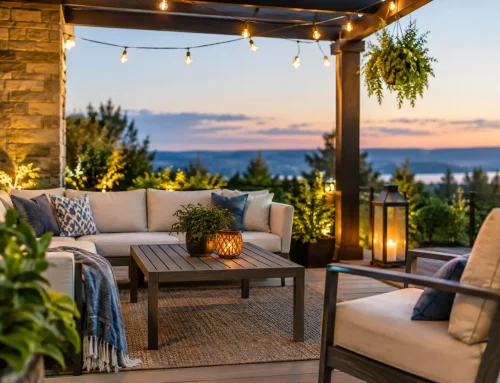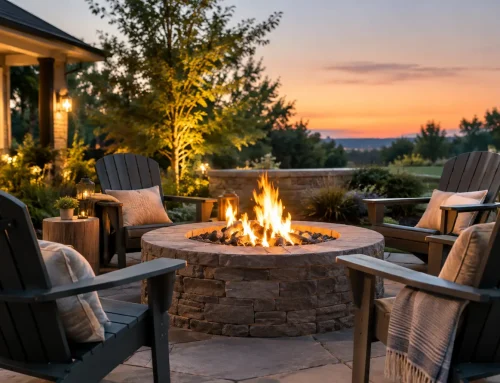


A beautiful backyard should not disappear when the sun goes down. The best landscape lighting fixtures extend the life of your outdoor space, giving a flagstone patio a warm evening glow, making a walkway easier to follow, and turning the movement of water in a pond or waterfall into part of the nighttime view.
For a sanctuary-style backyard, lighting is not an afterthought or a collection of bright fixtures scattered around the yard. It is part of the design. The right combination creates depth, guides guests naturally toward gathering areas, and lets your family enjoy a quiet night outdoors without harsh glare interrupting the mood.
What Makes a Landscape Lighting Fixture the Right Choice?
The best fixture is rarely the brightest one. It is the one that puts light precisely where it belongs while allowing the landscape, stonework, and architecture to remain the focus.
Start with the experience you want after dark. A family that uses its patio for dinners, a homeowner with a koi pond, and someone who wants to highlight mature palms will each need a different lighting plan. Safety matters, especially around steps, paths, pool decks, and changing elevations, but practical lighting can still feel soft and welcoming.
In Southwest Florida, durability also deserves serious attention. Fixtures need to stand up to humidity, salt air in coastal areas, heavy rain, irrigation, and year-round sun. Quality metal construction, sealed connections, and professional-grade LED components help protect the investment and reduce the frustration of frequent replacements.
Color temperature is another detail that changes the atmosphere. Warm white lighting, usually in the 2700K to 3000K range, works beautifully with natural stone, wood tones, lush planting, and outdoor gathering spaces. Cooler light can make a backyard feel stark or overly commercial unless it is used for a specific design purpose.
The Best Landscape Lighting Fixtures by Area
A balanced outdoor lighting design uses several fixture types, each serving a quiet, specific purpose. Rather than trying to illuminate the whole yard, think in layers: guidance at ground level, soft ambient light around living areas, and dramatic accents in the landscape.
Path and Walkway Lights
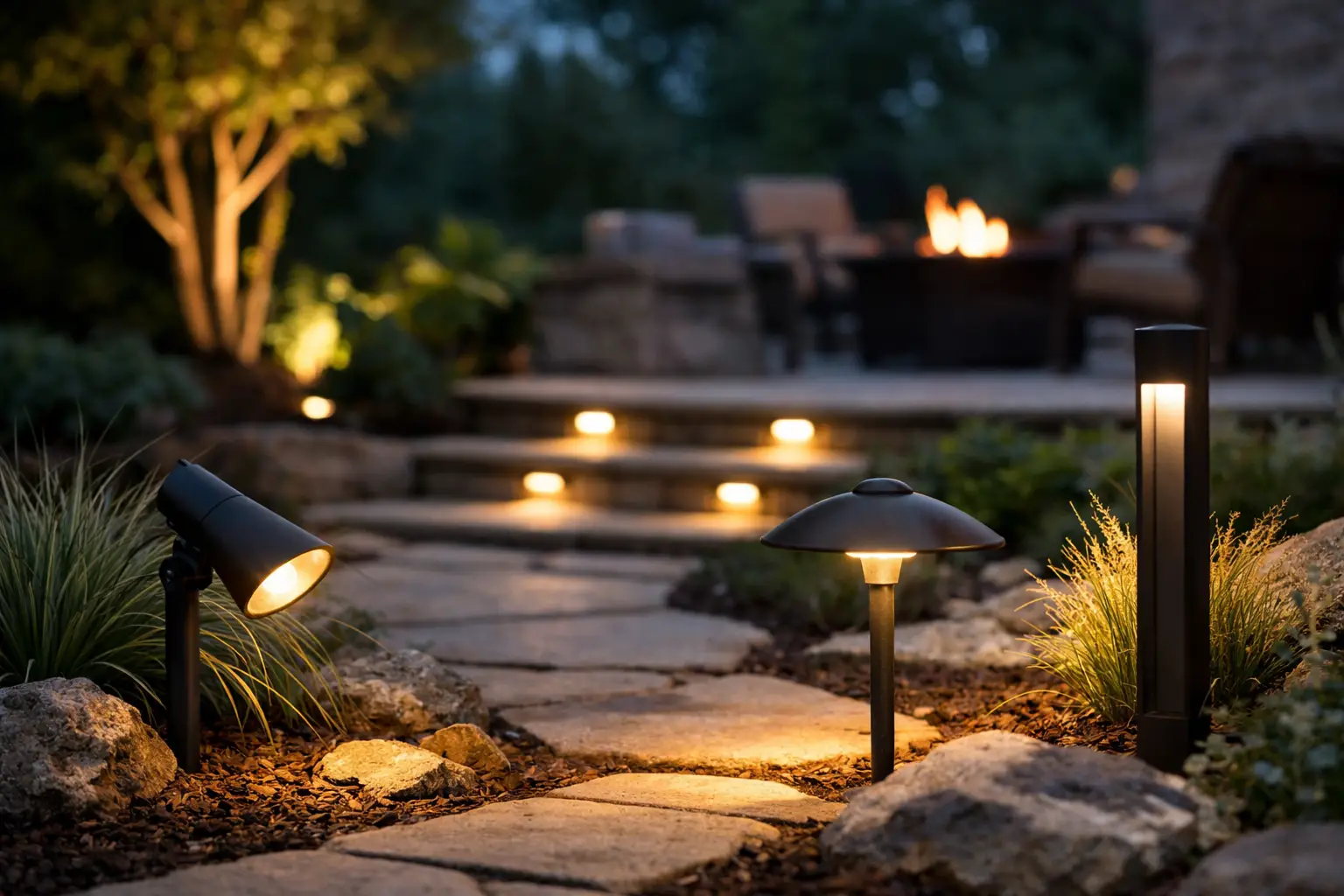
Path lights make walkways, garden edges, and transitions between outdoor spaces easier to navigate. They are especially useful along flagstone paths, entries to patios, and routes between the home and a pool, spa, or fire pit.
The common mistake is placing them too close together or choosing fixtures that cast light in every direction. That can create a runway effect instead of a relaxed garden path. Spacing fixtures thoughtfully and using shielded, low-glare options provides enough visibility while keeping the night peaceful.
For a more refined look, path lighting may be paired with small downlights mounted in trees or structures. This creates a gentle wash of light along the ground without filling every garden bed with visible fixtures.
Well Lights and In-Ground Uplights
Well lights sit nearly flush with the ground and send light upward. They are among the best landscape lighting fixtures for emphasizing architectural columns, feature walls, palms, specimen trees, rock work, and sculptural plants.
Used near a large tree, an uplight reveals texture in the trunk and brings the canopy into view. Placed beside a stone wall or boulder grouping, it adds dimension and gives the landscape a sense of depth that disappears in darkness.
These fixtures need careful placement. Aim them too directly at a seating area or toward the home, and glare can become distracting. In planting beds, they should also be positioned where mulch, leaves, and growing plants will not block the beam. A professional design accounts for how the landscape will mature, not just how it looks on installation day.
Downlights for a Natural Moonlit Effect
Downlights are installed above eye level, often in mature trees, pergolas, rooflines, or other elevated structures. They cast light downward, creating a gentle pattern across a lawn, path, patio, or planting bed.
This is one of the most comfortable forms of landscape lighting because the source is often hidden. Instead of seeing a bright fixture, guests notice the soft light underfoot and the calm sense of being able to move through the backyard naturally.
Downlighting is particularly effective around outdoor kitchens and dining areas where people need visibility without the glare of a floodlight. It also helps define the edges of a patio, making the space feel inviting long after sunset.
Deck, Step, and Hardscape Lights
Low-profile hardscape lights fit neatly into retaining walls, seat walls, stair risers, capstones, and the edges of outdoor kitchens. Their job is simple: make changes in elevation clear and create a warm border around the spaces where people gather.
These fixtures are ideal for patios with multiple levels, steps leading to a pool area, or seating walls around a fire feature. Since the light is directed downward, it improves safety while preserving the intimate feel of the setting.
Hardscape lights work best when they are integrated during construction. They can be added later in many cases, but planning them alongside stonework and patios gives the finished space a cleaner, more intentional appearance.
Underwater and Water Feature Lights
Water has its own nighttime personality. A pond that looks tranquil during the day can become a luminous focal point after dark when the right fixtures reveal the movement of a waterfall, the shape of natural stone, and the reflective surface of the water.
Submersible lights are designed for ponds, fountains, waterfalls, and other aquatic features. They should be rated specifically for underwater use and installed with attention to access, wire routing, and future maintenance. The goal is not to make every inch of water bright. A few carefully positioned lights can make falling water shimmer while leaving darker areas that feel natural and restful.
For koi ponds, lighting should be selected and aimed with the fish and water quality in mind. Excessive brightness can feel unnatural, while poorly placed fixtures may create reflections that prevent you from enjoying the view into the pond. Thoughtful illumination lets the feature remain calm, visible, and beautiful.
Fixtures to Use Carefully
Some lighting styles have a place, but they can easily overpower a residential setting. Floodlights are useful for targeted security needs or larger service areas, yet they are usually too intense for patios, pools, and intimate garden spaces. If a floodlight is necessary, choose a shielded fixture and aim it away from windows and neighboring properties.
Solar lights may seem convenient for small decorative accents, but they are often inconsistent in shaded landscapes, during rainy periods, or beneath dense tree cover. They also tend to produce less reliable light than a professionally installed low-voltage system. For a permanent outdoor retreat, wired LED lighting generally offers better control, appearance, and longevity.
Color-changing fixtures can be fun for occasional celebrations, particularly around pools or entertaining areas. For everyday use, however, warm white light is usually the more timeless choice. It flatters natural materials, feels more relaxing, and keeps the landscape from looking like a holiday display.
Design the View From Inside, Too
Landscape lighting should serve the moments spent indoors as well as those spent outside. From the kitchen window, living room, or primary bedroom, a softly lit tree, fountain, or stone path can make the whole property feel more settled and cared for.
Choose focal points that deserve attention from those interior viewpoints. A waterfall beside a patio, a row of palms along the pool, or a beautifully textured wall may need only a few lights to become part of the evening atmosphere. Leaving some areas dark creates contrast, which is often what makes the illuminated elements feel special.
The most successful plans also avoid lighting directly into windows. A fixture may look fine from the yard but become irritating when its beam reaches a bedroom or reflects off glass. Testing angles at night is worth the effort.
A Lighting Plan That Feels Like Home
The best landscape lighting does more than help people see. It makes a backyard feel available: ready for late dinners, quiet conversations beside the water, children coming in from the pool, or a few unhurried minutes outdoors after a long day.
At Uni-Scape, lighting is considered alongside patios, water features, stonework, pools, and gathering spaces so every element supports the same experience. When fixtures are selected for the landscape rather than added one by one, the backyard keeps its sense of calm – and gives your family another reason to stay outside a little longer.