

The right countertop changes the feel of an outdoor kitchen before the first meal is served. It is where platters land after a swim, where children lean in for a snack, and where friends gather while dinner comes off the grill. Choosing the best outdoor kitchen countertop materials means balancing that everyday enjoyment with Florida sun, sudden rain, salt air, heat, and the care each surface requires.
A beautiful countertop should belong to the whole backyard, not look like an appliance dropped onto the patio. Whether your kitchen sits beside a pool, overlooks a waterfall, or anchors a flagstone entertaining area, its surface should support the relaxed, welcoming atmosphere you want to create.
What an Outdoor Countertop Must Handle
Indoor countertop decisions often begin with color and style. Outdoors, performance has to come first. Cape Coral and Fort Myers homeowners know how quickly a bright, peaceful afternoon can turn into a heavy rainstorm. Add intense UV exposure, humidity, cooking grease, pool splashes, and the occasional red wine spill, and a countertop needs to work harder than one inside the home.
Look closely at heat resistance, UV stability, stain resistance, porosity, and maintenance needs. The material also has to work with the structure beneath it. Large-format stone slabs can be exceptionally beautiful, but they are heavy and require cabinetry and footings designed to carry that weight. A surface that feels cool and effortless to use can still demand careful planning behind the scenes.
Texture matters, too. Highly polished materials may look dramatic, but glare can be uncomfortable in a sunny backyard. Honed, leathered, or matte finishes often bring a softer, more natural feel while making fingerprints and water spots less noticeable.
Best Outdoor Kitchen Countertop Materials for Florida
Granite: Natural Beauty With Proven Durability
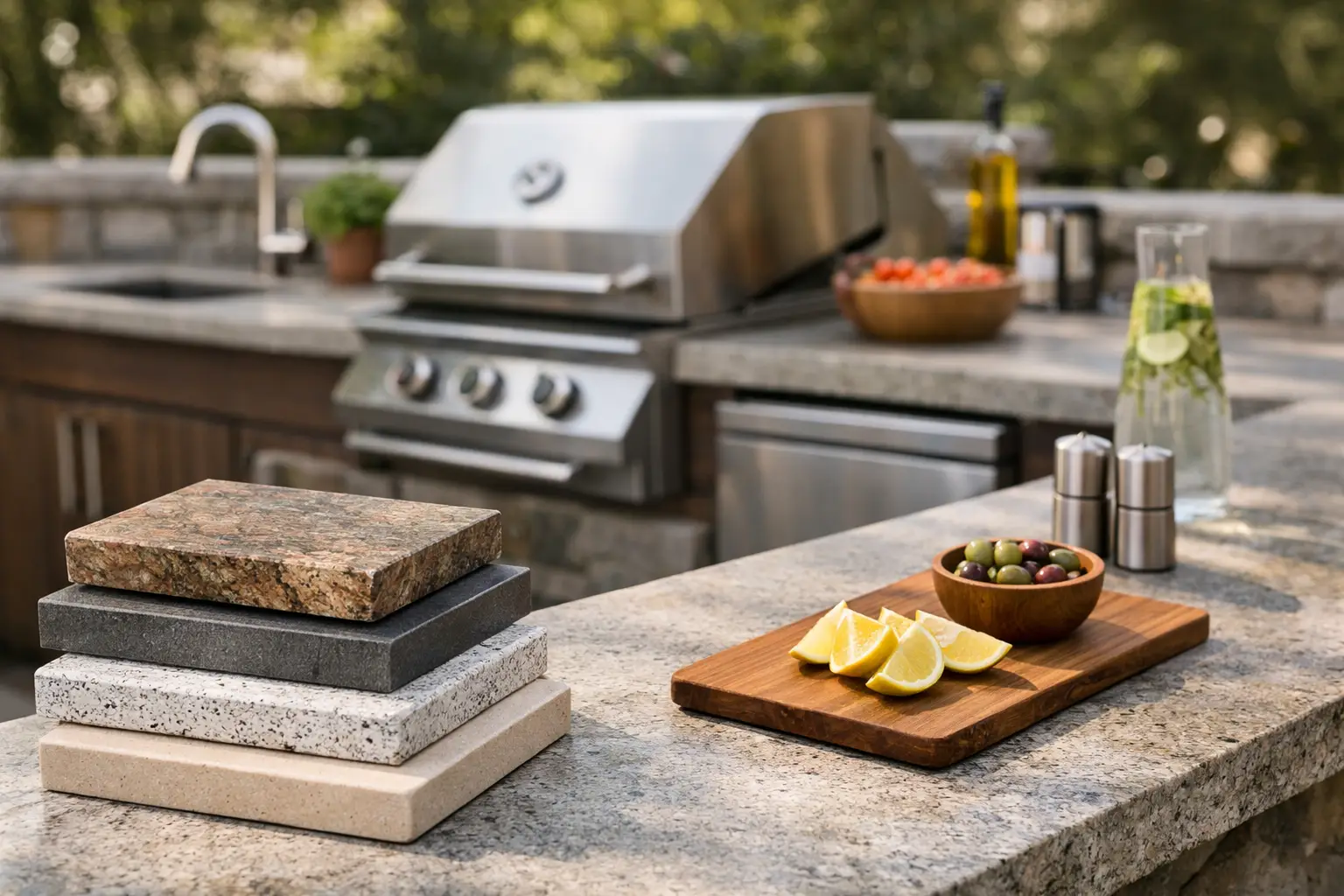
Granite remains one of the strongest choices for a custom outdoor kitchen. It is hard, heat-resistant, and available in a range of colors and movement, from quiet charcoal and warm sand tones to dramatic veining that becomes a focal point. Each slab is distinct, which makes granite especially appealing in backyard retreats built around natural stone, water, and planting.
For outdoor use, choose a dense granite and have it properly sealed. Sealing helps protect against oils, sauces, moisture, and staining. It will need periodic resealing, and lighter colors can show marks more readily than darker or patterned slabs. Still, for homeowners who want a substantial, timeless surface that complements rock work, pavers, and waterfalls, granite is often the right fit.
One practical note: dark granite absorbs heat. Around a pool or in a fully exposed cooking area, a medium-toned or lighter slab may be more comfortable for bare hands on a sunny afternoon.
Porcelain: A Polished, Low-Maintenance Choice
Porcelain slabs have become a favorite for modern outdoor kitchens because they handle outdoor conditions exceptionally well. They are nonporous, highly resistant to stains and UV fading, and easy to clean after a weekend gathering. Porcelain also comes in convincing stone, concrete, and marble-inspired looks, making it possible to achieve a refined design without the upkeep associated with some natural materials.
This is an excellent option for homeowners who want clean lines, consistent color, and very little ongoing maintenance. Porcelain does not require sealing, and it holds up well around pools where sunscreen, chlorine, and wet towels are part of daily life.
Its trade-off is installation. Porcelain is durable once installed, but slab edges can chip if handled poorly during fabrication or if struck hard. It should be measured, cut, and installed by experienced professionals who understand exterior cabinetry and support requirements. A well-executed porcelain countertop feels calm, tailored, and easy to live with.
Quartzite: Elevated Stone for a Resort-Style Setting
Quartzite offers the visual character many homeowners love in marble, with greater strength and better resistance to scratching and heat. It can bring luminous whites, soft grays, earthy golds, and flowing veining to an outdoor kitchen, pairing beautifully with a spa, fire feature, or naturalistic pond setting.
Do not confuse quartzite with engineered quartz. Natural quartzite is a stone formed by heat and pressure, while engineered quartz contains resins that can discolor or deteriorate under strong outdoor UV exposure. For a fully exposed Florida kitchen, natural quartzite is the outdoor-worthy choice, provided the specific slab is suitable and properly sealed.
Quartzite is a premium material, both in price and in the level of craftsmanship it requires. It also needs regular sealing because natural slabs vary in porosity. For a homeowner who sees the outdoor kitchen as a defining design feature rather than simply a prep station, that investment can create a truly memorable result.
Concrete: Custom, Architectural, and Full of Character
Concrete countertops can be shaped to suit almost any layout, including curved bars, oversized islands, integrated drainboards, and custom edges. Their handcrafted appearance works particularly well in landscapes with contemporary architecture, textured walls, fire pits, and natural stone accents. Pigments, aggregate, and finish options make concrete highly flexible from a design standpoint.
The appeal comes with responsibility. Concrete is porous and must be sealed carefully, then maintained over time. Hairline cracks can develop as the material cures and moves with changing temperatures. Many homeowners appreciate that lived-in character; others prefer a surface that stays more uniform.
Concrete works best when its natural variation is embraced rather than treated as a flaw. In the right setting, it gives an outdoor kitchen a grounded, custom-built presence that feels connected to the landscape.
Stainless Steel: The Workhorse for Serious Cooking
Stainless steel is not the first material people picture when imagining a warm backyard sanctuary, but it deserves consideration. It is nonporous, sanitary, heat-resistant, and exceptionally practical around grills, smokers, pizza ovens, and outdoor bars. It also stands up well to rain and requires minimal maintenance.
The visual effect is more culinary than residential, so stainless steel often works best as a secondary prep surface or as part of a contemporary kitchen design. It can show fingerprints, water spots, and scratches, especially in polished finishes. Brushed stainless hides everyday use better and gives the kitchen a crisp, professional feel.
For households that cook outdoors often, a stainless prep area paired with a stone or porcelain serving counter can offer the best of both worlds.
Tile: Flexible, Budget-Conscious, and Detail-Driven
Outdoor-rated porcelain tile can create a durable countertop with considerable color and pattern flexibility. It may be a smart option for smaller kitchen installations, matching a backsplash to patio materials, or adding a handcrafted Mediterranean feel to the space.
The concern is not usually the tile itself. It is the grout. Grout lines collect grease and dirt, require more cleaning, and can interrupt the smooth surface needed for food prep. Using a high-quality exterior grout and keeping the layout simple helps, but tile is generally less convenient than slab materials for an active entertaining kitchen.
Materials to Use Carefully Outdoors
Engineered quartz is popular indoors, but it is usually not the best choice for an uncovered outdoor kitchen. The resin content can fade, yellow, or break down under prolonged sun and heat. Some manufacturers offer products for exterior use, but specifications should be reviewed carefully before committing.
Marble is another material that asks for realistic expectations. Its classic beauty is undeniable, yet it can etch from citrus, wine, and acidic foods, and it is more vulnerable to staining and weathering. In a covered outdoor bar used mostly for serving, marble may be worth the maintenance. At the main grill station where life gets messy, granite, porcelain, or quartzite is usually more forgiving.
Match the Countertop to the Way You Gather
The best choice depends on how your family uses the backyard. A covered lanai expands your options because the countertop receives less direct sun and rain. A fully exposed kitchen near a pool needs stronger UV resistance and an easy-clean surface. If your favorite evenings involve grilling for a crowd, prioritize heat resistance, generous prep space, and a finish that will not make every smudge feel urgent.
The countertop should also relate to its surroundings. Warm granite can echo the movement in a flagstone patio. Porcelain with a stone-look finish can create a quiet transition between a sleek pool deck and outdoor cabinetry. Quartzite can give a bar island a sense of occasion, especially when landscape lighting catches its veining after sunset.
At Uni-Scape, outdoor kitchens are designed as part of a complete backyard experience, alongside the patio, pool, fire feature, water elements, and spaces where people naturally gather. That integrated approach helps avoid a common mistake: selecting a countertop in isolation, then trying to make the rest of the yard fit around it.
Choose a surface that can welcome hot pans, rainy afternoons, and the joyful disorder of a full house. When the material suits both your climate and your lifestyle, the kitchen becomes more than a place to cook – it becomes one of the most inviting places to stay awhile.