

A pool should make a Southwest Florida afternoon feel easier: a cool escape after work, a place for children to play, and a beautiful focal point beside the patio after sunset. When choosing a chlorine pool versus saltwater pool, the best answer is rarely about trends. It is about the kind of backyard experience you want, the maintenance approach that feels comfortable, and the equipment choices that support your long-term design.
Both options can keep a pool clean, clear, and ready for company. Their differences show up in how they produce sanitizer, how the water feels, what equipment they require, and where homeowners spend time and money over the life of the pool.
Chlorine Pool Versus Saltwater Pool: Start With the Chemistry
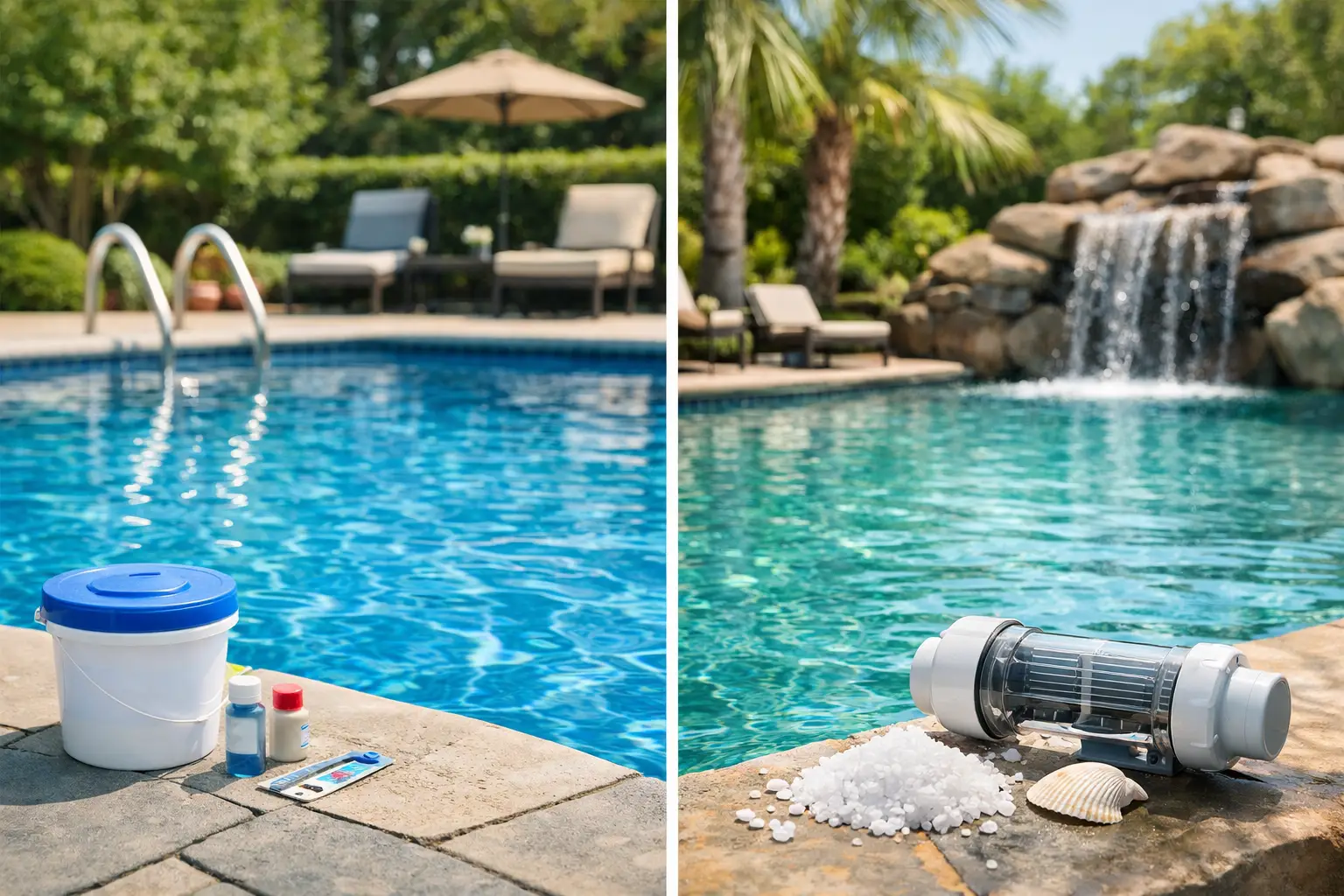
The most useful clarification is also the one that surprises many homeowners: a saltwater pool is still a chlorine pool. Saltwater systems use dissolved salt and a salt cell, also called a chlorine generator, to create chlorine as water moves through the equipment. That chlorine sanitizes the water just as chlorine added directly to a traditional pool does.
A traditional chlorine pool relies on chlorine products such as liquid chlorine, tablets, or granular treatments. The owner or pool service tests the water and adds sanitizer as needed. With a saltwater system, the generator produces chlorine gradually while the circulation system is running. The cell can be adjusted to increase or reduce output as the weather, bather load, and water conditions change.
Neither option is maintenance-free. Both need regular testing, balanced pH and alkalinity, proper filtration, brushing, and attention after heavy rain, frequent swimming, or a stretch of intense Florida sun. The real difference is the delivery method and the ownership experience that comes with it.
How the Water Feels
For many families, water comfort is the strongest argument for saltwater. Saltwater pools generally have a much lower salt concentration than ocean water, so they do not feel like swimming in the sea. Instead, many people describe the water as softer and gentler on their skin and eyes.
Because a salt system creates chlorine steadily, it can avoid the sharper peaks that sometimes follow a manual chlorine addition. That can mean less noticeable chlorine odor when the pool chemistry is properly balanced. It may also be appealing for homeowners who want their pool to feel less like a public facility and more like a private retreat.
A well-maintained traditional chlorine pool can feel equally inviting. Eye irritation, dry skin, and strong odor are often signs of water that is out of balance, not proof that chlorine pools are inherently harsh. A reliable maintenance routine and the right equipment matter far more than the label alone.
Installation Cost and Long-Term Spending
A standard chlorine setup typically has a lower upfront cost because it does not require a salt cell and generator. This can make sense when the pool budget needs to leave more room for the features that shape daily life outdoors, such as a raised spa, natural stone coping, a fire feature, landscape lighting, or an expanded entertainment patio.
A saltwater system usually costs more at installation, but it may reduce the amount of packaged chlorine you purchase over time. That savings is not automatic or identical for every pool. Salt cells have a limited service life and will eventually need replacement. They also need periodic inspection and cleaning, especially in areas where calcium scale can build on the cell plates.
Electricity use, local water conditions, pool size, operating hours, and maintenance habits all affect the total cost. The most practical way to compare systems is to look beyond the first invoice. Ask what equipment is included, what will need replacing in the coming years, and whether your service provider is comfortable maintaining that particular setup.
Florida Conditions Deserve Extra Attention
In Cape Coral, Fort Myers, and nearby coastal communities, pools work hard for much of the year. High temperatures, afternoon storms, intense sun, and frequent use can all change water chemistry quickly. Saltwater generators can be especially convenient during busy swim seasons because they provide a consistent sanitizer source, but they still need monitoring.
Salt also deserves careful consideration around the pool itself. Saltwater can contribute to corrosion when equipment, fixtures, or nearby materials are not selected for that environment. This does not rule out a salt system, but it does make quality construction and material planning more important. The pool equipment, handrails, fasteners, stone details, and surrounding landscape should be designed as one complete environment.
Maintenance: Convenient Does Not Mean Hands-Off
Traditional chlorine pools give homeowners direct control. If testing shows chlorine is low, sanitizer can be added right away. The system is straightforward, familiar to most pool professionals, and easier to troubleshoot because there are fewer specialty components.
Saltwater pools automate part of that process, but they introduce another piece of equipment that needs care. The salt cell must be checked for scale, and its output should be adjusted as conditions change. A salt pool can still need supplemental chlorine after an unusually busy weekend, a large rain event, or a water-quality issue.
In either case, dependable circulation and thoughtful maintenance protect the investment. Clean filters, correctly programmed pumps, balanced water, and routine inspections help preserve the finish, equipment, and comfort of the pool. For homeowners who would rather spend Saturday around the fire pit than measuring chemicals, professional pool care can make either system feel wonderfully simple.
Which System Fits Your Backyard Lifestyle?
Choose a traditional chlorine pool if you prefer lower upfront equipment costs, simple components, and the flexibility of directly adding sanitizer when needed. It is a dependable choice for homeowners who have an established pool service routine or who want to keep the mechanical system as straightforward as possible.
Choose a saltwater pool if a softer-feeling swim, steady chlorine production, and reduced day-to-day chemical handling are high priorities. It is often a strong fit for families who expect frequent use and want the pool to feel like a calm, polished extension of the home. Just plan for the salt cell, compatible equipment, and ongoing monitoring from the beginning.
There is also room for personal preference. Some homeowners love the familiar control of a conventional chlorine system. Others value the rhythm of a salt system quietly generating sanitizer in the background. The better option is the one that fits how you will actually use and care for the pool, not the one that sounds easiest in a brochure.
Let the Pool Shape a Complete Retreat
A pool is rarely just a pool in a well-designed backyard. Its water color, coping, deck material, lighting, spa placement, and views from the house all influence whether the space feels restorative or unfinished. A saltwater or chlorine decision should support that larger vision.
For example, a tranquil pool framed by natural stone, soft landscape lighting, and the sound of a nearby waterfall calls for materials and equipment chosen to age beautifully together. A lively family pool near an outdoor kitchen may need generous deck space, clear sightlines, durable finishes, and an easy maintenance plan that keeps the water ready for spontaneous gatherings.
At Uni-Scape, the goal is to help homeowners create outdoor environments where the practical details support the moments that matter: a quiet morning beside the water, a dinner that lingers under the lights, or the familiar splash of family laughter on a warm evening. Start with the pool system that gives you confidence, then build the sanctuary around it.