

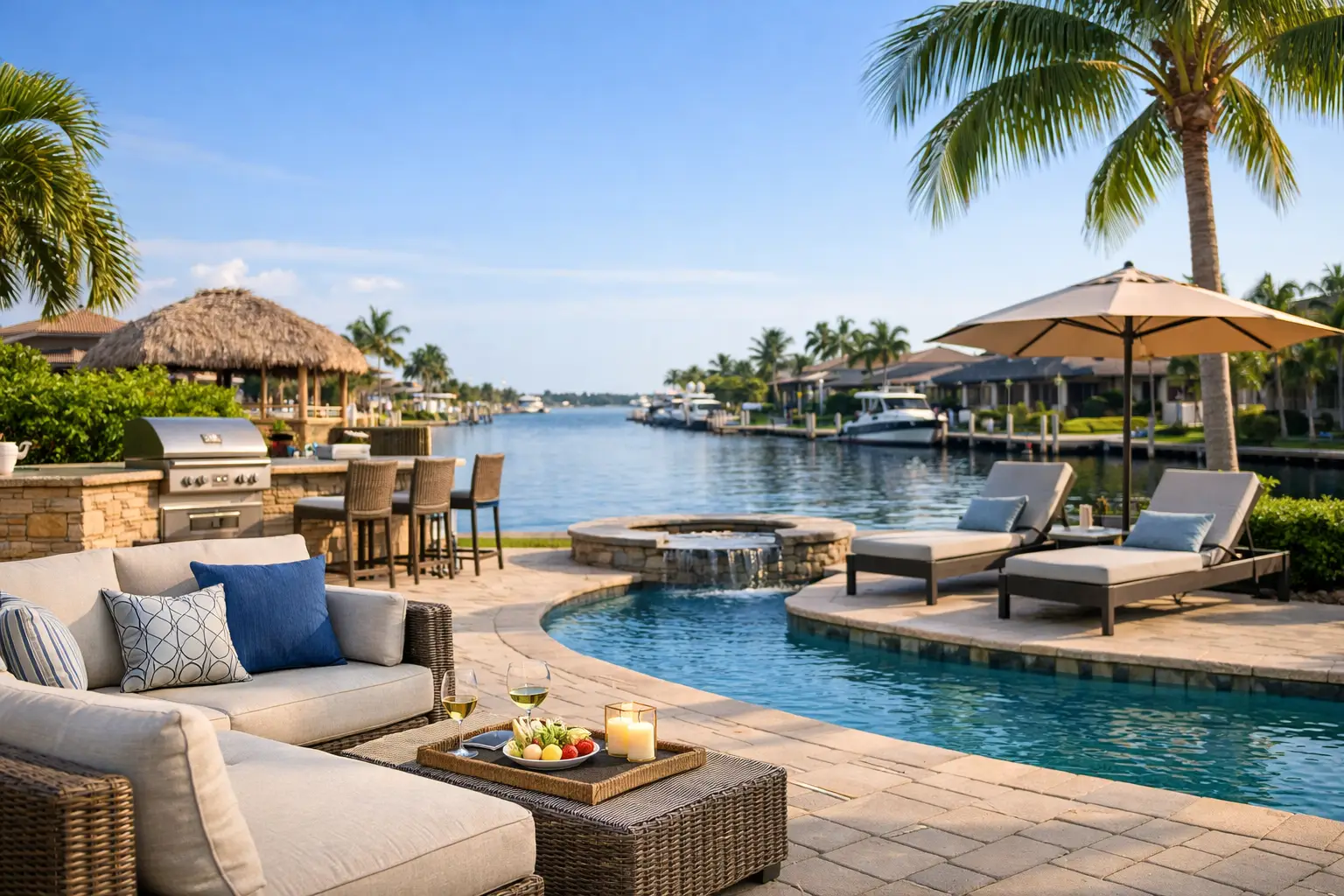
A patio in Cape Coral has to work harder than a pretty surface outside the back door. It may host a Sunday dinner, offer a quiet place after a long day, give children room to spread out, and become the setting for a warm evening beside the water. This Cape Coral patio planning guide starts with that real-life question: what do you want to feel and do in your backyard?
The best patios are not simply large. They are intentional. They create a natural transition from indoors to outdoors, give people a reason to linger, and hold up beautifully through Florida sun, rain, humidity, and salt air. When the layout, materials, shade, and surrounding landscape are considered together, the patio becomes part of a personal retreat rather than an isolated slab of hardscape.
Start With How You Want to Use the Space
Before choosing pavers, stone, or furniture, picture an ordinary week at home. A couple who wants morning coffee and a peaceful view has different needs than a family that hosts birthday dinners or neighbors around a fire feature. Both deserve a patio designed around the moments that matter to them.
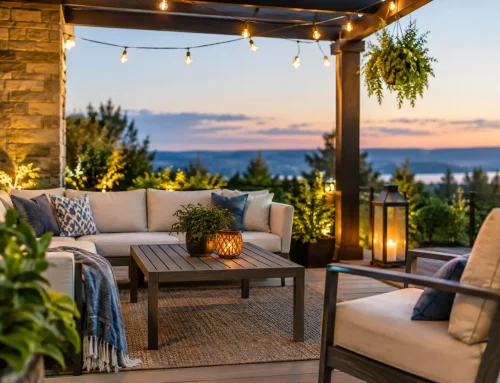
A dining patio needs enough clearance for chairs to slide out comfortably. A lounge area benefits from a softer, more sheltered atmosphere, often with room for deep seating, side tables, and a focal point such as a fountain, fire pit, or pool view. If cooking outdoors is a priority, the route between the house, grill, prep space, and dining table should feel easy instead of crowded.
It is also wise to plan for more than one activity when space allows. A single open rectangle can feel bare and underused. Separating the patio into connected zones – perhaps a dining area near the kitchen and a lower, quieter seating area near a waterfall or garden – makes even a modest backyard feel richer and more inviting.
Read Your Cape Coral Backyard Before Designing
Cape Coral properties come with details that should shape the plan: sun exposure, drainage, canal views, existing pool placement, lot boundaries, and the location of utilities or septic components. What looks ideal on a sketch can be uncomfortable at 4 p.m. if western sun turns the seating area into the hottest place in the yard.
Spend time outside at different hours. Notice where shade falls, how water moves after rain, where breezes come through, and which views you want to frame or soften. A patio facing a canal may call for a low profile that preserves the water view. A more private lot may benefit from layered planting, stone accents, or a fountain that creates a sense of enclosure and gentle sound.
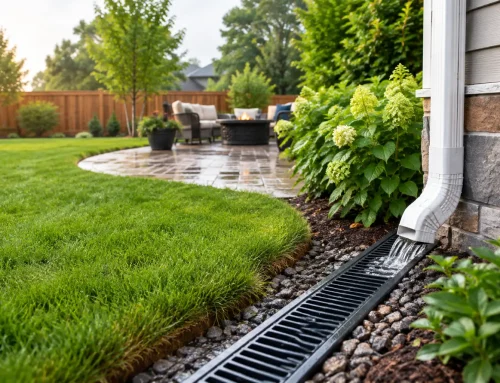
Drainage deserves attention early. Florida rain can arrive quickly and heavily, and a patio should direct water away from the home while avoiding low areas that collect runoff. The correct base, slope, edging, and connection to the surrounding landscape are not glamorous decisions, but they protect the comfort and longevity of the finished space.
Respect Sun, Shade, and Surface Temperature
Color and material selection affect how a patio feels underfoot. Darker finishes can look dramatic, especially beside lush planting and natural stone, but they may absorb more heat in strong sun. Lighter tones often feel cooler and can brighten a compact yard, although they may show certain stains more readily.
Shade changes the equation. A covered lanai, pergola, umbrella, or strategically placed trees can make a patio usable for more of the day. The right answer depends on the setting. Permanent overhead coverage offers reliable protection, while an open patio preserves broad skies and can feel especially welcoming on clear winter evenings. Many homeowners prefer a balance: covered space for dining and an uncovered area for a fire feature, chaise lounges, or stargazing.
Choose Materials for Beauty and Daily Life
Material should support the atmosphere you want to create, not compete with it. Flagstone brings natural variation, texture, and an organic connection to rock work, ponds, and garden beds. It is especially fitting for homeowners who want their patio to feel like a tucked-away garden retreat rather than a formal extension of the house.
Pavers offer flexibility in color, pattern, and layout. They can create a tailored look that complements pools, outdoor kitchens, and contemporary homes, while allowing for repairs or adjustments more easily than a single poured surface. Concrete can be a practical option for certain designs, but its finish, joints, and relationship to nearby features should be carefully considered so it does not feel flat or disconnected.
For any surface, traction matters. Around pools, spas, and water features, a finish that performs well when wet is a comfort and safety consideration. Natural texture can be beautiful, but overly uneven stone may not be the best fit for households with young children, aging family members, or frequent entertaining. A thoughtful design weighs the look you love against the way people will actually walk, play, and gather there.
Build a Patio With a Sense of Arrival
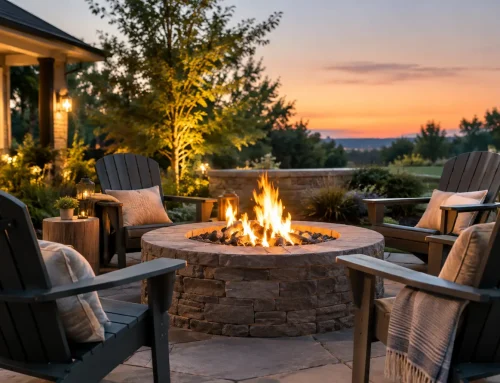
The most memorable outdoor rooms have a focal point. It might be the glow of a fire pit, the movement of a waterfall, an outdoor kitchen faced with stone, or a view toward a pool framed by palms and layered plantings. This anchor gives the eye somewhere to rest and gives the patio a purpose.
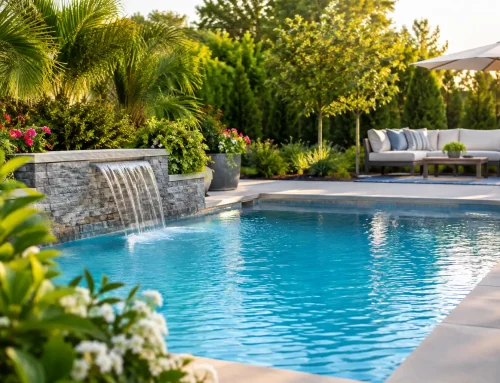
Water features are particularly powerful in a sanctuary-style backyard. The sound can soften nearby noise and make an open outdoor space feel more private. A pond, koi pond, fountain, or cascading rock waterfall also introduces movement and reflection, helping the patio feel alive even when no one is entertaining. These features require planning for access, equipment, maintenance, and scale, but when designed as part of the patio rather than added afterward, they create a more cohesive retreat.
Lighting carries that feeling into the evening. Soft path lighting improves visibility without overpowering the landscape. Gentle illumination on stone walls, palms, water, or architectural planting adds depth after sunset. Avoid treating lighting as a final accessory. Plan fixture locations before hardscape installation so wiring, sightlines, and nighttime mood are all considered from the beginning.
Leave Room for the Landscape
A patio feels more comfortable when it is softened by planting. Too much hard surface can make a backyard feel exposed and hot, especially in the Florida sun. Planting beds around the edges add color, texture, privacy, and a visual connection to the rest of the property.
The goal is not to surround every inch with dense growth. Leave enough openness for air circulation, access, and views. Use plants to screen an unwanted fence line, guide guests toward a seating area, or frame a favorite view without closing it off. Natural stone boulders, accent rock, and carefully placed palms can help blur the line between patio and garden.
Think about maintenance honestly. A lush landscape can be deeply calming, but the right plant palette should match the level of care you want to provide. If you love the presence of a pond or koi pond, plan for ongoing maintenance from the start so the feature remains clear, healthy, and enjoyable year after year.
Plan Utilities, Permits, and Phasing Early
Outdoor kitchens, fire features, pools, spas, landscape lighting, and water features all involve technical decisions beyond the visible design. Gas, electric, water, drainage, and equipment access should be coordinated before the patio is installed. Moving a line or cutting into finished stone later can add cost and compromise the design.
Depending on the scope of your project and local requirements, permits or approvals may be necessary. A qualified local design and installation team can help identify these needs and create a plan that accounts for them before construction begins. This is especially valuable when combining several elements, such as a pool renovation, kitchen, fire pit, lighting, and new patio in one backyard transformation.
If the full vision is larger than the current budget, phase it with intention. Start with the patio footprint and utilities for future features, then add the outdoor kitchen, water feature, or lighting in a later stage. Planning ahead preserves the finished look and helps avoid rebuilding work that was already done.
Make the Patio Feel Like Home
A well-planned patio should invite use without requiring a special occasion. Add comfortable seating, a place to set down a drink, and enough room for people to move naturally. Choose furnishings that suit the scale of the space. Oversized pieces can overwhelm a small patio, while furniture that is too sparse can make a generous entertaining area feel unfinished.
This is where professional design brings the whole backyard together. Uni-Scape approaches patios as part of an outdoor living environment, connecting natural stone, water, landscape, lighting, and gathering spaces into one restful experience. The goal is not to fill a yard with features. It is to create a place where those features support your life.
As you make decisions, return to the moment you pictured at the beginning: the first cool evening when the lights come on, water moves quietly nearby, and the people you love choose to stay outside a little longer. Let that feeling guide the plan.