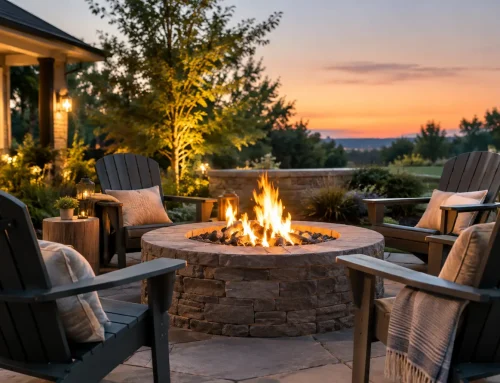


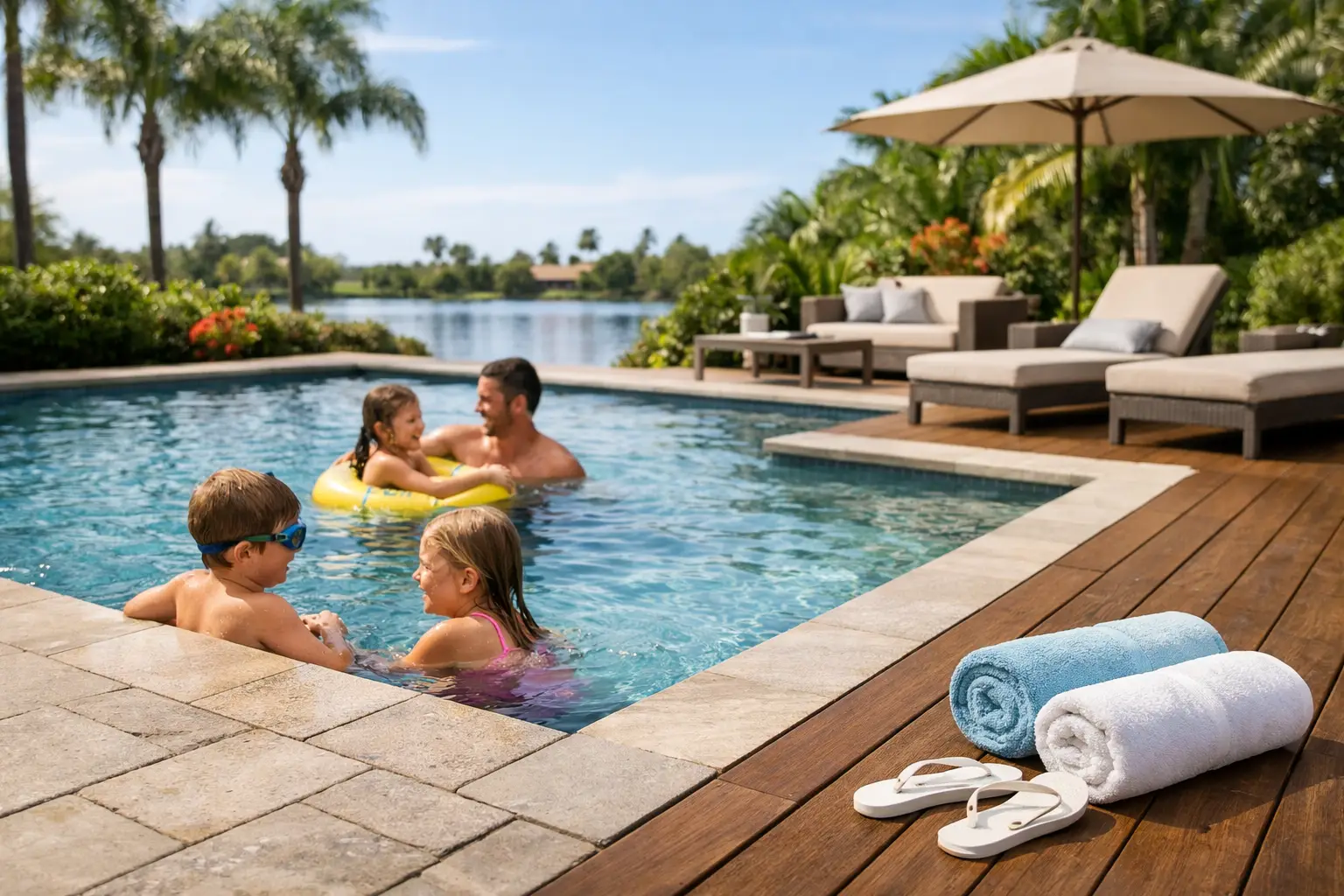
A pool deck sees real life up close: bare feet racing in from the water, dripping towels dropped near the door, grandparents settling into a shaded chair, and friends gathering long after the sun goes down. The best family friendly pool deck materials do more than frame a beautiful pool. They help your backyard feel safe, comfortable, and ready for the moments your family will remember.
In Southwest Florida, material selection matters even more. Sun exposure can make an inviting deck uncomfortably hot, afternoon rain can create slick surfaces, and constant humidity demands finishes that hold up gracefully. A beautiful pool environment should feel like a retreat, not a place where everyone has to watch every step.
What Makes a Pool Deck Family-Friendly?
There is no single perfect surface for every home. The right choice depends on your pool design, how much sun the area receives, whether young children or older adults use the space, and the style of your landscape. Still, the most successful family pool decks tend to share a few qualities: they stay reasonably cool underfoot, offer traction when wet, resist pool chemicals and weather, and are easy to keep clean.
Comfort is part of safety, too. A deck that radiates heat at midday limits when your family can enjoy it. A material with deep grooves may offer traction but can be difficult to sweep, uncomfortable for bare feet, or prone to collecting debris. The goal is a balanced surface that supports carefree use without sacrificing the calm, polished look of a custom outdoor retreat.
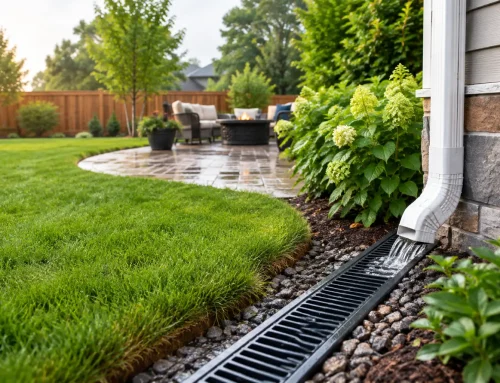
Drainage deserves attention from the beginning. Even an excellent decking material can become slippery if water has nowhere to go. A thoughtful design establishes gentle slopes away from the pool and home, incorporates drainage where needed, and considers how the deck meets planting beds, patios, and outdoor living areas.
Top Family Friendly Pool Deck Materials
Travertine pavers
Travertine is a natural stone that brings an easy, resort-like character to a pool setting. Its soft, earthy colors pair beautifully with water features, lush planting, and outdoor kitchens, making it a natural fit for homeowners who want the entire backyard to feel connected rather than pieced together.
For families, one of travertine’s strongest benefits is its ability to remain cooler than many denser surfaces in direct sun. Its naturally porous structure can also provide useful texture under wet feet. Individual pavers allow water to move through joints, which can support drainage when the base is designed correctly.
Travertine does require professional installation and occasional care. Some varieties are more porous than others, so sealing may be recommended to help protect against stains and simplify maintenance. It is a premium investment, but for a timeless deck with comfortable bare-foot appeal, it is often worth considering.
Textured concrete
Concrete remains a practical choice because it can be shaped around almost any pool, finished in a wide range of colors, and designed to complement adjacent patios or walkways. A broom finish, exposed aggregate, or other textured finish can improve grip compared with smooth concrete.
This option can work especially well for larger pool decks where budget and design flexibility both matter. Decorative concrete can create a clean, contemporary setting, while a warmer color palette helps the space feel more relaxed and inviting.
The trade-off is heat. Darker concrete and dense finishes may become quite hot in Florida sunshine. Cracking is also possible over time, particularly if the base, control joints, or drainage are not handled correctly. A lighter color, a comfortable texture, and a quality protective finish make a meaningful difference.
Concrete pavers
Concrete pavers offer a tailored look with dependable performance. Available in many shapes, sizes, and colors, they can suit everything from a modern geometric pool to a more traditional backyard with natural stone accents. Their jointed construction also makes future repairs simpler than repairing a large cracked concrete slab.
A textured paver surface can provide good traction, and lighter shades are generally more comfortable in the sun. Pavers are also an excellent option for creating visual zones: a broad pool surround, a distinct dining terrace, and a pathway leading toward a fire pit or spa can all feel connected without looking uniform.
Not all pavers feel the same under bare feet. Avoid highly rough finishes near the pool edge, where children may kneel, sit, or play. Joint material and edge restraint also matter. A properly prepared base keeps the deck stable and helps prevent shifting that can create uneven spots.
Natural stone with the right finish
Natural stone creates depth and character that manufactured materials often cannot duplicate. Flagstone, limestone, and certain granite products can become striking parts of a poolscape, particularly when blended with rock work, fountains, or a waterfall that makes the space feel tucked away from the outside world.
The specific stone and finish are more important than the category. Polished surfaces are not appropriate around a family pool. A honed, tumbled, or naturally cleft finish may offer better traction, but some stones retain heat more than others and some need more sealing to resist moisture, spills, and pool chemicals.
A designer can help select stone that reflects your preferred style while accounting for its performance in Florida conditions. Natural stone is not always the lowest-maintenance option, yet its warmth and one-of-a-kind variation can make a backyard feel deeply personal.
Porcelain pavers
Porcelain pavers are a refined option for homeowners who prefer a crisp, contemporary finish with low water absorption. Many outdoor-rated porcelain products offer textured, slip-resistant surfaces, and they are available in stone-look, wood-look, and concrete-look designs.
They resist staining and fading well, which is appealing in a pool area exposed to sunscreen, drinks, wet towels, and frequent cleaning. Their consistent color and sizing can also create a calm visual rhythm around the pool.
Porcelain can be warmer underfoot than travertine depending on color and exposure, so samples should be viewed in direct sun before a final decision. Installation is also highly technical. The substrate, drainage plan, grout or joint system, and pool coping details need to be handled with care to achieve the polished result the material promises.
Pool Coping Needs Its Own Decision
Coping is the material that caps the pool edge. It is where swimmers hold on, children sit before jumping in, and water transitions from pool to deck. Because it receives constant splashing, it should be comfortable to grip, easy on bare skin, and finished with a safe edge profile.
Matching coping to the deck creates a quiet, cohesive look, while a contrasting stone can give the pool a more defined architectural outline. Either approach can work. What matters most is choosing a coping surface that is not slick and ensuring the transition to the deck is level, secure, and carefully detailed.
Design Choices That Make Any Deck Safer
Material is only one layer of a family-focused pool area. A few design decisions can improve daily comfort across nearly every decking choice:
- Use lighter colors in the most sun-exposed areas to reduce heat buildup.
- Create clear walking paths between the home, pool, outdoor kitchen, and seating areas.
- Add shade with a covered structure, pergola, umbrellas, or thoughtfully placed trees.
- Plan lighting for steps, deck edges, pathways, and gathering spaces so evenings feel welcoming rather than dim.
- Keep planting beds and loose decorative gravel set back from the pool edge to reduce debris on wet walking surfaces.
These details also help the deck serve more than swimmers. When there is a comfortable dry lounge area, a shaded table, and a natural path toward the rest of the yard, parents can relax while children play and guests can gather without crowding the pool’s edge.
Choosing the Right Material for Your Backyard
Start by thinking about how your family uses the space on an ordinary Saturday. If the deck will host young children and frequent pool parties, cool surfaces, dependable traction, and easy cleanup may lead the decision. If the pool is part of a quieter sanctuary with a spa, waterfall, and evening entertaining area, the character of natural stone may be worth the additional care.
It also helps to see samples outdoors at the time of day your deck gets the strongest sun. Touch them with bare feet. Wet the surface if possible. Notice how the color works with your home’s exterior, pool water, landscape lighting, and the textures you want to bring into the yard.
At Uni-Scape, pool decks are considered as part of the complete outdoor experience, from the water’s edge to the patio, planting, lighting, and gathering spaces beyond it. The best result is not simply a safer surface. It is a backyard that lets your family slow down, spread out, and enjoy being together.
A well-chosen deck gives every splash, sunset meal, and quiet poolside pause a more comfortable place to happen.