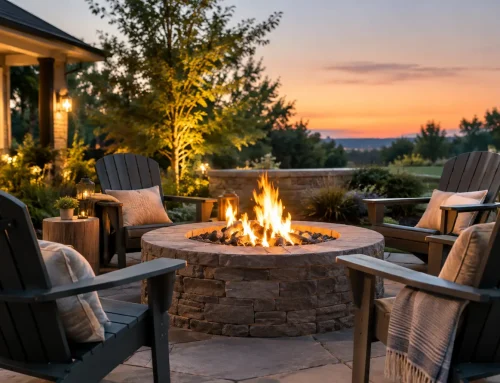


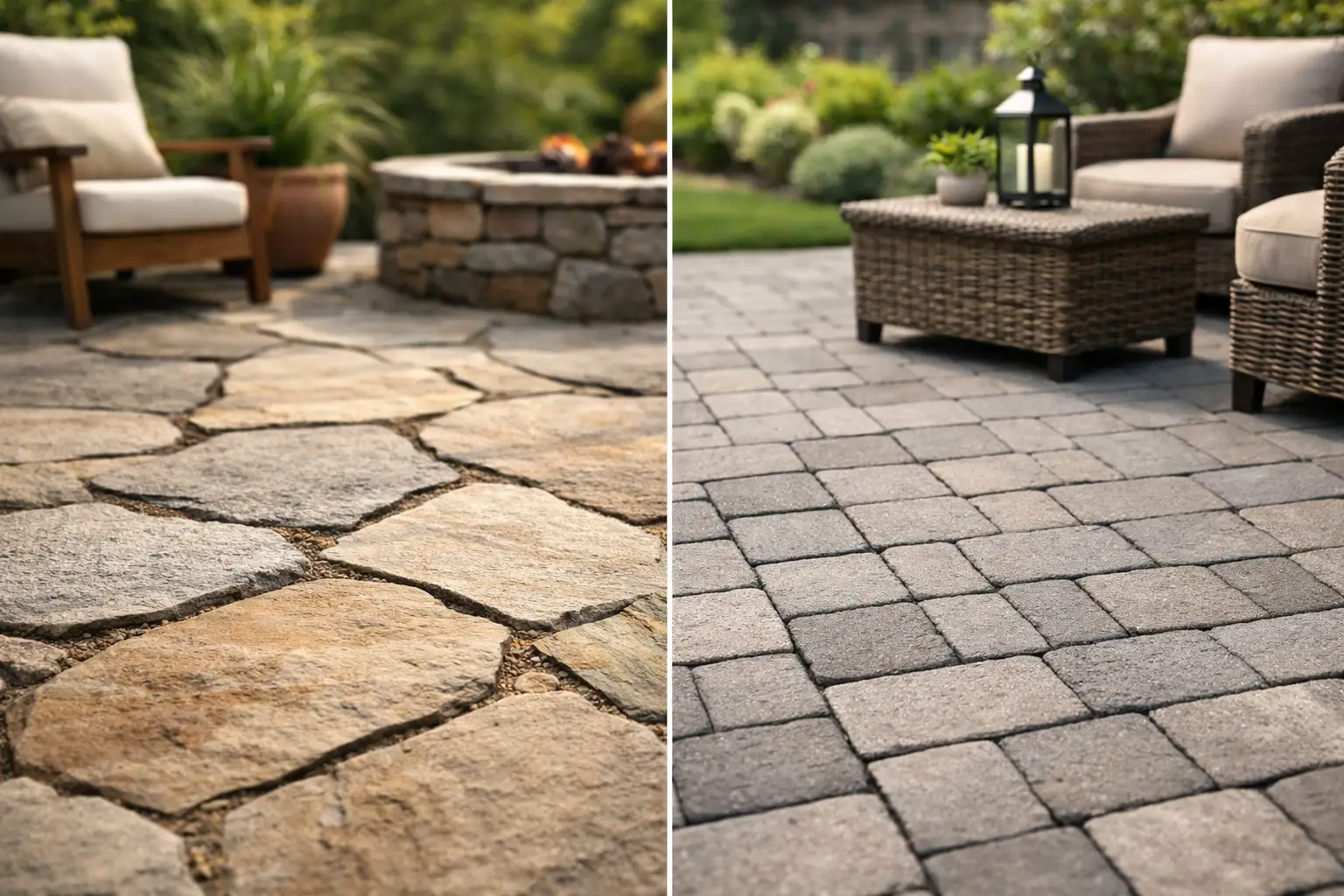
You can feel the difference underfoot before you ever think about price. A flagstone patio has that quiet, organic character that makes a backyard feel settled and serene, like it has always belonged there. Pavers feel more tailored and structured. When homeowners compare flagstone patio versus pavers, they are usually deciding between two very different moods as much as two different materials.
That choice matters because a patio is not just a surface. It shapes how your backyard feels when friends gather around a fire pit, when the kids come outside after dinner, or when you step out early with coffee and want the space to feel calm. The right patio material helps the whole environment feel more inviting, more cohesive, and easier to enjoy.
Flagstone patio versus pavers: the biggest difference
The simplest distinction is this: flagstone is natural stone, while pavers are manufactured units made in consistent shapes and sizes. That difference affects everything else, from appearance to installation to long-term maintenance.
Flagstone brings variation. Each piece has its own texture, shape, edge, and color movement. That natural irregularity is exactly why many homeowners love it. It can soften a backyard and pair beautifully with water features, garden beds, rock work, and other elements designed to feel relaxed and natural.
Pavers bring control. Because they are made to be uniform, they create cleaner lines and more predictable patterns. If your vision leans toward a polished entertaining space, an outdoor kitchen area, or a patio with a more architectural look, pavers often make that easier to achieve.
Neither is automatically better. The better choice depends on the atmosphere you want, how much customization the project calls for, and how the patio connects with the rest of your outdoor living design.
How each material changes the look of your backyard
If your goal is to create a sanctuary-style outdoor space, appearance usually drives the decision first. Flagstone tends to feel warm, timeless, and connected to nature. It works especially well in backyards that include lush planting, curved walkways, ponds, waterfalls, or a freeform pool. The result feels less like a hardscape installation and more like a retreat.
Pavers offer a wider range of colors, finishes, and laying patterns, but the overall effect is usually more structured. That can be a real advantage if the home itself has stronger lines or if you want the patio to echo the look of a driveway, pool deck, or outdoor kitchen. Pavers can still be beautiful and inviting. They just express that beauty in a more orderly way.
For many Florida homeowners, this comes down to whether they want the patio to look designed around nature or designed around geometry. Both can support a high-end backyard. They simply tell a different visual story.
When flagstone feels like the right fit
Flagstone often suits homeowners who want the patio to feel collected, custom, and one of a kind. Because no two stones are exactly alike, the finished surface has more character. It also complements signature features like boulders, fountains, naturalistic pools, and softly lit garden spaces.
That natural look is hard to fake. If the dream is a backyard that feels peaceful and a little removed from everyday routine, flagstone usually has an emotional advantage.
When pavers make more sense
Pavers tend to fit projects where consistency matters. If you want clear borders, a uniform pattern, easier material matching, or a large entertaining area with a crisp finish, pavers are often the more practical visual choice.
They can also work well when the backyard design needs to connect several built features into one cohesive layout. In that setting, their regularity can help the space feel intentional and organized.
Cost is not just about the material
Homeowners often ask which option is cheaper, but the answer depends on more than the surface itself. Material cost, labor, site prep, edge detailing, drainage, pattern complexity, and the overall design all play a role.
In many cases, pavers are more budget-predictable. Their uniform size and installation methods can make planning simpler, especially for standard layouts. Flagstone can cost more, particularly when using premium stone and more custom fitting during installation. Since each piece may need to be selected and placed more carefully, labor can rise with the artistry involved.
That said, focusing only on upfront cost can be shortsighted. A patio becomes part of how you live at home. If one material gives you the exact look and feeling you want, the better value may come from daily enjoyment rather than the lower initial number.
Comfort, heat, and everyday use
A patio should look beautiful, but it also needs to feel good in real life. That includes how it handles heat, texture, furniture, foot traffic, and weather.
In warm climates like Southwest Florida, surface temperature matters. Some pavers can hold significant heat in direct sun, though this varies by color and material. Certain natural stones can stay more comfortable underfoot, but not all flagstone performs the same way. Lighter colors generally help either material remain cooler.
Texture matters too. Flagstone often has a naturally varied surface, which many people find visually appealing and pleasantly organic. But depending on the stone and finish, it may be less even for furniture or bare feet than a smooth paver installation. Pavers typically provide a flatter, more uniform walking and seating surface, which can be useful around dining areas, grills, and gathering spaces.
If the patio will anchor family meals, lounge seating, and frequent entertaining, comfort should carry as much weight as appearance.
Maintenance and long-term durability
Both flagstone and pavers can last for many years when installed well, but they age differently.
Flagstone has a natural beauty that many homeowners consider worth a little extra attention. Depending on the type of stone and the installation method, it may need periodic sealing, joint maintenance, or occasional resetting if movement occurs. Natural stone can also show weathering in ways that some people love and others see as wear.
Pavers are often chosen for their practical durability. If one unit becomes stained or damaged, it can usually be replaced without rebuilding the entire patio. That modular advantage appeals to homeowners who want a resilient, lower-hassle surface. Weed growth between joints and shifting can still happen over time, especially if installation or drainage is poor, so pavers are not maintenance-free.
The real lesson is that installation quality matters just as much as the material. A beautiful patio that is not designed for proper base preparation, grading, and drainage will not perform the way it should.
Flagstone patio versus pavers for Florida homes
Florida backyards ask a lot from hardscape materials. Intense sun, heavy rains, humidity, and the way outdoor spaces are used nearly year-round all influence the right choice.
Flagstone can be a strong option when the overall landscape leans natural and the patio is part of a larger retreat-style setting with planting, rock features, or water elements. It can create a softer, more custom feel that suits a backyard built for unwinding.
Pavers are often a smart fit when homeowners want durability, design flexibility, and easier repairs over time. They also make sense for spaces that need to integrate with driveways, pool decks, and broad entertaining areas.
For many homes in Cape Coral and Fort Myers, the deciding factor is not weather alone. It is whether the patio needs to feel like a natural extension of the landscape or a more refined outdoor room.
The best choice depends on the whole design
This is where many patio decisions go wrong. Homeowners compare materials in isolation instead of asking how the patio will support the full backyard experience.
A flagstone patio can be stunning, but it shines most when it belongs to a larger natural composition. A paver patio can be elegant and welcoming, but it often performs best when the design calls for structure and visual consistency. The material should support the lifestyle you want, whether that means quiet evenings near a fountain, weekend cookouts with family, or a poolside space that always feels ready for company.
At Uni-Scape, that is often the turning point in the conversation. The patio itself matters, but what matters more is how it helps create a backyard that feels restorative, beautiful, and easy to enjoy.
If you are torn between flagstone and pavers, stop picturing samples and start picturing the life around them. The right surface is the one that makes your backyard feel like the place you actually want to be.