

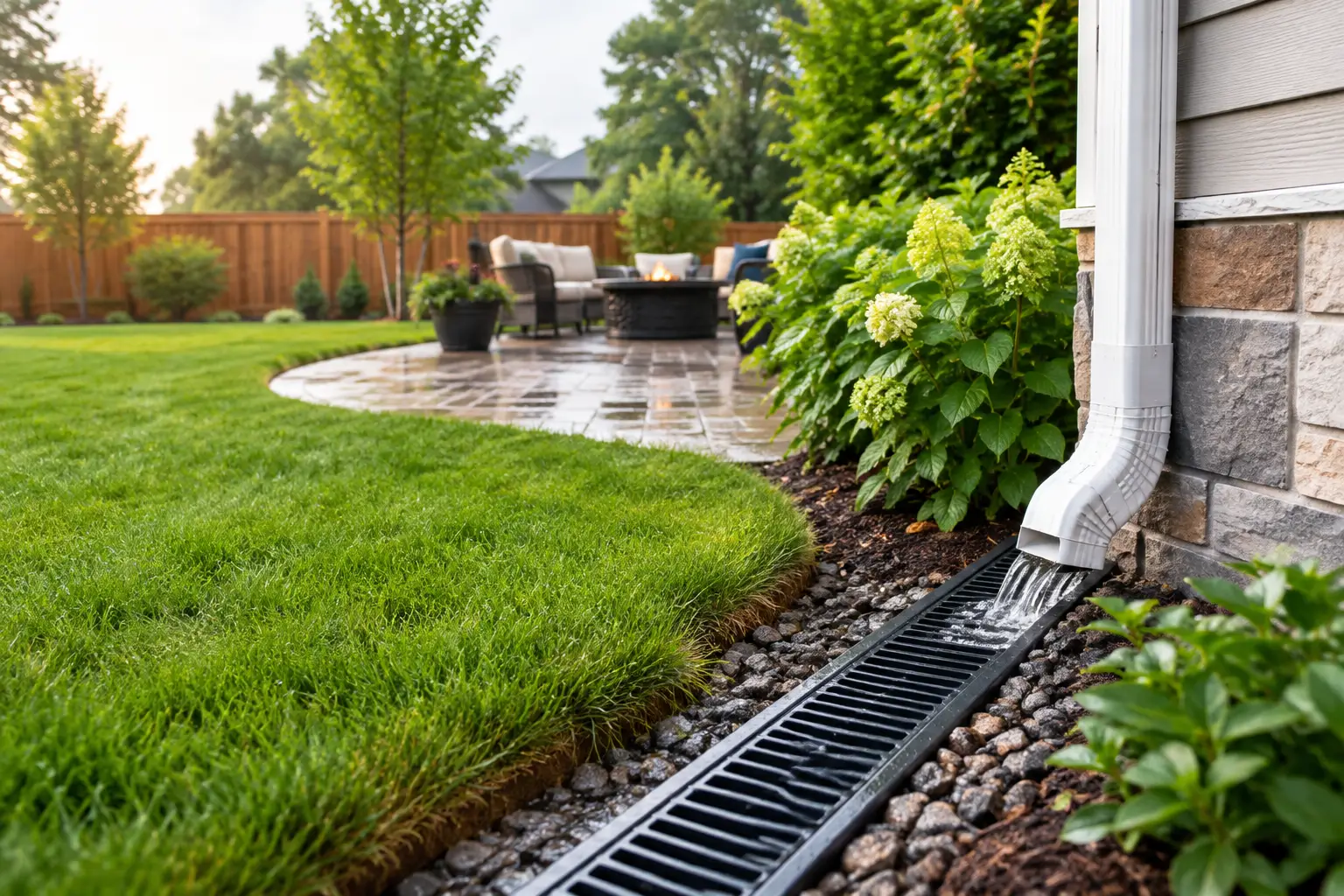
A beautiful backyard should invite you outside after a summer rain, not leave you stepping around puddles or watching water creep toward the patio. Thoughtful backyard drainage is one of the quietest parts of a successful outdoor transformation, yet it protects nearly everything you see and enjoy: natural stone, planting beds, pool decking, outdoor kitchens, lawn areas, and the comfort of the people gathered there.
In Southwest Florida, where intense rain can arrive fast and the ground may already be saturated, drainage cannot be treated as an afterthought. It needs to be part of the design from the first conversation. When water has a clear, intentional path, your backyard can feel like the peaceful retreat it was meant to be – even during the wettest months.
Why backyard drainage belongs in the design
Water always moves somewhere. The question is whether it moves safely away from your home and gathering spaces or collects where it can cause frustration, erosion, and costly damage. A low spot in the lawn may seem minor at first, but repeated standing water can weaken turf, drown roots, invite mosquitoes, and turn a favorite path into a muddy shortcut nobody wants to use.
Hardscape adds another layer to the equation. Flagstone patios, pool surrounds, walkways, and outdoor kitchen pads need carefully planned grades so rainwater drains away without rushing across the surface. The goal is not simply to get rid of water quickly. It is to manage it gracefully, protecting the home while preserving the comfort and visual calm of the landscape.
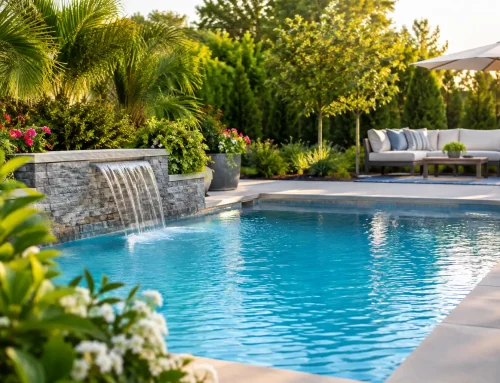
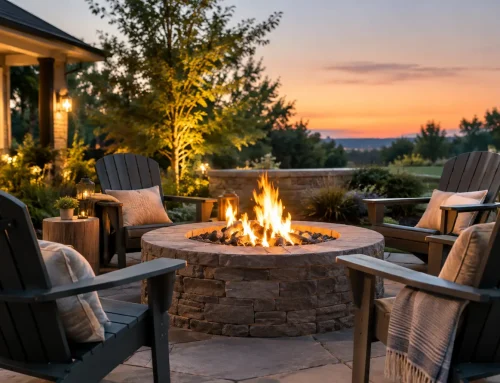
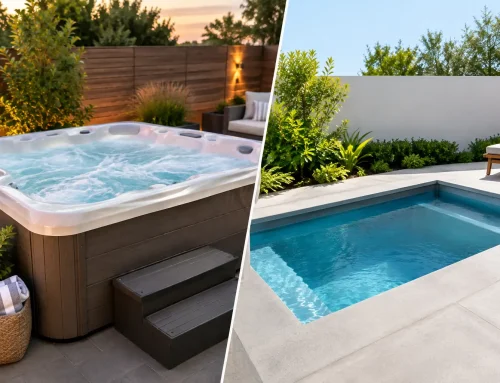
This is especially important when a backyard includes several features. A pool, spa, waterfall, fire pit, and patio can create a true stay-at-home escape, but each element affects how water travels across the property. The most natural-looking finished spaces are often the ones where drainage planning has been integrated so well that it is barely noticed.
Signs your yard needs drainage attention
Some drainage concerns are obvious after one heavy storm. Others reveal themselves slowly through changing plant health, settling pavers, or an area of lawn that never quite dries. Watch for water that remains for more than a day after rain, soil washing out of beds, mulch floating into walkways, or puddles forming beside the foundation.
You may also notice algae or slippery areas on stone, cracked edging, exposed roots, and mosquitoes gathering near a persistently wet section of the yard. Downspouts that empty directly beside patios or planting beds can create problems too, particularly when a large roof sends a concentrated volume of water into one small area.
Not every puddle calls for a major construction project. A brief collection of water in a low lawn area may be acceptable if it drains naturally and sits well away from structures. But water near the home, beneath hardscape, around equipment, or in the center of the spaces where your family relaxes deserves a closer look.
Start with water’s natural path
The right solution begins with observation, not a one-size-fits-all product. A landscape professional should study the property’s existing elevations, roof runoff, soil conditions, nearby swales, hardscape surfaces, and the locations of utilities and structures. It also helps to understand what happens during a true downpour, rather than judging the yard only on a sunny afternoon.
The desired grade depends on the property, but the central principle is consistent: water should move away from the house and toward an approved drainage area. On a Florida property, that may mean working with existing swales, carefully reshaping portions of the yard, or directing runoff to a suitable collection and discharge point. Local requirements, lot conditions, and neighboring properties all matter.
Good grading is subtle. It should never make a patio feel tilted or leave a lawn looking artificially sculpted. Instead, it creates gentle movement in the land, guiding water while supporting a landscape that feels relaxed, balanced, and natural.
Backyard drainage solutions that work together
A single drain is not always the answer. The best backyard drainage plan often combines several elements, each placed where it makes the most sense. Grading may handle broad surface flow, while a channel drain protects the edge of a patio. Downspout extensions can reduce concentrated runoff, and a buried drain line may carry water beyond a planting area that would otherwise become saturated.
French drains can be useful where water is collecting below the surface, especially in certain lawn or bed conditions. They are designed to collect water through gravel and perforated pipe, then move it toward an appropriate outlet. They are not ideal for every yard, however. If the soil, outlet elevation, or installation depth is wrong, a French drain can become an expensive feature that does little to solve the problem.
Channel drains are often a smart choice at transitions between hardscape and other areas. Installed correctly, they can capture sheet flow before it crosses a patio, enters a pool deck area, or settles near an outdoor kitchen. Their placement and finish matter. In a high-end space, drainage components should support the design rather than interrupt it.
Swales and shallow landscape contours can guide water across larger areas without making the yard feel overly engineered. In some settings, a carefully designed dry creek bed can also add a beautiful natural-stone detail while giving stormwater a defined route. This approach works best when it is genuinely needed and properly graded, not added merely as decoration.
Drainage and water features need different thinking
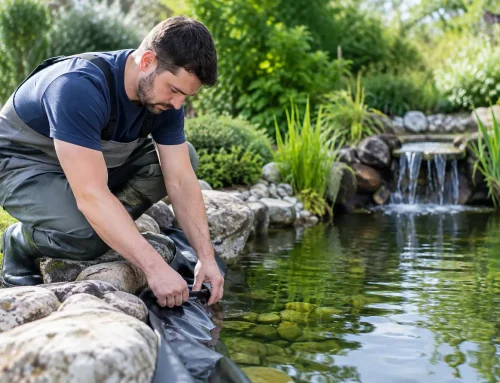
A pond, waterfall, or fountain brings the soothing sound and movement of water into a backyard by design. Stormwater is different. It should not be allowed to wash soil, fertilizer, mulch, or debris directly into a pond or stream feature.
A well-planned landscape separates these systems where appropriate. The water feature should have stable edges, thoughtful surrounding grades, and planting that helps hold soil in place. Runoff from patios, roofs, and lawns should be directed so it does not overwhelm the feature during heavy rain or compromise water quality.
This distinction protects the experience as much as the installation. A koi pond should feel like a place to pause and listen, not a basin collecting everything that flows through the yard. Proper drainage lets each water element do its intended job.
Protecting patios, pools, and outdoor kitchens
Premium outdoor materials deserve careful water management. Water that moves beneath pavers or stone can contribute to settling over time. Water that repeatedly splashes against cabinetry, appliances, or a fire feature can shorten the life of finishes and create avoidable maintenance concerns.
Patio drainage is about more than avoiding puddles underfoot. It supports the longevity of the base beneath the surface, helps preserve clean edges between beds and hardscape, and makes the space more enjoyable after a storm. Around pools and spas, drainage should also be planned with safety in mind, helping reduce standing water on walking surfaces.
There is a design trade-off worth discussing early. Larger patios, expansive decks, and broad rooflines create more hard surfaces, which means more runoff to manage. That does not mean you need to limit the outdoor living space you want. It means the drainage plan should grow with the vision, rather than being squeezed in after construction begins.
Planting with drainage in mind
The plants that make a backyard feel lush also respond to moisture levels. Some thrive in consistently damp conditions, while others need fast-draining soil and can struggle when roots remain wet. Placing the right plants in the right part of the property makes the landscape more resilient and reduces replacement costs later.
Mulch, rock, and edging should be selected and installed with stormwater in mind as well. Too much loose material on a slope can travel during heavy rain. A stone accent can help stabilize an area, but it needs a proper base and edge restraint to stay attractive. These details are where drainage and landscape craftsmanship meet.
Build the retreat from the ground up
The best time to address drainage is before the first stone is set, not after a finished patio starts holding water. A complete site plan gives every feature a role: where guests gather, where the light falls in the evening, where plants soften the view, and where rainwater goes when the sky opens.
For homeowners in Cape Coral, Fort Myers, and nearby coastal communities, that level of planning can make the difference between a backyard that looks impressive on installation day and one that continues to feel welcoming through every season. Uni-Scape approaches outdoor environments as connected experiences, where practical site work supports the beauty, relaxation, and family time the space is designed to hold.
Your backyard should be ready for quiet mornings, lively dinners, and the calming sound of water after the rain has passed. Give the rain a thoughtful path, and the rest of the retreat has room to shine.