

A patio can look beautiful at noon and still feel unfinished when the sun goes down. The right lighting changes that. It softens the edges of a stone walkway, makes dinner feel more intimate, brings the movement of water into view, and gives family and guests a reason to stay outside a little longer. Learning how to choose patio lighting starts with a simple question: how do you want your backyard to feel after dark?
For a sanctuary-style outdoor space, lighting should do more than brighten the yard. It should create layers of comfort, guide people safely through the landscape, and reveal the details that make the space personal. A warm glow across a flagstone patio feels very different from a row of harsh fixtures aimed in every direction.
Start With the Evenings You Want to Create
Before choosing fixtures, picture a typical night at home. Maybe it is a quiet evening near the pool, with the sound of a waterfall in the background. Maybe it is a relaxed dinner around the outdoor kitchen or a lively gathering around the fire pit. Your patio lighting plan should support those moments rather than treating every part of the yard the same way.
A dining area needs enough light to comfortably see food, faces, and place settings. A lounging area benefits from lower, gentler illumination that encourages conversation and rest. Steps, grade changes, and walkways need clear light for safe movement. Meanwhile, a pond, fountain, specimen palm, or natural stone wall may only need a subtle accent to become striking after sunset.
This is why one bright floodlight rarely creates the feeling homeowners want. It solves visibility, but it can flatten the landscape and erase the sense of escape. A layered plan gives each part of the patio its own role.
How to Choose Patio Lighting in Layers
The most inviting patio lighting uses a mix of ambient, task, and accent lighting. Think of these as the foundation, function, and finishing touch of your evening landscape.
Ambient lighting sets the mood
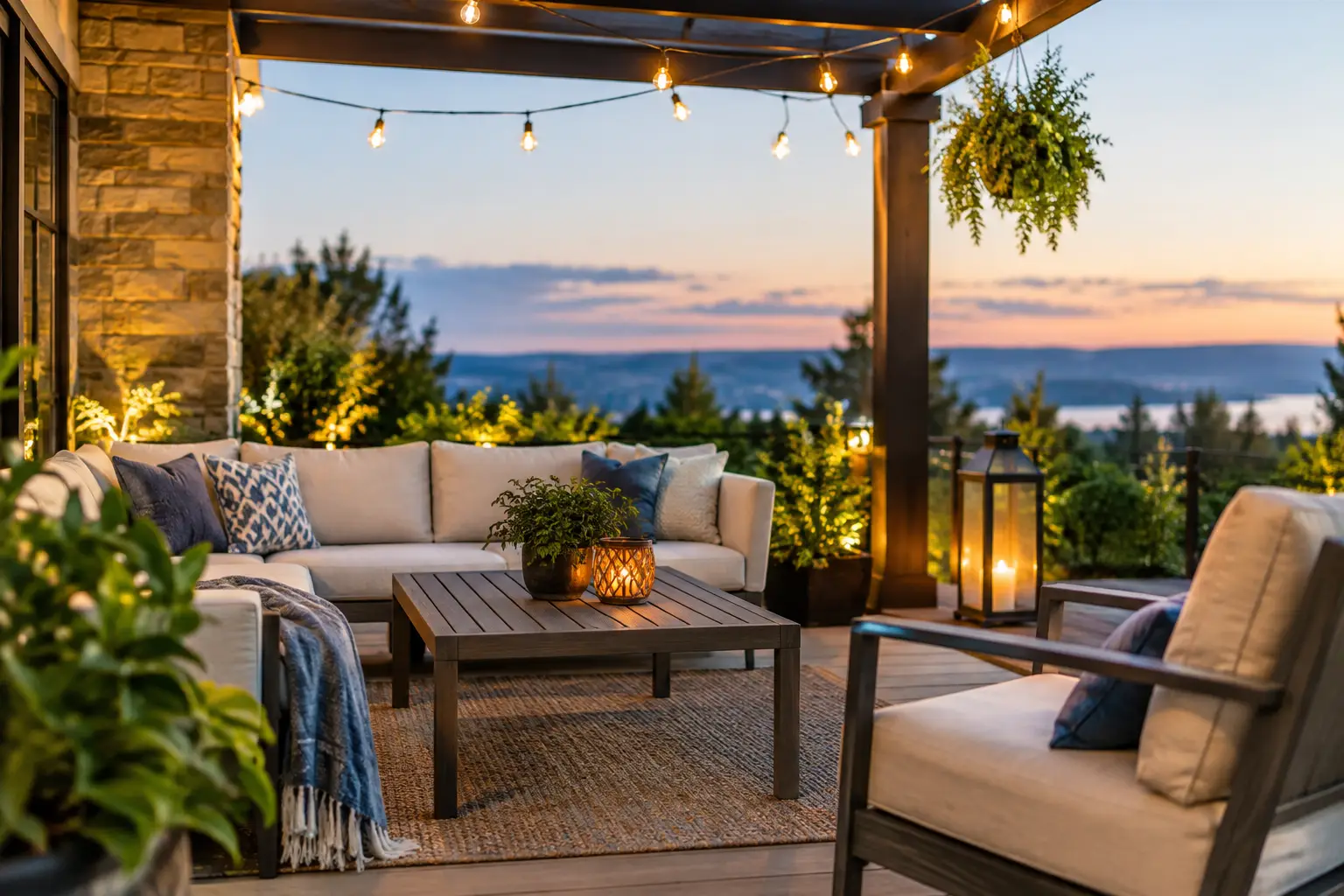
Ambient lighting provides the overall glow that makes the patio usable after dark. It may come from sconces on a covered lanai, recessed lights in a patio ceiling, discreet downlights in nearby trees, or carefully placed fixtures around the edge of the outdoor living area.
The goal is not to make the patio feel like an indoor room with a ceiling full of lights. Instead, ambient lighting should make guests feel comfortable finding their seats, moving around the space, and settling in. Warm white light is usually the better choice for residential patios because it feels relaxed and flattering against natural stone, wood, landscaping, and water.
For Florida homeowners, covered patios often become an extension of the home through much of the year. Dimmable ambient lighting is especially valuable there. You can turn it up for a family meal and lower it when the evening shifts to conversation by the fire.
Task lighting makes the space work
Task lighting belongs where people are cooking, serving, entering, or navigating. An outdoor kitchen, grill station, bar counter, stairway, and gate are all places where purposeful light matters.
Under-counter lighting can give an outdoor kitchen a polished, welcoming look while helping the cook see clearly. Small step lights or low, shielded fixtures can make elevation changes easier to navigate without casting glare into the seating area. If your patio connects to a pool, spa, or dock-like water feature, clear pathway lighting is not just attractive. It supports safer movement when feet are wet and the evening is winding down.
Task lighting does not need to be visually heavy. In a well-planned design, the fixtures stay quiet while the light lands exactly where it is needed.
Accent lighting creates the magic
Accent lighting is where a backyard begins to feel like a retreat. It draws attention to texture, movement, and focal points: the face of a boulder, the silhouette of a palm, the curve of a planting bed, or the shimmer of a waterfall.
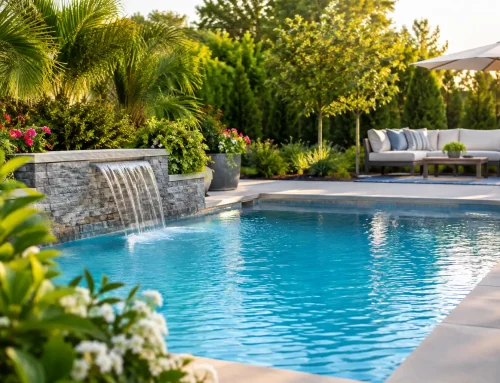
Water features are especially compelling after dark. Underwater lights can reveal the movement of a pond or fountain, while carefully aimed exterior fixtures bring out the shape of rock work and surrounding plants. The effect should feel natural, not theatrical. A few thoughtfully placed lights often do more than many fixtures competing for attention.
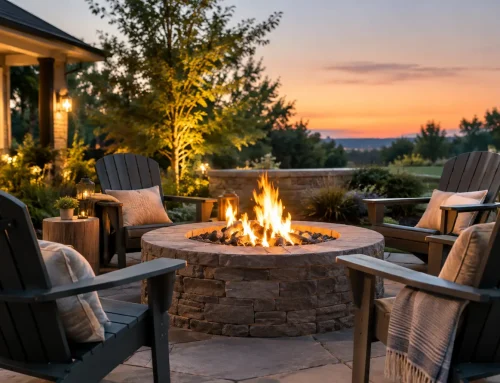
If your patio has a fire pit, let the fire remain the star. Nearby lighting should be low and indirect so it supports the gathering space without overpowering the warmth of the flame.
Choose Warmth and Brightness With Restraint
Color temperature has a major effect on how a patio feels. For most outdoor living spaces, warm white lighting in the 2700K to 3000K range creates a calm, welcoming atmosphere. It complements travertine, flagstone, wood tones, lush greenery, and the soft colors of a Florida evening.
Cooler, blue-white light can make some contemporary designs feel crisp, but it often feels more commercial on a residential patio. It can also make a peaceful water feature or garden bed look less inviting. If you prefer a clean, modern style, use cooler tones selectively rather than washing the entire backyard in them.
Brightness matters just as much. More lumens do not automatically mean better lighting. Excessive brightness creates glare, deep shadows beyond the lit area, and an uncomfortable contrast between patio and garden. It may also spill into neighboring properties. The best lighting lets your eyes adjust gradually as you move through the yard.
Respect the View From Inside the Home
Patio lighting should be designed from the house outward, not only from the patio looking back. After all, many homeowners enjoy their landscape first through windows and sliding doors. A softly lit pathway, illuminated palm, or glowing waterfall can make the view from the living room feel like a living piece of art.
Avoid placing fixtures where the light source shines directly into indoor spaces. Shielded fixtures, downlighting, and careful aiming help keep the view comfortable. This also protects the sense of privacy that makes a backyard sanctuary feel truly separate from the day.
Consider sightlines from the kitchen, primary bedroom, and main gathering rooms. A focal point that looks beautiful from a favorite indoor seat can add enjoyment every night, even when no one steps outside.
Select Fixtures Built for Outdoor Conditions
A patio lighting system needs to stand up to heat, humidity, rain, irrigation, and coastal air. In Cape Coral, Fort Myers, and nearby waterfront communities, salt exposure can be especially tough on lower-quality materials. Fixtures that look good on installation day may corrode or fade quickly if they are not suited to the environment.
Choose durable, wet-rated fixtures designed for outdoor use. Brass and certain high-quality composite materials are often favored for landscape lighting because they age well and handle the elements better than thin, painted metal. The fixture finish should complement your home and patio, but long-term performance deserves equal weight.
LED lighting is a practical choice for most patios. It uses less energy, runs cooler, and requires fewer bulb changes than older lighting options. Quality LEDs also provide consistent warm light, which makes them well suited to spaces designed for relaxation and entertaining.
Add Control Without Making It Complicated
Your lighting should be easy to enjoy. Timers, photocells, dimmers, and smart controls can turn lights on when evening arrives, shift them off at a chosen hour, or let you create different scenes for dinner, entertaining, and quiet nights outside.
The right level of control depends on how you use the patio. A simple automated schedule may be perfect for pathway and landscape lights. A more detailed control system can be worthwhile for a larger outdoor kitchen, pool area, or multi-zone backyard where you want the ability to adjust distinct spaces separately.
Keep the experience intuitive. If a lighting system requires too much effort to operate, it is less likely to become part of everyday life.
Plan Lighting With the Whole Landscape in Mind
Patio lighting works best when it is considered alongside the full outdoor design. A fixture location that seems sensible before installation may change once a pergola, planting bed, pool, fire feature, or new walkway is added. Planning early helps conceal wiring, protect clean lines, and make every element feel intentional.
It also prevents a common mistake: lighting only the patio surface and leaving the surrounding landscape as a dark border. A gentle transition into gardens, water features, and pathways makes the property feel larger, more connected, and more peaceful at night.
A well-lit patio should never announce itself with glare. It should invite you outside, make people feel at ease, and let the best parts of your backyard emerge slowly as the sky grows dark. When your space is designed as one complete experience, Uni-Scape can help turn those ordinary evenings at home into the ones everyone remembers.