

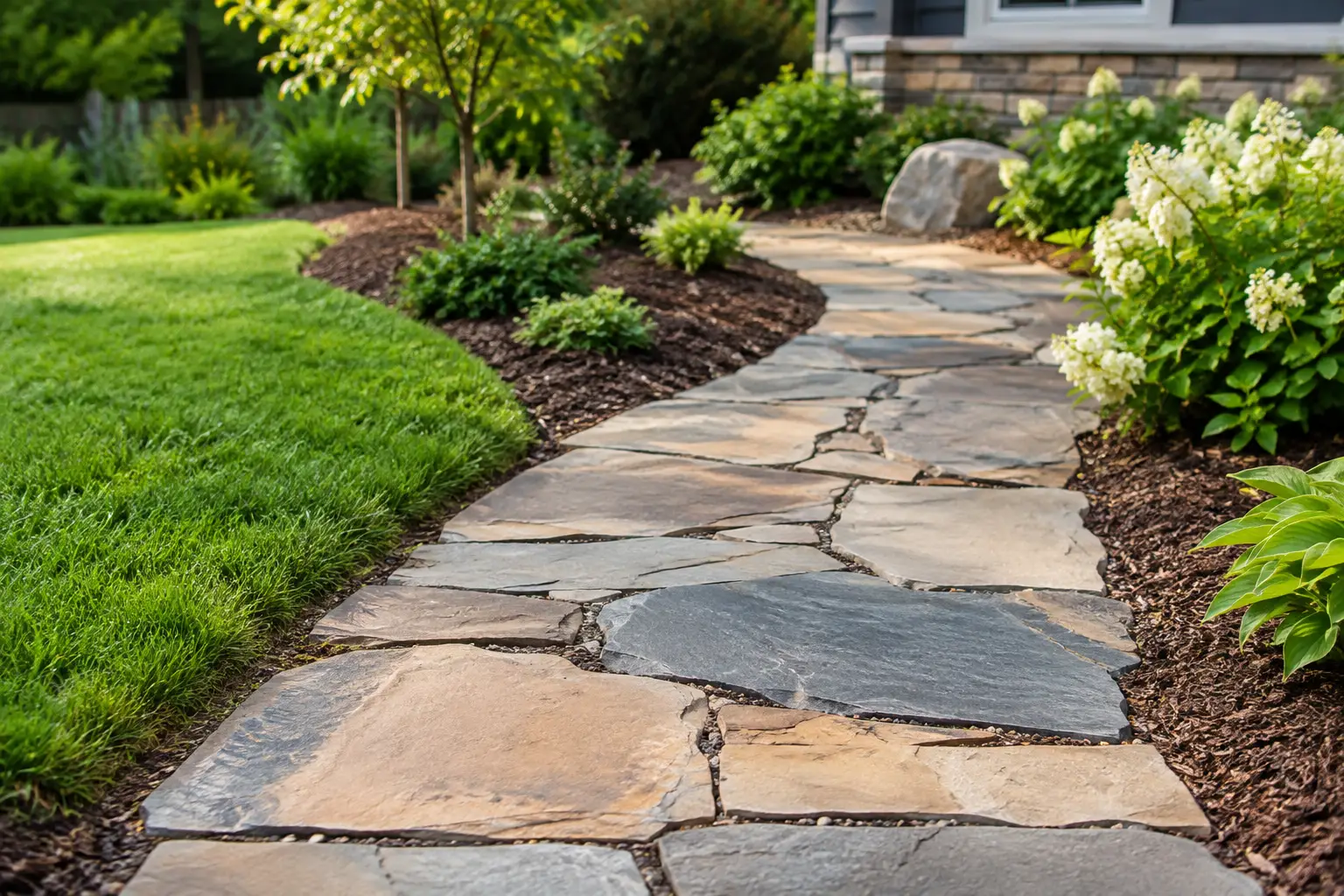
A flagstone path changes the way a backyard feels before anyone reaches the patio, pond, pool, or fire feature. It gives bare lawn a sense of invitation and helps every outdoor element feel intentionally connected. This flagstone walkway installation guide explains the decisions beneath a beautiful finished path – because lasting natural stone work begins with thoughtful planning, not simply placing stones on the ground.
Begin With the Experience, Not the Stone
A walkway should lead people somewhere worth slowing down for. That might be a quiet bench beside a waterfall, an outdoor kitchen where the family gathers after sunset, or a poolside lounge area designed for unhurried weekends. Consider the view at the beginning, middle, and end of the route. A gentle curve can reveal a garden, a water feature, or a warm fire pit gradually, while a straight path feels more formal and direct.
Width matters as much as shape. A three-foot path works for one person moving comfortably through a side yard. For a route connecting a back door to a patio, pool, or entertaining area, four feet or more provides a more welcoming passage for guests walking side by side. If the walkway will carry a wheelbarrow, service equipment, or frequent foot traffic, build that practical need into the design from the start.
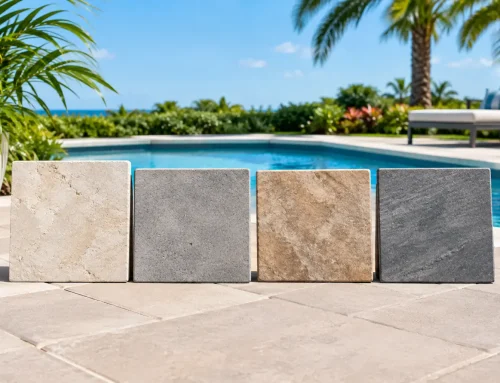
Natural flagstone has an easy, organic character, but it should still relate to the home and surrounding hardscape. Warm buff, tan, and gold tones can soften a tropical Florida planting scheme. Cooler grays can create a more contemporary contrast around clean-lined pools and architectural fountains. The goal is not to make every stone identical. It is to create a path that feels composed rather than random.
Flagstone Walkway Installation Guide: Plan the Foundation
The most attractive flagstone cannot compensate for a poorly prepared base. Before excavation begins, the route should account for utilities, mature tree roots, irrigation lines, downspout outlets, and existing drainage patterns. A path that crosses low ground without a plan may hold water, settle unevenly, and become slippery after a summer storm.
A walkway also needs a gentle slope that directs water away from the home and prevents it from standing on the stone. The correct slope depends on the property, nearby structures, and how the walkway meets patios or driveways. On Southwest Florida properties, where intense rain can arrive quickly, drainage is part of the installation rather than an afterthought. In some yards, the answer is subtle grading. In others, a drain, swale, or carefully placed planting bed helps move water naturally.
Excavation depth depends on the stone thickness, the base material, soil conditions, and the intended use of the path. A pedestrian walkway generally requires less structural buildup than a driveway, but it still needs a compacted, stable base. The excavation should be consistent, with room for the base, bedding layer, and flagstone while allowing the final surface to sit at the desired elevation.
Landscape fabric may be appropriate beneath the base in certain soil conditions, helping separate the aggregate from the native ground. It is not a cure for poor drainage or weak preparation, however. The real work happens in properly graded, compacted layers that resist movement over time.
Build a Base That Holds Its Shape
After excavation, installers add crushed aggregate in manageable lifts and compact each lift before adding the next. This creates a firm, draining foundation that supports the irregular stone above it. Skipping compaction may save time for a day, but it often shows up later as rocking stones, low spots, and open joints.
The bedding layer is then screeded to create a level, workable surface for setting each piece. Depending on the project, this may be compactable stone dust, sand, or a mortar setting bed. A dry-laid flagstone path, built with aggregate and a granular bedding layer, has a relaxed appearance and allows water to move through the joints. It also makes future adjustments more manageable if a stone needs to be reset.
A mortared walkway offers a more finished, locked-in surface and can suit formal patios, pool areas, and paths that need a tighter joint pattern. It requires greater precision, correct substrate preparation, and movement considerations. Mortar is not automatically better. In a landscape with active roots, shifting soil, or drainage concerns, a well-built dry-laid installation may be the more forgiving choice.
Set the Stone With Comfort Underfoot
Flagstone arrives in varying shapes, textures, and thicknesses. Setting it well is part puzzle, part craftsmanship. Larger, more stable pieces usually belong along the main walking line, while smaller stones can help shape gentle curves or finish the edges. Avoid placing narrow points where they can break under weight or create awkward trip points.
Each piece should be set firmly, checked for level relative to adjacent stones, and adjusted until it does not rock. “Level” does not always mean perfectly flat. The finished walkway should follow its intended drainage slope while offering a steady, comfortable surface. A slight natural variation in flagstone is beautiful. A sudden heel-catching edge is not.
Joint width is a design choice with practical consequences. Wider joints create a looser, garden-forward look and can be filled with gravel, polymeric material, low-growing plants, or groundcover suited to the amount of sun and foot traffic. Tighter joints feel more refined and are easier to sweep, but they require more careful fitting. Around pools or water features, select finishes and joint materials with wet conditions in mind.
Edge restraint is especially valuable on dry-laid paths. Without it, surrounding soil, mulch, and seasonal movement can gradually push the stones outward. Stone edging, concealed restraints, or adjacent planting beds can help preserve the walkway’s intended line while keeping the transition into the landscape graceful.
Finish the Walkway as Part of the Whole Backyard
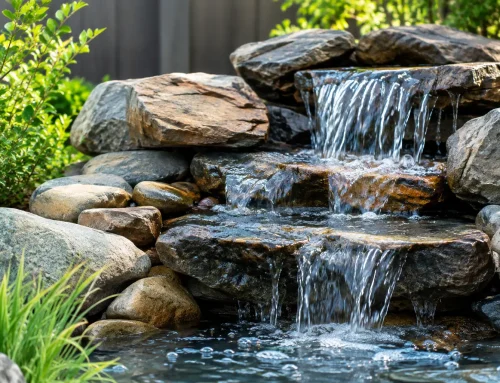
The pathway should not look like a separate project laid across the yard. Repeat a stone color from a patio wall, use boulders to transition into a waterfall, or allow planting to soften the path’s edge. Fragrant plants near an entry route, ornamental grasses catching evening light, and layered foliage beside a curve can make a simple walk through the yard feel restorative.
Lighting adds both safety and atmosphere. Low path lights can define the route without flooding the yard with glare. Soft uplighting on nearby palms, specimen trees, or rock work gives the path a sense of depth after dark. The best lighting lets guests see where they are going while preserving the calm of the evening.
Plan maintenance realistically. Dry-laid joints may need occasional topping off, especially after heavy rainfall. Leaves, mulch, and soil should be swept from the stone to discourage staining and keep drainage paths open. For a mortared installation, inspect joints periodically for cracking or separation. Gentle cleaning usually protects natural stone better than harsh chemicals, which can alter its color or finish.
When Professional Installation Makes the Difference
A small garden path can be a satisfying hands-on project for an experienced homeowner. But a flagstone walkway tied into a pool deck, grade change, drainage system, outdoor kitchen, or water feature benefits from an integrated design and installation plan. Those details determine whether the path settles beautifully into the landscape or becomes a recurring repair.
For homeowners in Cape Coral, Fort Myers, and nearby Southwest Florida communities, a professional team can evaluate stormwater, soil, elevation, and the relationship between the walkway and the rest of the outdoor environment. Uni-Scape designs natural stone paths as part of a complete sanctuary – connecting the places where families gather, relax, and make memories outside.
A well-built flagstone walkway should feel settled from the moment it is finished, as though it has always belonged in the garden. Choose the route with care, build the base with patience, and let the stone lead people toward the moments they came outside to enjoy.