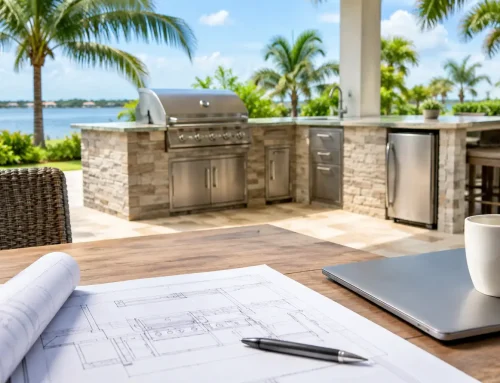


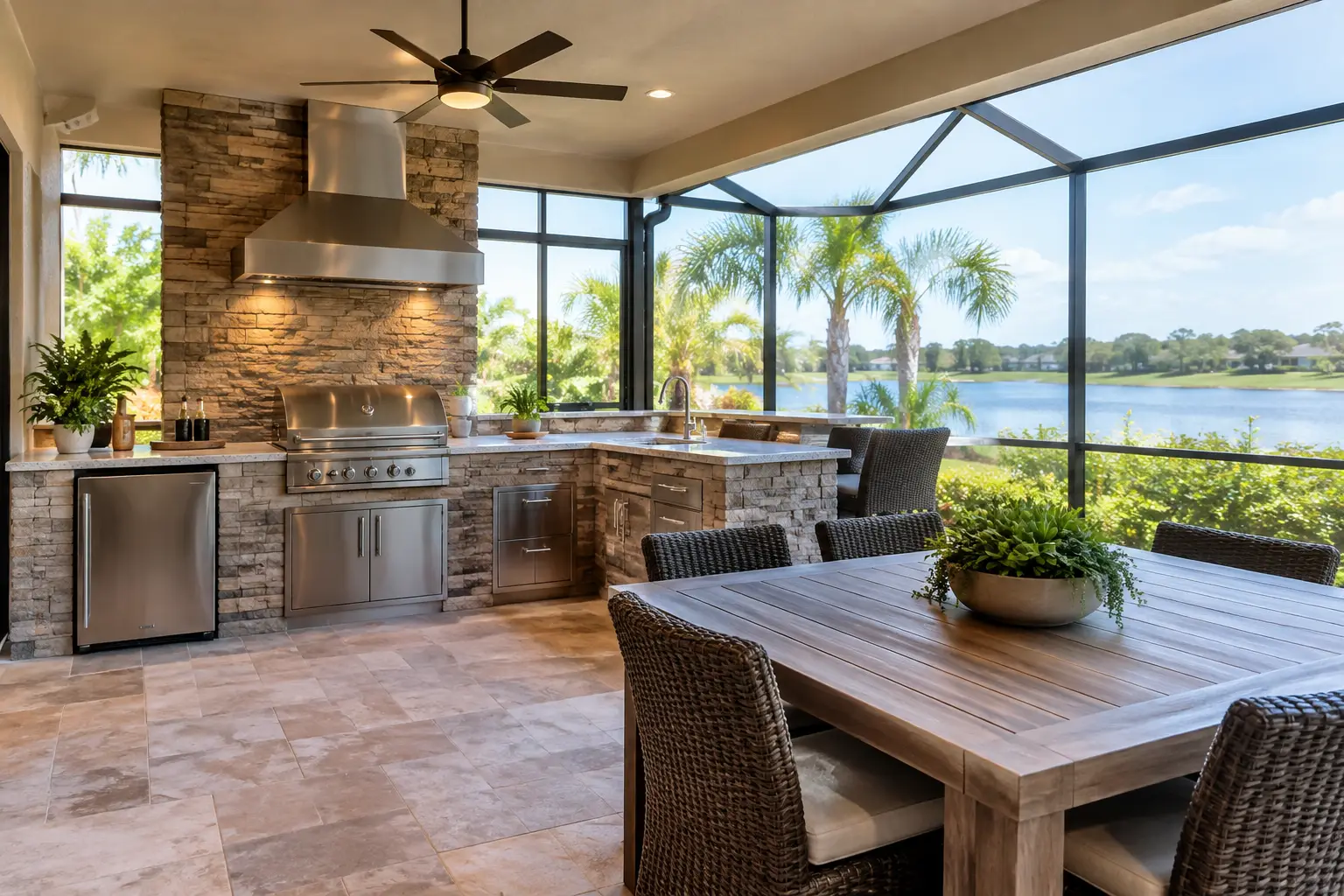
The best screened lanai outdoor kitchen does more than put a grill near the patio door. It creates a comfortable place to make dinner while the children play nearby, linger over coffee as morning light reaches the water, or host friends without surrendering the evening to mosquitoes, wind, or a sudden summer shower.
For Florida homeowners, a lanai can become the most natural gathering space in the home. The key is designing it as one complete environment – where cooking, seating, shade, lighting, landscape views, and the sounds of water all work together. A beautiful outdoor kitchen should feel like it belongs to the sanctuary around it, not like a row of appliances placed against a wall.
Start With How Your Family Will Use the Space
A kitchen designed for quiet weeknight meals has different needs than one built for game-day gatherings or holiday entertaining. Before choosing finishes or appliances, picture a normal evening outside. Who is cooking? Where do guests sit? Will children move between the pool, patio, and kitchen? Is the kitchen a destination, or a convenient support space for a larger outdoor living area?
A compact setup with a grill, counter space, refrigerator, and storage can be exactly right for a smaller lanai. It keeps the footprint open and leaves room for a dining table, lounge seating, or a view of a pond or waterfall. Larger lanais can support a full kitchen with a sink, ice maker, built-in smoker, bar seating, and a separate serving area.
More features are not always better. A crowded kitchen can interrupt circulation and make a screened space feel smaller. The right design gives the cook enough room to work while allowing guests to stay close without standing in the way.
Design the Screened Lanai Outdoor Kitchen as One Retreat
An outdoor kitchen is most inviting when it feels connected to everything around it. That starts with the placement. A kitchen along one wall may preserve wide-open views toward the pool or garden. An L-shaped layout can create a more intimate entertaining zone, with room for a bar on the outer edge. On a generous lanai, an island can help define the kitchen while creating a natural place for conversation.
Think carefully about the sightlines from inside the house, too. From the family room or kitchen window, you may see the grill enclosure, bar stools, a stone wall, or landscape lighting after dark. Those details should enhance the view, not compete with it.
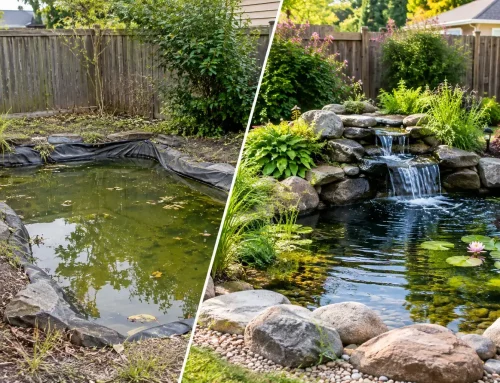
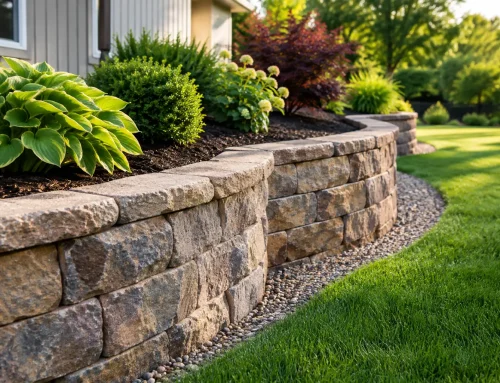
Natural materials help bring a high-end outdoor kitchen into harmony with the landscape. Stone veneer, textured porcelain, stucco finishes, and carefully selected countertop colors can echo a flagstone patio, rock work, or pool coping. When a water feature is part of the plan, soft movement and sound can make the cooking area feel calmer, even when the house is full of guests.
Let the Kitchen Support the View
In many backyards, the most memorable feature is not the grill. It may be a koi pond, a spillway, a fire feature, a pool, or a mature palm-framed garden. Position the kitchen and seating so those elements remain visible. A bar facing a waterfall or illuminated pond gives guests a reason to slow down and stay outside after dinner.
This is where an integrated design matters. The outdoor kitchen, patio, lighting, planting, and water should feel like parts of the same experience.
Choose Materials for Heat, Humidity, and Cleanup
A screened lanai offers meaningful protection from insects and blowing debris, but it is still an outdoor setting. Heat, humidity, rain, chlorine exposure near a pool, and salt air in coastal areas all affect material choices.
Stainless steel appliances and access doors are a common choice because they are durable and easy to clean. Yet not all stainless performs equally near the coast. Homeowners in Cape Coral, Fort Myers, Pine Island, and nearby waterfront communities should discuss higher-grade stainless options and regular care, especially where salty air is a daily reality.
Countertops need equal attention. Dense porcelain and quality natural stone can be excellent choices, depending on the look you want and how much maintenance you are comfortable with. Some stones need sealing and may develop character over time. Porcelain is often easier to maintain and offers strong resistance to stains, heat, and UV exposure. The best surface depends on whether you value natural variation, low upkeep, or a particular architectural style.
Cabinet construction should be designed for moisture. Outdoor-rated stainless, marine-grade polymer, and masonry-based enclosures each have advantages. A skilled designer can help you avoid a costly mismatch, such as choosing a finish that looks beautiful on installation day but fades, warps, or rusts under local conditions.
Plan the Cooking Zone Before Selecting Appliances
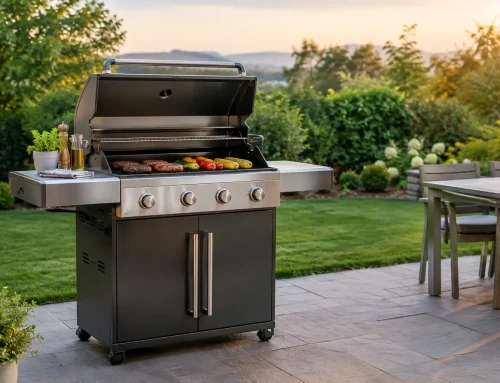
Appliances should follow the menu, not lead the design. A homeowner who enjoys simple grilled dinners may need a quality built-in grill, refrigerator, and generous prep counter. Someone who regularly hosts large family gatherings may benefit from a side burner, griddle, warming drawer, beverage station, or separate cold storage.
Leave usable landing space on both sides of the grill whenever possible. A few extra inches of counter space can make a remarkable difference when handling trays, serving dishes, and hot pans. Storage below the counter keeps tools close and reduces trips back inside.
Ventilation deserves special attention in any covered or screened lanai. A grill produces heat, smoke, and grease-laden air. Depending on the roof structure, grill location, ceiling height, and local code requirements, the kitchen may need a properly sized vent hood or a different layout altogether. This is not a detail to settle after cabinetry is installed. It should be addressed early with experienced design and construction professionals.
Make Room for the People Who Are Not Cooking
The cook should not be isolated with their back to everyone else. A raised bar, dining table, or lounge seating nearby helps turn meal preparation into part of the gathering. Keep a clear path between the house, kitchen, pool, and seating areas so guests are not constantly crossing behind the grill.
If the lanai opens to a pool deck, consider where wet feet will travel and choose slip-resistant surfaces. If the kitchen is near a fire pit or fireplace, give each feature enough breathing room. The result should feel relaxed, never crowded.
Lighting Makes the Lanai Useful After Sunset
Florida evenings are often the best time to be outside. Soft, layered lighting lets the space stay welcoming long after the sun goes down.
Task lighting is essential at the grill and prep counters. Ambient lighting, such as recessed fixtures, ceiling lights, or under-counter illumination, keeps the lanai comfortable without making it feel overly bright. Accent lighting can bring out the texture of stone, define a pathway, or reflect gently across water.
Avoid treating lighting as an afterthought. A well-lit kitchen is safer, but a thoughtfully lit backyard also changes the feeling of the entire property. The pool glows, the garden gains depth, and a waterfall becomes part of the evening atmosphere rather than disappearing into darkness.
Keep Comfort and Maintenance in the Plan
Screens provide a major comfort advantage, particularly during mosquito season, but they need to work with the rest of the lanai. Ceiling fans improve air movement and make warm afternoons more enjoyable. Retractable shades or privacy screens can help with low sun and neighboring views. If you are enclosing an existing lanai, confirm that the kitchen layout still allows for access to screens, drains, pool equipment, and service areas.
Maintenance is part of preserving a premium outdoor space. Wipe down appliances, keep grill grease management clean, inspect caulk and grout, and address standing water before it becomes a larger concern. Stone, tile, cabinetry, and screens all last longer when they receive regular attention.
A screened lanai kitchen should make life outside easier, not add another complicated room to manage. The most successful designs balance the features you want with materials and details that fit your real routine.
A well-planned outdoor kitchen can become the place where a quiet dinner turns into a long conversation, where visiting family gathers naturally, and where the backyard finally feels like the retreat you imagined. With a cohesive plan for cooking, comfort, stone, water, and light, Uni-Scape can help shape that feeling into a space made for everyday enjoyment.