

The sound of moving water can change the feeling of a backyard before anyone takes a seat. A well-designed rock waterfall example does more than add a focal point. It softens the view from the patio, creates a peaceful backdrop for conversation, and makes an ordinary outdoor space feel like a private retreat.
For homeowners in Southwest Florida, a waterfall also brings movement and texture to landscapes that can otherwise feel flat or overly open. The right design should look as though it belongs there – shaped by the home, the planting, the stone, and the way your family actually spends time outside.
What Makes a Rock Waterfall Feel Natural?
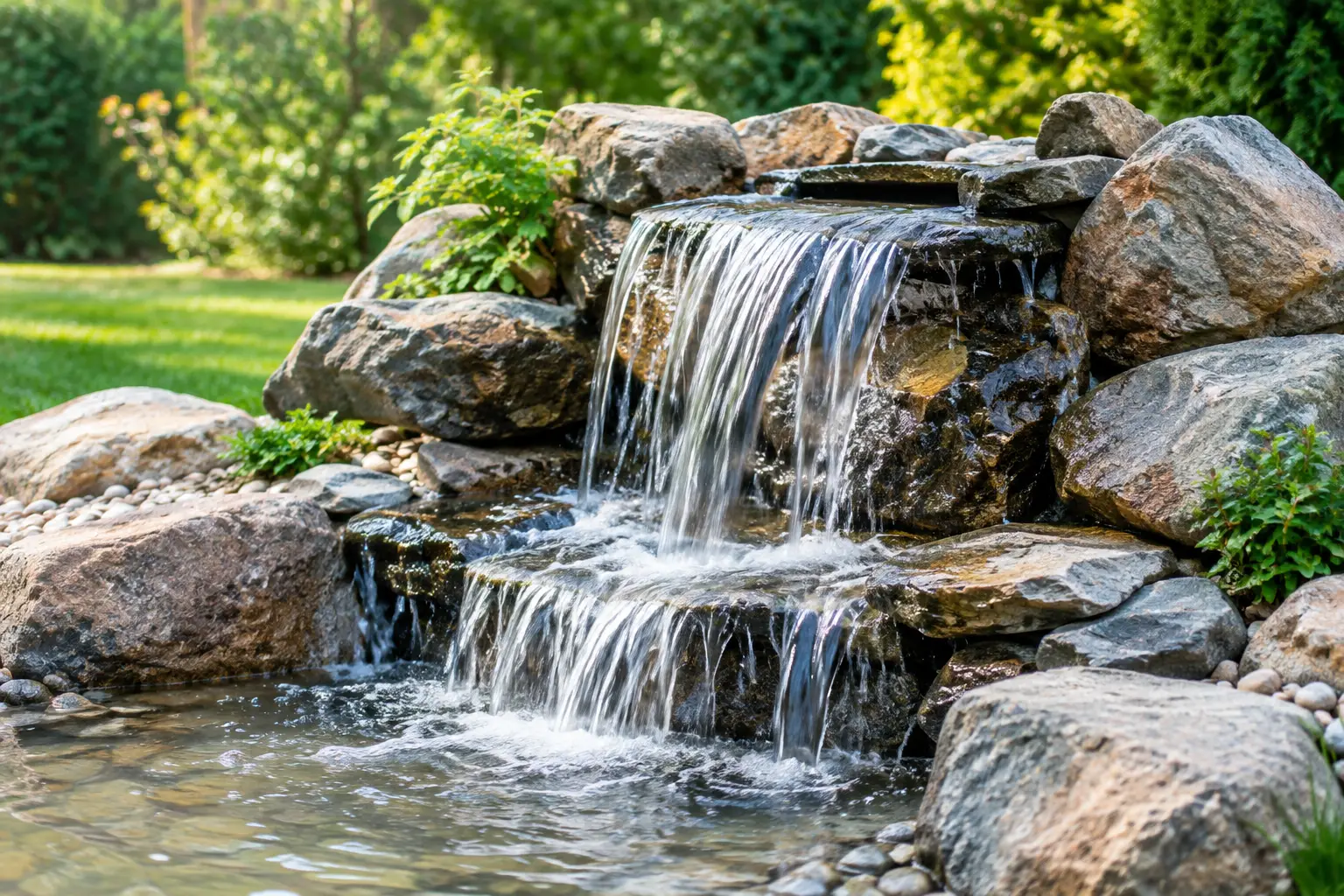
Natural-looking waterfalls are not created by stacking a few rocks and turning on a pump. The magic is in the composition. Large boulders establish the structure, while smaller stones soften the transitions and hide the mechanics. Water needs a believable path to follow, with changes in elevation that create a mix of gentle sheets, quiet trickles, and brighter splashes.
The stone selection matters just as much as the water flow. Some homeowners prefer rugged, earthy boulders that make the feature feel like a hidden tropical spring. Others gravitate toward cleaner, more architectural stone that fits a contemporary pool deck or outdoor kitchen. Neither approach is inherently better. It depends on whether the goal is a lush garden escape, a resort-style pool setting, or a modern gathering space with a natural touch.
Planting completes the scene. Palms, ornamental grasses, ferns, flowering plants, and low groundcover can frame the rockwork without swallowing it. At night, carefully placed landscape lighting can reveal the water’s movement and the texture of each stone, turning the feature into an inviting view from indoors.
5 Rock Waterfall Examples for a Backyard Retreat
1. The Pondside Waterfall
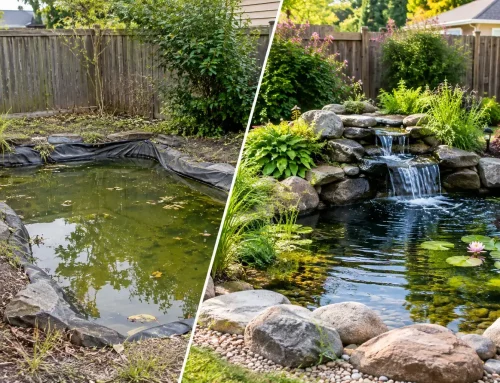
A pondside waterfall is one of the most classic ways to bring a backyard sanctuary to life. Water spills from a planted rock outcropping into a pond below, creating circulation that supports a healthier environment for fish and aquatic plants. For a koi pond, this movement is especially valuable because it adds oxygen while giving the pond a more dynamic, natural appearance.
This option works beautifully in a garden-focused backyard where the pond is meant to be enjoyed up close. A flagstone path or small seating area nearby gives family and guests a place to pause, feed the fish, or simply listen to the water after a long day.
The trade-off is maintenance. Ponds need attention to water quality, filtration, debris, and plant growth. For homeowners who enjoy the living element of a pond, that care is part of the experience. For those who want the sound of water with less involvement, a pondless design may be a better fit.
2. The Pondless Rock Waterfall
A pondless waterfall gives you the visual and sensory reward of moving water without an open pond. Water disappears into a concealed underground reservoir, then recirculates through the feature. From the surface, it can look like a small stream emerging from lush planting and vanishing naturally into the landscape.
This is often a smart choice for families who want a peaceful focal point near a patio, walkway, or entrance. There is no exposed pond edge, and the footprint can be more flexible than a full pond installation. It also works well in smaller backyards where every square foot needs a purpose.
A pondless waterfall is not necessarily maintenance-free. The reservoir, pump, and surrounding planting still need periodic care. But compared with a fish pond, it offers a simpler path to the sound and beauty of water.
3. The Poolside Boulder Cascade
For a true resort atmosphere, a poolside boulder cascade can make the water itself feel more immersive. This rock waterfall example uses stone to create a natural edge near the pool, with water flowing into the swimming area or into a connected spa. It can become the visual anchor of the entire outdoor living space, especially when paired with palms, uplighting, and a generous pool deck.
The most successful pool waterfalls are sized for the setting. A towering cascade may overwhelm a compact pool or send too much water toward lounge areas. A lower, wider spillway can feel more refined and still deliver that relaxing sound. The goal is a feature that feels integrated, not added on.
Consider how the waterfall will be used. A lively cascade may delight children and create an energetic entertaining space. A softer spill can preserve a calmer mood for floating, reading, or enjoying an evening soak in the spa.
4. The Spa Spillover with Natural Stone
A raised spa with a stone spillover offers a more polished version of the waterfall experience. Rather than a rugged stream effect, water flows in a controlled sheet from the spa into the pool below. Natural stone cladding, coping, and surrounding rock accents can keep the design warm and organic while complementing a more structured backyard layout.
This approach is ideal when the spa is already a centerpiece for relaxation. During the day, the spillover adds movement to the pool. In the evening, it pairs beautifully with fire features, outdoor lighting, and comfortable seating for a setting that feels intimate without feeling closed in.
Because this feature is closely tied to pool and spa construction, planning it early matters. The finish materials, circulation system, water level, and sightlines should all work together. Retrofitting is possible in some cases, but an integrated design usually delivers the most natural result.
5. The Entry or Courtyard Waterfall Wall
Not every waterfall needs to sit beside a pool or pond. A compact waterfall wall can bring a calming welcome to a courtyard, front entry, or covered outdoor room. Stone becomes the backdrop, while water travels down a textured surface into a narrow basin or hidden reservoir below.
This is a strong option for homeowners who want the presence of water without dedicating a large section of the yard to a feature. It can also help define a transition between spaces, such as a patio and an outdoor kitchen or a walkway and a private garden room.
The design needs restraint. In a tight area, oversized rockwork can feel heavy. A clean stone wall, a modest basin, and warm lighting often create more impact than a large cascade competing with every other feature nearby.
Planning the Right Rock Waterfall for Your Space
Before choosing a style, think about where you want to experience it most. If the waterfall is meant to be heard from the lanai, the volume and location of the flow matter. If it is primarily a view from the kitchen or living room, the shape of the feature and nighttime lighting deserve extra attention. If children and guests will gather around it, the surrounding paths, seating, and safety details should be part of the design from the beginning.
Florida’s climate also affects the plan. A feature should be built with durable materials, dependable circulation equipment, and planting suited to heat, rain, and seasonal changes. Proper construction helps keep the water where it belongs, protects nearby hardscapes, and makes future maintenance easier.
The best waterfalls are rarely standalone objects. They connect naturally to patios, pools, walkways, planting beds, lighting, and places to sit. That is where a custom landscape design earns its value: the feature does not simply look good in a photo. It feels right when your family is gathered outside on a warm evening.
A rock waterfall should give you a reason to stay outdoors a little longer. Whether it becomes the soundtrack to quiet mornings, weekend swims, or dinners shared under the lights, thoughtful stonework and moving water can make the backyard feel like the place everyone wants to be. Uni-Scape can help shape that feeling into a retreat built around the way you live.