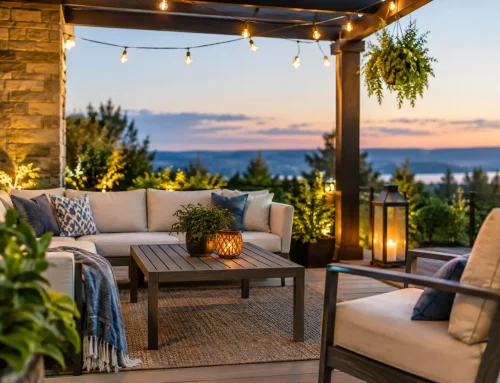


The best patio lighting for entertaining does more than help guests see where they are going. It sets the mood the moment people step outside, softens the edges of the night, and turns a patio into the kind of place where dinner lingers, conversations stretch, and nobody is in a hurry to go home.
That is why great outdoor lighting rarely comes from a single fixture. The most welcoming patios use layers – light for dining, light for pathways, light that highlights stone, water, or planting beds, and quieter accents that make the whole space feel calm instead of overly bright. When the goal is entertaining, comfort matters just as much as visibility.
What makes the best patio lighting for entertaining?
A patio built for gathering has different lighting needs than a patio meant only for occasional use. You are not just lighting a surface. You are shaping how the space feels after sunset.
For entertaining, the sweet spot is usually warm light with a gentle spread. Harsh brightness can flatten the space and make guests feel exposed. Too little light creates shadows in the wrong places, especially around steps, serving areas, and seating transitions. The best designs balance both. You want enough illumination for people to move easily, eat comfortably, and settle in without the space feeling commercial.
It also helps to think in zones. A dining area may need focused overhead or nearby lighting, while a fire pit or lounge area benefits from softer, lower light. If your patio includes an outdoor kitchen, bar, pool, spa, pond, or waterfall, each feature should have its own lighting approach. That is how a backyard starts to feel like a complete environment instead of a few disconnected pieces.
Start with ambient light, not the brightest fixture
Ambient light is what gives a patio its overall glow. It is the foundation of the evening atmosphere, and it should feel natural and easy on the eyes.
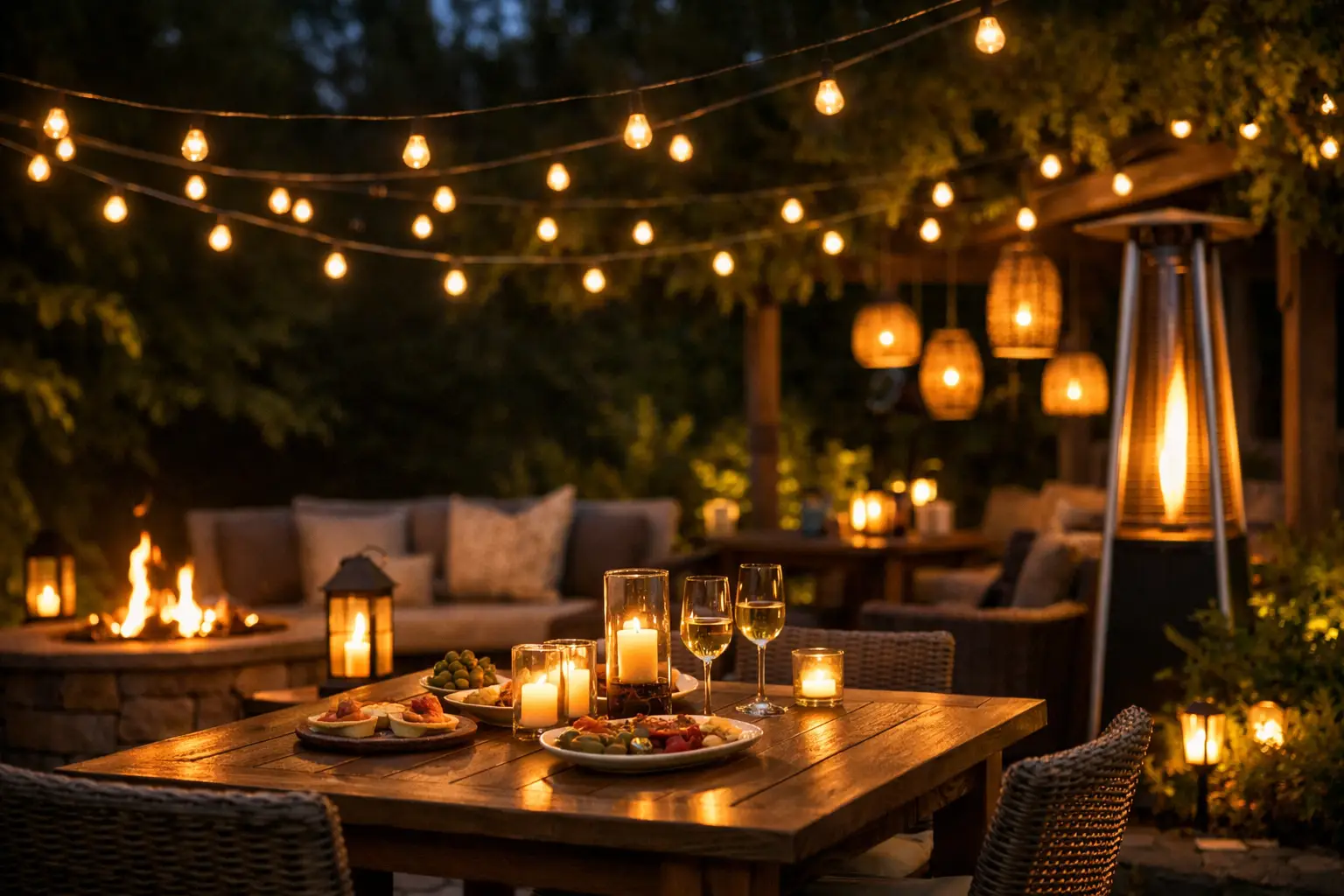
String lights are popular for a reason. When used well, they bring warmth and a relaxed social feel that fits casual dinners, birthdays, and family get-togethers. They work especially well over seating areas, pergolas, and open patio spans. The trade-off is that they are better for mood than task lighting, so they usually should not carry the full load on their own.
Mounted sconces and overhead fixtures can provide a more polished look, especially on covered patios. These options often make sense for homeowners who want something permanent and visually integrated with the architecture of the home. The caution here is scale. A fixture that is too large or too bright can dominate the patio and wash out the softer elements that make evening entertaining feel special.
In many high-end backyard settings, the best result comes from combining one dependable ambient source with quieter layers around it.
Patio lighting ideas that make entertaining feel effortless
When guests feel comfortable without noticing why, the lighting is doing its job. The strongest patio lighting plans support the flow of the evening from arrival to dinner to relaxed conversation afterward.
Light the dining area so food and faces both look good
Dining light should feel flattering and functional. People want to see what they are eating, but they also want a relaxed atmosphere. Warm pendant lighting over a table, subtle downlighting from a pergola, or a nearby wall fixture often works better than a flood of overhead brightness.
A common mistake is centering all the light on the tabletop and leaving the surrounding seating area dark. That can make the patio feel visually unbalanced. Let the table be slightly brighter, but keep the nearby area softly lit so the whole gathering space feels connected.
Use pathway and step lighting for comfort and safety
Entertaining often means movement. Guests walk from the gate to the patio, from the patio to the pool, from dinner to the fire pit, and back again. If those transitions are dim, the evening feels less relaxed.
Low path lights, recessed step lights, and subtle edge lighting make a big difference. These fixtures are not there to call attention to themselves. They simply help people move naturally through the space. On patios with flagstone walkways, grade changes, or natural stone steps, this layer becomes even more important.
Add accent lighting to create depth
Without accent lighting, patios can feel flat at night. A few well-placed lights aimed at a textured wall, specimen plant, fountain, or waterfall give the space dimension and character.
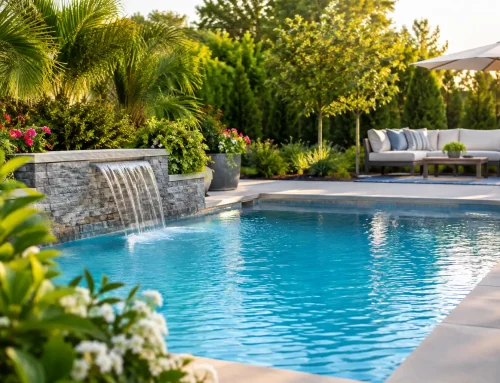
This is where entertaining becomes memorable. The eye has somewhere to travel. Water shimmers. Palm fronds catch a soft glow. Stonework shows its texture after dark. Guests may not name these details, but they absolutely feel them.
For Florida backyards especially, where outdoor living often stretches across much of the year, accent lighting helps the landscape stay present after sunset instead of disappearing into darkness.
The best patio lighting for entertaining is layered
If there is one principle that matters most, it is layering. A single bright source can make a patio usable, but layered lighting makes it enjoyable.
Think of your patio in three categories: ambient, task, and accent. Ambient lighting creates the overall mood. Task lighting supports practical needs like dining, grilling, and navigating steps. Accent lighting adds depth and beauty. When all three are present, the space feels complete.
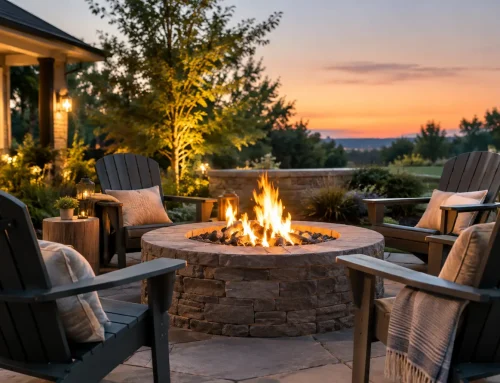
This layered approach matters even more in patios with multiple features. An outdoor kitchen needs clean visibility at prep areas. A lounge area near a fire pit needs lower, softer light. A spa or pond may benefit from subtle illumination that reflects on the water instead of glaring across it. Trying to treat all of those moments with one lighting type usually leads to a space that feels either too dim or too stark.
Choosing fixtures that fit your patio style
The right fixture is not only about output. It should also support the look and feel of the patio during the day.
For natural stone patios, understated bronze, black, or textured finishes often blend best with the surroundings. In a more modern backyard, streamlined fixtures with clean silhouettes may feel more appropriate. In a lush, sanctuary-style landscape, hidden or low-profile lighting usually creates a more peaceful effect than decorative fixtures that constantly ask for attention.
Material quality matters outdoors, especially in humid and coastal conditions. In areas like Cape Coral and Fort Myers, lighting should be chosen with heat, moisture, and salt air in mind. A fixture that looks great in a showroom may not age beautifully on an exposed patio. Durability is not the glamorous part of lighting design, but it has a lot to do with whether your backyard still feels polished a few seasons from now.
Warm light usually wins, but it depends on how you entertain
For most residential patios, warm white light is the most inviting choice. It flatters skin tones, makes natural materials feel richer, and supports the relaxed feeling people want in a backyard retreat.
That said, there are exceptions. If your outdoor kitchen is used heavily for evening cooking, slightly brighter and cleaner task lighting may make sense in that zone. If you host larger events, you may also want more coverage than a patio used mainly for quiet family dinners.
This is where many homeowners run into frustration. They try to choose one color temperature and one brightness level for the entire backyard. Entertaining spaces usually work better when the light changes subtly by area. The dining and lounge zones can stay warm and soft, while prep and circulation areas carry a bit more clarity.
Why professional design often changes the outcome
Patio lighting looks simple until you try to get it right. A fixture can be beautiful and still be placed at the wrong height. A pathway can be illuminated and still feel awkward. A patio can technically be bright enough and still lack warmth.
That is why lighting design is most successful when it is considered part of the overall outdoor environment, not added as an afterthought. The patio, plantings, stonework, water features, seating areas, and gathering spaces all affect how light behaves. When the plan is cohesive, the backyard feels restful and ready for company at the same time.
For homeowners investing in a full outdoor living space, lighting has the power to protect that investment. It extends usability, highlights craftsmanship, and keeps the experience going long after sunset. In many cases, it is the detail that turns a beautiful patio into a place people actually use more often.
If you are planning a backyard meant for connection, the best patio lighting for entertaining is the kind that feels almost invisible while everything around it feels better. When the night is warm, the water is reflecting softly, dinner is still on the table, and nobody wants to head inside yet, that is when you know the lighting is right.