

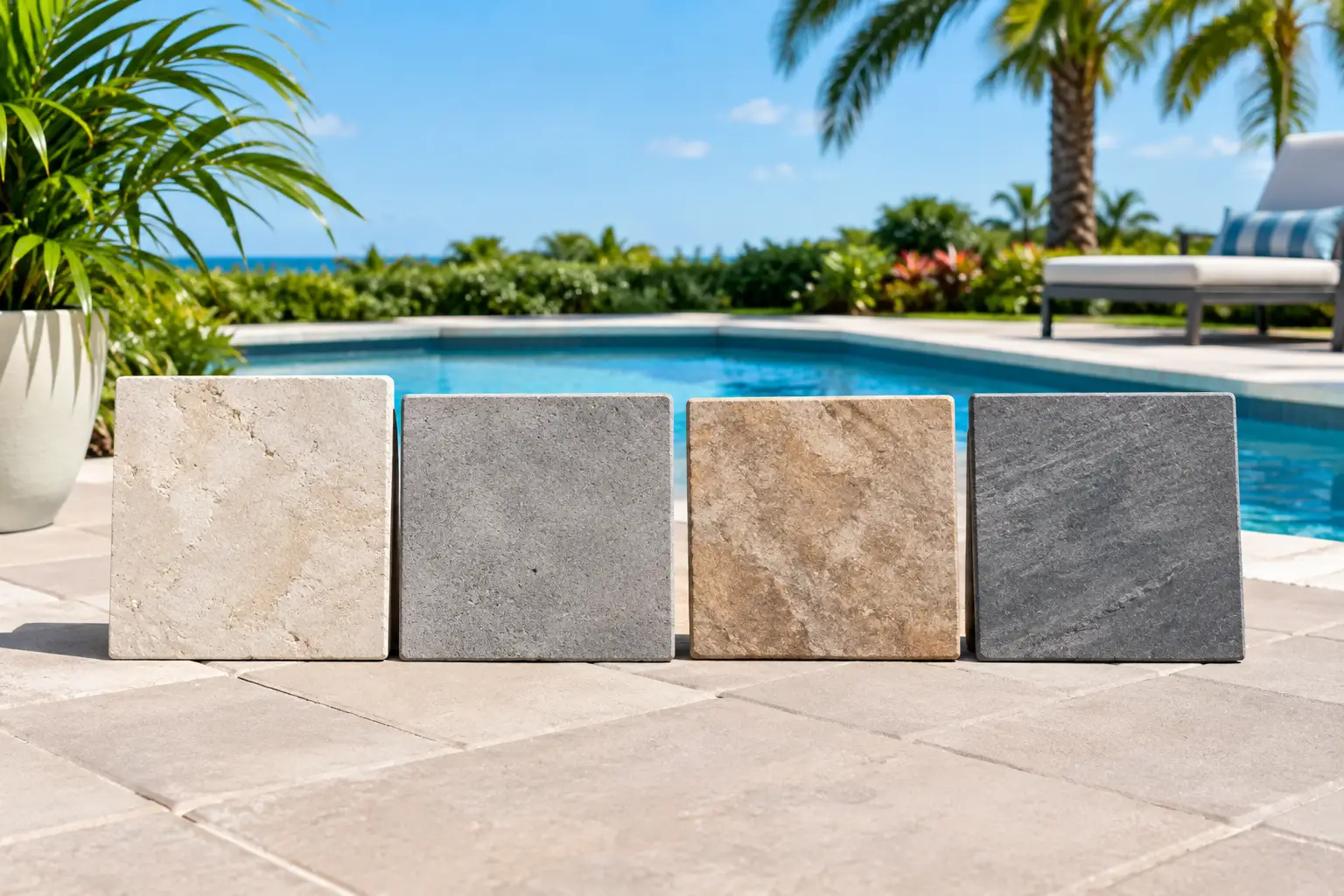
A patio can look like a private resort and still become unusable by lunchtime if the surface burns bare feet. For homeowners asking which patio stone stays coolest, travertine is usually the leading choice, especially in sunny Florida backyards. Its light color and naturally porous structure help it absorb less heat and release it more readily than many denser, darker materials.
That said, the coolest patio is rarely decided by stone alone. Color, finish, exposure, drainage, surrounding water, and how the space is used all affect whether a patio feels inviting on a bright afternoon or sends everyone back inside. The right choice should support the way your family relaxes – from quiet coffee beside a pond to poolside gatherings that stretch into the evening.
Which Patio Stone Stays Coolest? Start With Travertine
Travertine is a natural limestone known for its soft, earthy character and small surface voids. Those pores give it a slightly textured appearance, but they also make a real difference in warm climates. Compared with dense concrete, dark flagstone, or many ceramic surfaces, a light-colored travertine patio is often noticeably more comfortable underfoot in direct sun.
For pool decks and open-air patios, travertine has another advantage: its tumbled or honed finishes offer traction without feeling aggressively rough. It creates a relaxed, resort-like surface that works beautifully beside a spa, waterfall, outdoor kitchen, or fire feature. Cream, ivory, sand, and light beige tones generally perform best when heat is a priority.
Travertine is not heat-proof. No patio material stays cool indefinitely under intense Southwest Florida sun. But for a natural-stone surface that balances comfort, beauty, and a refined outdoor-living feel, it is often the strongest all-around option.
Other Patio Materials That Can Feel Comfortable
Shellstone offers a coastal, naturally textured option
Shellstone is another excellent choice for Florida landscapes. This pale, fossil-rich natural stone brings a distinctly coastal character to patios, pool surrounds, and garden walkways. Its lighter shades and textured surface can make it more comfortable than dark, dense stone, while its organic pattern adds visual interest without making a space feel overly formal.
The trade-off is texture. Shellstone can be more pronounced under bare feet than smooth travertine, and individual selections vary in density and color. It is a beautiful fit for homeowners who want their patio to feel connected to the Gulf Coast landscape, particularly when paired with natural rock work, palms, and water features.
Light limestone can be a good choice with the right finish
Limestone and travertine are related materials, but not every limestone performs the same way in sun. A pale, lightly textured limestone can be comfortable and elegant, creating a calm, tailored foundation for an outdoor dining area or shaded courtyard. Cream and buff tones are far more forgiving than charcoal, blue-gray, or richly colored varieties.
Because limestone can be denser than travertine, it may hold more heat depending on the specific stone and finish. A smooth, dark limestone in full afternoon sun can become much warmer than a light, tumbled travertine. Selecting the slab in person and seeing it outdoors is worthwhile before committing to a large patio.
Light concrete pavers are practical, but vary widely
Quality concrete pavers can provide a durable, versatile patio surface, especially when selected in light, sand-toned colors. They are available in many shapes and patterns, making them useful for larger entertaining spaces, walkways, and transitions around outdoor kitchens.
Still, concrete pavers usually do not stay as cool as light travertine. Their heat performance depends heavily on pigment, density, surface texture, and sun exposure. A pale paver may be perfectly comfortable for a covered seating area but noticeably hotter beside an uncovered pool. They remain a practical choice when budget, pattern flexibility, or repairability carries more weight than the coolest possible surface.
Stones More Likely to Get Hot Underfoot
Dark materials absorb more of the sun’s energy, so color matters as much as the stone category. Dark slate, black granite, charcoal concrete, and deep blue-gray bluestone can look dramatic, but they are often poor choices for barefoot areas in Florida. The same is true of dark porcelain pavers. Porcelain is durable and low-maintenance, yet its dense surface can feel surprisingly hot when installed in a sun-drenched location.
Some flagstones also run hot. Flagstone is a broad term rather than one single material, and its performance changes dramatically by type and color. A pale sandstone flagstone may be reasonable in a partly shaded garden patio, while dark Pennsylvania bluestone in full sun is likely to be uncomfortable for bare feet.
This does not mean darker stone has no place in a backyard sanctuary. It can add depth around a fire pit, create a handsome garden path, or provide contrast in a shaded courtyard. The key is placing it intentionally rather than using it as the main surface around a pool or sun-filled lounge area.
What Makes a Patio Feel Cooler Beyond the Stone
A thoughtful design can improve comfort even more than changing from one light stone to another. Shade is the most powerful tool. A pergola, covered lanai, mature canopy, or well-positioned umbrella keeps direct sunlight off the surface and gives the patio a place to breathe during the hottest part of the day.
Air movement matters, too. An open layout that catches prevailing breezes can feel significantly cooler than an enclosed corner between solid walls. Ceiling fans under a covered structure extend that comfort, particularly around dining and lounge areas.
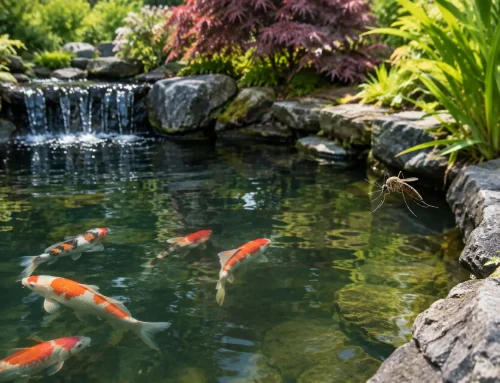
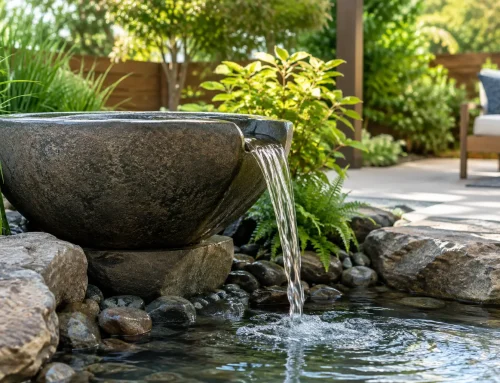
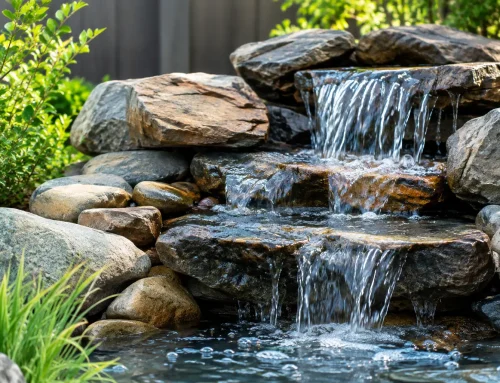
Water also changes the experience of a patio. The sound and sight of a fountain, waterfall, or koi pond bring a sense of calm, while nearby water can make a space feel more refreshing on a warm afternoon. It will not lower the temperature of the stone itself in a dramatic way, but it can make the entire setting more pleasant and encourage people to linger.
Finally, avoid designing one large, unbroken field of paving in full sun. Blend sunny circulation areas with covered seating, soften edges with planting beds, and use trees or structures to create pockets of shade. A backyard feels more natural and more usable when it offers choices throughout the day.
Choosing the Right Surface for Your Backyard Lifestyle
If the patio will surround a pool or spa, prioritize light-colored travertine or shellstone with a suitable slip-resistant finish. These surfaces help protect bare feet and create the relaxed, vacation-at-home feeling many families want from a poolscape.
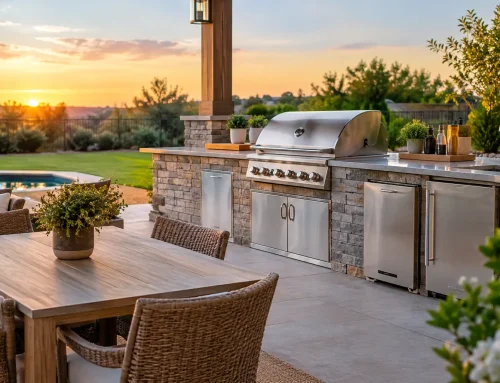
For an outdoor kitchen or dining terrace, the decision can be more flexible. A light limestone or quality concrete paver can work well if much of the space is shaded by a roof extension, pergola, or umbrella plan. Here, stain resistance, furniture placement, and how easily spills can be managed may matter as much as surface temperature.
For a fire pit patio, consider when you will use the space most. If evenings are the focus, a darker accent stone may be appropriate and visually grounding. If children will run through the area during sunny afternoons, a lighter main paving material remains the more comfortable choice.
Samples are essential. Place several candidates outside in the exact area where they will be installed, then check them barefoot at midday. This simple test accounts for your property’s sun angle, reflected heat, surrounding roof color, and local microclimate better than a showroom display ever can.
The best patio is not simply the one that photographs beautifully. It is the one that invites you outside on an ordinary Tuesday, lets children move freely from pool to patio, and gives guests a comfortable place to settle in as the sky turns gold. A light, thoughtfully selected stone – supported by shade, water, and a design shaped around real life – can make that daily retreat feel possible.