

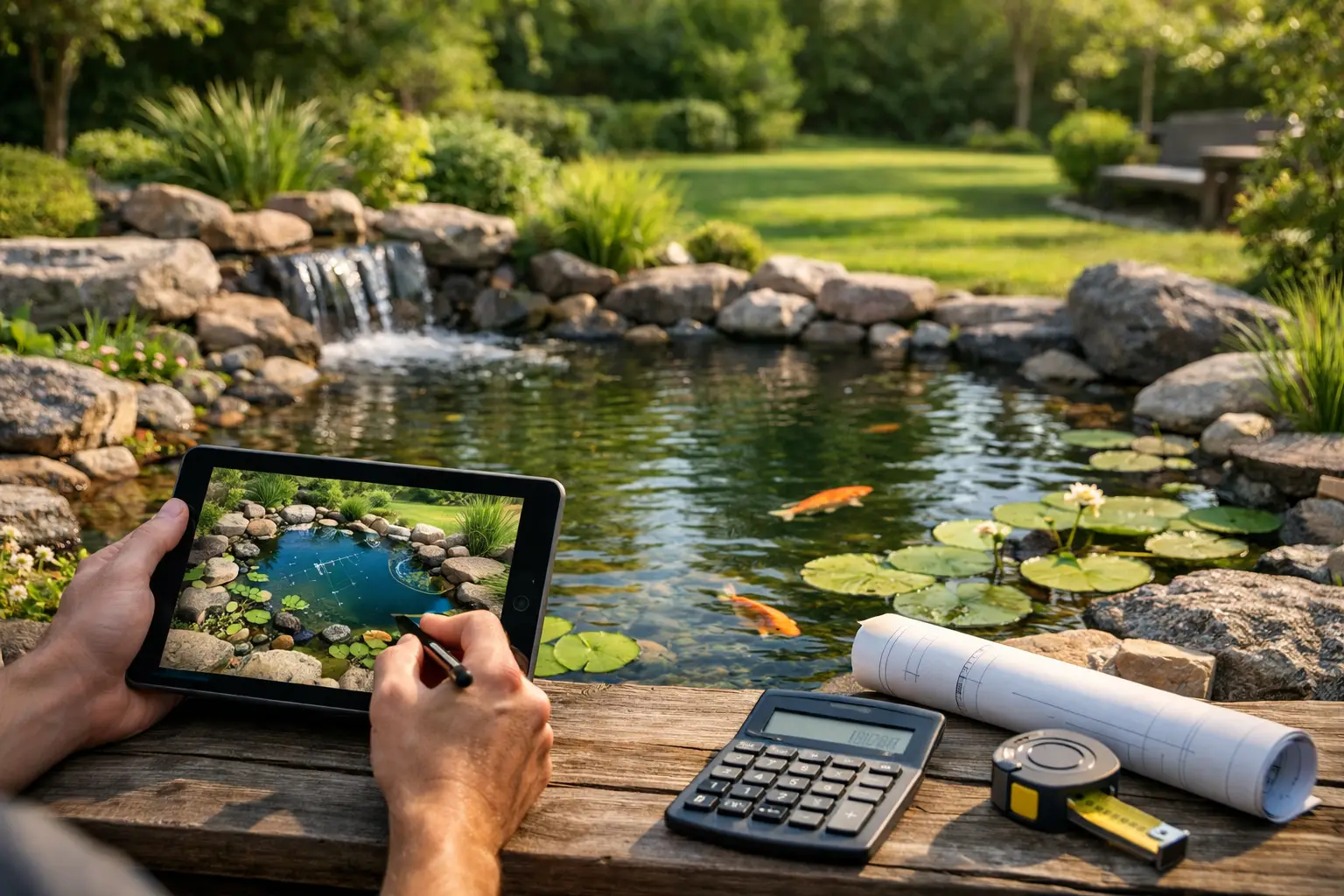
A pond should feel like it belongs in the yard, not like a decorative feature squeezed into an open patch of lawn. A pond sizing calculator gives you a practical starting point for estimating water volume, but the best pond size also comes down to how you want to live around it: quiet mornings by a waterfall, children watching fish at the edge, or friends gathering beside a softly lit patio.
For Florida homeowners, thoughtful sizing matters even more. Our intense sun, warm water, seasonal rain, and lush plant growth affect everything from filtration to fish health. The goal is not simply to make a pond larger or smaller. It is to create a balanced water feature that looks natural, works reliably, and supports the peaceful backyard retreat you have in mind.
What a Pond Sizing Calculator Tells You
Most pond sizing calculators estimate the number of gallons in a pond. That figure drives several decisions: pump capacity, filtration, aeration, beneficial bacteria treatments, water conditioning, and the appropriate number of fish. Guessing can lead to a system that is underpowered, harder to maintain, and less enjoyable over time.
For an irregular, naturalistic pond, the standard calculation is:
Length × width × average depth × 7.48 = approximate gallons
Measure length and width in feet, and use the average depth rather than the deepest point. For example, a pond that is 12 feet long, 8 feet wide, and averages 2.5 feet deep holds roughly 1,795 gallons:
12 × 8 × 2.5 × 7.48 = 1,795 gallons
That is a useful estimate, not a final construction specification. Rock shelves, boulders, planting pockets, gravel, and a waterfall basin all displace water. A finished pond may hold 10 to 20 percent less than the simple geometric calculation suggests. A professional design accounts for that difference before equipment is selected.
Finding the average depth
Depth is often where homeowners overestimate their pond volume. A pond may have a 3-foot center but include broad shelves that are only 12 to 18 inches deep. To find a more realistic average, measure several points across the pond footprint, add those depths together, and divide by the number of measurements.
Shelves are valuable. They provide stable areas for aquatic plants, create a gradual visual transition from stone edge to water, and can make the pond easier to enjoy from nearby seating. They simply need to be included honestly in the volume calculation.
Choose Pond Size Around the Experience
A calculator answers, “How much water will this hold?” Design answers, “What will this space feel like?” Those questions should work together.
A compact pond can be a beautiful fit for a courtyard, entry garden, or smaller Cape Coral backyard. In a footprint around 6 by 8 feet, a thoughtfully built pond with a bubbling waterfall, natural stone, and surrounding tropical planting can create a strong sense of escape without taking over the space. This scale works well when the water feature is meant to be viewed from a lanai, kitchen window, or intimate seating area.
A medium pond, often in the 10-by-12-foot range or larger, gives more room for movement, planting zones, and a waterfall with visual presence. It can become the focal point of a patio or outdoor kitchen area, especially when flagstone pathways and landscape lighting make the water inviting after sunset.
For a true koi pond, depth and water volume deserve more attention than surface dimensions alone. Koi need generous room, dependable filtration, and water conditions that remain stable through hot weather. A larger pond generally offers more forgiving water chemistry, but it also has a greater upfront investment and requires a filtration system sized for the actual fish load, not just the calculated gallons.
Size for Fish, Plants, and Water Movement
Every pond has an ecosystem. Water, fish, plants, sunlight, circulation, and filtration influence one another. A pond that looks calm on installation day can become cloudy or algae-prone if its supporting systems do not match its size and conditions.
Koi ponds need more than a gallon number
A common rule of thumb is to allow roughly 250 gallons of water per mature koi, with more space being better. This should be treated as a starting point, not a license to fill a pond to its limit. Koi grow, create significant waste, and need oxygen-rich water. A pond designed for a small number of koi will usually be more attractive and easier to maintain than one crowded with fish.
Depth matters, too. Many koi ponds benefit from a deeper central zone, often around 3 feet or more depending on the design, while shallower shelves support plants and soften the shoreline. In Southwest Florida, the conversation is less about winter freeze protection and more about preventing water from overheating in direct sun. Shade, circulation, depth, and planting all play a role.
Plants bring beauty and balance
Aquatic plants make a pond feel established and alive. Water lilies shade the surface, marginal plants add color and texture at the edges, and carefully placed plantings help connect the water feature to the larger landscape.
However, plants need room. If a pond is too shallow or its shelves are too narrow, pots can look crowded and disrupt circulation. If the pond is heavily shaded by dense planting, viewing the fish and reflective water surface becomes harder. The most satisfying designs balance lushness with open water.
Turnover rate affects pump selection
Once you have a reasonably accurate gallon estimate, you can begin sizing the pump. For many decorative ponds, the system is designed to circulate the full pond volume about once per hour. A 2,000-gallon pond, for example, may need roughly 2,000 gallons per hour of actual flow at the waterfall.
Actual flow is not the same as the number printed on a pump box. Water loses pressure as it travels uphill to a waterfall and through plumbing, filters, elbows, and valves. The vertical distance from the pond surface to the waterfall spillway is called head height, and it can significantly reduce output. A pump must be selected for the flow it will deliver at that real head height.
A wide, energetic waterfall may require more flow than the one-hour turnover guideline, while a gentle bubbling stream may need less. Sound is part of the design. Some homeowners want water that masks nearby traffic; others prefer a quiet cascade they can enjoy during dinner outdoors.
Give the Pond Room to Belong
The pond footprint is only one part of the space it occupies. A water feature needs an edge for viewing, access for maintenance, and a setting that supports the way your family uses the backyard. Before settling on a size, picture where people will stand, sit, walk, and gather.
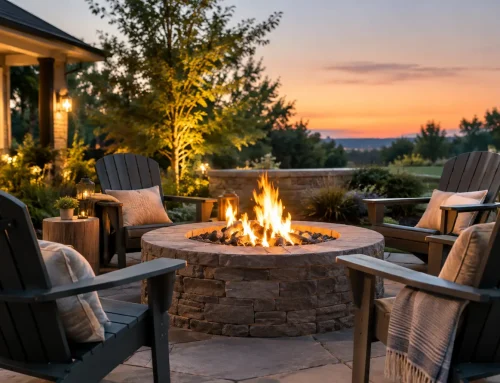
Leave room for a path, patio furniture, or a fire feature if those are part of the plan. Consider sightlines from the house. A pond visible from the living room or primary bedroom offers more daily enjoyment than one hidden behind a screen enclosure or placed in the farthest corner of the property.
Also consider existing trees, drainage patterns, utilities, and sun exposure. Mature tree roots and falling leaves can complicate placement. Low areas may receive heavy rain during summer storms. Full afternoon sun can be beautiful, but it can also raise water temperature and encourage algae if the pond lacks shade, plants, or adequate circulation.
When an Online Estimate Is Not Enough
A pond sizing calculator is excellent for early planning and for understanding why certain equipment recommendations matter. It cannot see the grade changes in your yard, identify buried utilities, account for boulder placement, or determine how a waterfall will sound from your favorite chair.
Custom pond design is especially worthwhile when the water feature connects with a pool, spa, outdoor kitchen, retaining wall, flagstone patio, or major landscape renovation. These elements should feel composed as one sanctuary, not added as separate projects over several years. A coordinated plan can also make maintenance access, drainage, lighting, and future enhancements easier to manage.
At Uni-Scape, pond planning begins with how you want the space to feel and function, then pairs that vision with the right water volume, stonework, filtration, and planting strategy. The result can be dramatic, but it should never feel forced.
A well-sized pond does more than hold water. It gives your backyard a place to slow down – a living focal point where a gentle waterfall, warm landscape lighting, and the people you love can make an ordinary evening feel like time well spent.