

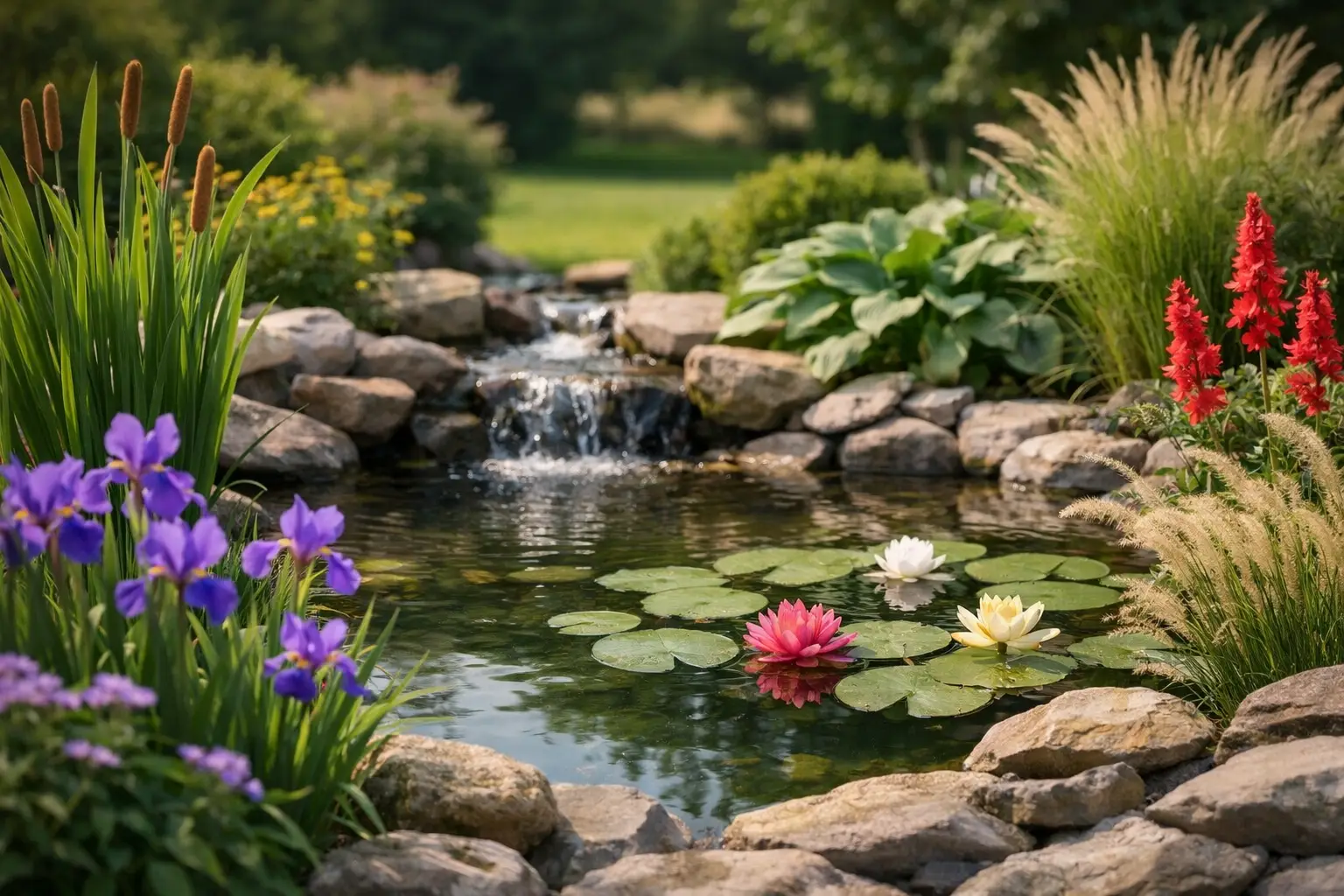
A backyard pond never feels finished when the water stops at the edge. What gives it warmth, softness, and that settled, resort-like feeling is the planting around it. The best plants around backyard ponds do more than add color. They frame reflections, soften stone, attract movement from birds and butterflies, and help the pond feel like it truly belongs in the landscape.
For homeowners building a more peaceful outdoor retreat, plant choice matters as much as the pond itself. The right mix can make a small water feature feel layered and natural, while the wrong mix can turn a clean design into something overgrown, messy, or high-maintenance. Around a pond, every plant should earn its place.
What makes the best plants around backyard ponds?
The answer depends on how you want the space to feel. Some pond plantings are meant to look lush and tropical. Others are more structured, with clipped forms, ornamental grasses, and carefully placed flowering accents. In Florida and similar warm climates, the challenge is choosing plants that can handle moisture, heat, and occasional splashing without overwhelming the water feature.
The best choices usually do three things well. They tolerate the microclimate around the pond, they support the style of the surrounding hardscape, and they stay in scale with the water feature. A dramatic koi pond with boulders and waterfalls can carry bold foliage. A smaller reflective pond near a patio often looks better with cleaner lines and more restraint.
This is also where trade-offs come in. Some of the most beautiful pondside plants drop leaves or flowers into the water. Others grow fast and need regular shaping. If low maintenance is a priority, it is worth leaning toward plants that keep a neat form and do not create constant cleanup.
10 best plants around backyard ponds
1. Dwarf papyrus
Dwarf papyrus brings movement that feels right at home beside water. Its fine, umbrella-like heads catch the breeze and add a soft vertical accent without feeling stiff. It thrives in moist soil and can handle the humid conditions many pond edges create.
For a naturalistic pond, it helps blur the line between land and water. For a more designed space, it works best in controlled groupings rather than scattered everywhere.
2. Blue flag iris
If you want seasonal color without losing that classic waterside look, blue flag iris is a strong choice. Its upright leaves stay attractive even after bloom, and the flowers bring a refined, natural beauty in spring.
Irises work especially well near rock edging and along shallow margins. They do need occasional division, so they are not completely hands-off, but they reward that little effort with structure and color.
3. Pickerel rush
Pickerel rush is one of those plants that makes a pond feel alive. Its glossy leaves and violet flower spikes add texture and a pop of color, and pollinators tend to love it. Around backyard ponds, it creates a relaxed, established look without appearing wild or untidy.
It is a good fit for homeowners who want a pond that feels lush but still composed. Left unchecked, it can spread, so placement matters.
4. Sweet flag
Sweet flag is often overlooked, which is a mistake. Its grassy blades bring clean lines that work beautifully around stone, waterfalls, and formal pond shapes. Variegated forms can brighten darker corners and soften heavy rock work.
Because it stays lower and more controlled than many moisture-loving plants, it is especially useful near walkways or sitting areas where you want a polished finish.
5. Society garlic
Not every great pondside plant needs to sit in constantly wet soil. Society garlic is a smart option for the slightly drier perimeter beyond the immediate water edge. It offers tidy strappy foliage and delicate purple blooms that pair well with natural stone and tropical planting palettes.
It is also valued for being relatively easy to care for. If you want color around a pond without introducing something fussy, this is a reliable choice.
6. Canna lily
For a bolder, more tropical look, canna lily brings height, broad foliage, and vivid flowers. Around larger backyard ponds, it can create the feeling of a private retreat, especially when paired with palms, boulders, or a waterfall.
The trade-off is that cannas can get assertive. In a smaller pond setting, they may crowd the view if they are planted too close or in heavy numbers. They are best used as accents, not a wall.
7. Louisiana iris
Louisiana iris has a slightly more dramatic presence than some other iris varieties, and it performs well in warm, wet environments. Its blooms can be striking, and the blade-like foliage keeps the pond edge looking clean even when flowers are gone.
This is a strong choice for homeowners who want something elegant rather than overly tropical. It suits both natural ponds and more refined water garden designs.
8. Horsetail reed
Horsetail reed creates a modern, architectural look that can be stunning around contemporary ponds. Its tall, jointed green stems echo the vertical lines of fountains, spillways, and clean-edged water features.
It is not for every setting. Horsetail can spread aggressively, so it should be used with care and usually in controlled planting areas. But in the right design, it gives the pond a crisp, upscale edge.
9. Liriope
Liriope is one of the most practical plants for the outer ring around a pond. It handles a range of conditions, forms soft mounded clumps, and helps transition from pond planting into lawn, patio, or larger landscape beds.
It will not give you the dramatic pondside presence of papyrus or iris, but that is exactly why it works. It provides visual calm and helps the more expressive plants stand out.
10. Dwarf muhly grass or similar ornamental grass
A fine-textured ornamental grass can be the finishing touch that makes the whole pondscape feel more complete. Dwarf muhly or another manageable ornamental grass adds softness, movement, and seasonal interest without blocking views.
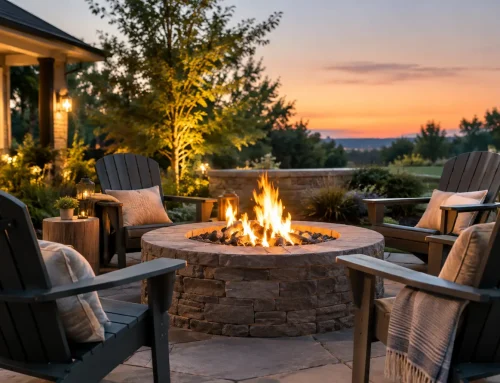
This is especially effective near seating areas, fire pits, or patios where the pond is meant to be part of a broader outdoor living experience. The gentle motion catches light beautifully and gives the space a more relaxed, welcoming feel.
How to choose plants for your pond design
The best plants around backyard ponds are not always the flashiest ones. Usually, the strongest result comes from a layered approach. You want a few taller plants for height, some medium plants for fullness, and lower edging plants to soften transitions near stone or lawn.
Color should be handled carefully. Too many bloom colors can make a pond feel busy, especially if the water feature already includes rock variation, lighting, and moving water. A calmer palette with greens, soft purples, white blooms, and occasional brighter accents often feels more luxurious.
Maintenance should guide decisions just as much as appearance. If your goal is a peaceful backyard sanctuary, the planting should not create constant skimming, trimming, or reworking. This is where professional planning makes a difference. A plant may look beautiful in a nursery container, but that does not mean it will stay proportional to the pond six months from now.
Pondside planting mistakes that change the whole feel
One of the most common mistakes is planting too close to the water with species that drop heavily. Leaves, petals, and seed heads may seem minor at first, but they can quickly affect water clarity and increase maintenance.
Another issue is overplanting. Homeowners often want the pond to look full right away, but crowded plantings can swallow the stonework, hide the water, and make the space feel smaller. A better approach is to let each plant have room to show its shape.
There is also the question of style. Tropical foliage, native wetland plants, and formal ornamental choices can all work around a pond, but mixing them without a clear plan usually creates visual tension. The planting should match the personality of the space, whether that means natural, elegant, tropical, or resort-inspired.
Creating a backyard pond that feels complete
A pond should never feel like an isolated feature placed in the middle of a yard. It should feel connected to the patio, the pathways, the lighting, and the places where family and friends gather. That is why planting matters so much. It turns the water feature into an experience.
When designed well, the area around a pond becomes one of the most calming parts of the property. You hear the water before you reach it. You notice the texture of leaves against stone. You get shifting reflections, soft movement, and just enough color to keep the scene interesting without feeling busy.
For homeowners in warm, outdoor-focused communities like Cape Coral and Fort Myers, that kind of backyard environment can change how the home is used every day. A well-planted pond invites slower mornings, easier evenings, and more time outside.
If you are choosing the best plants around backyard ponds, think beyond what looks good in a pot or a quick photo. Think about scale, maintenance, atmosphere, and how the pond fits into the life of the space. The right plants do not just decorate the water’s edge. They help create the kind of backyard you actually want to spend time in.