

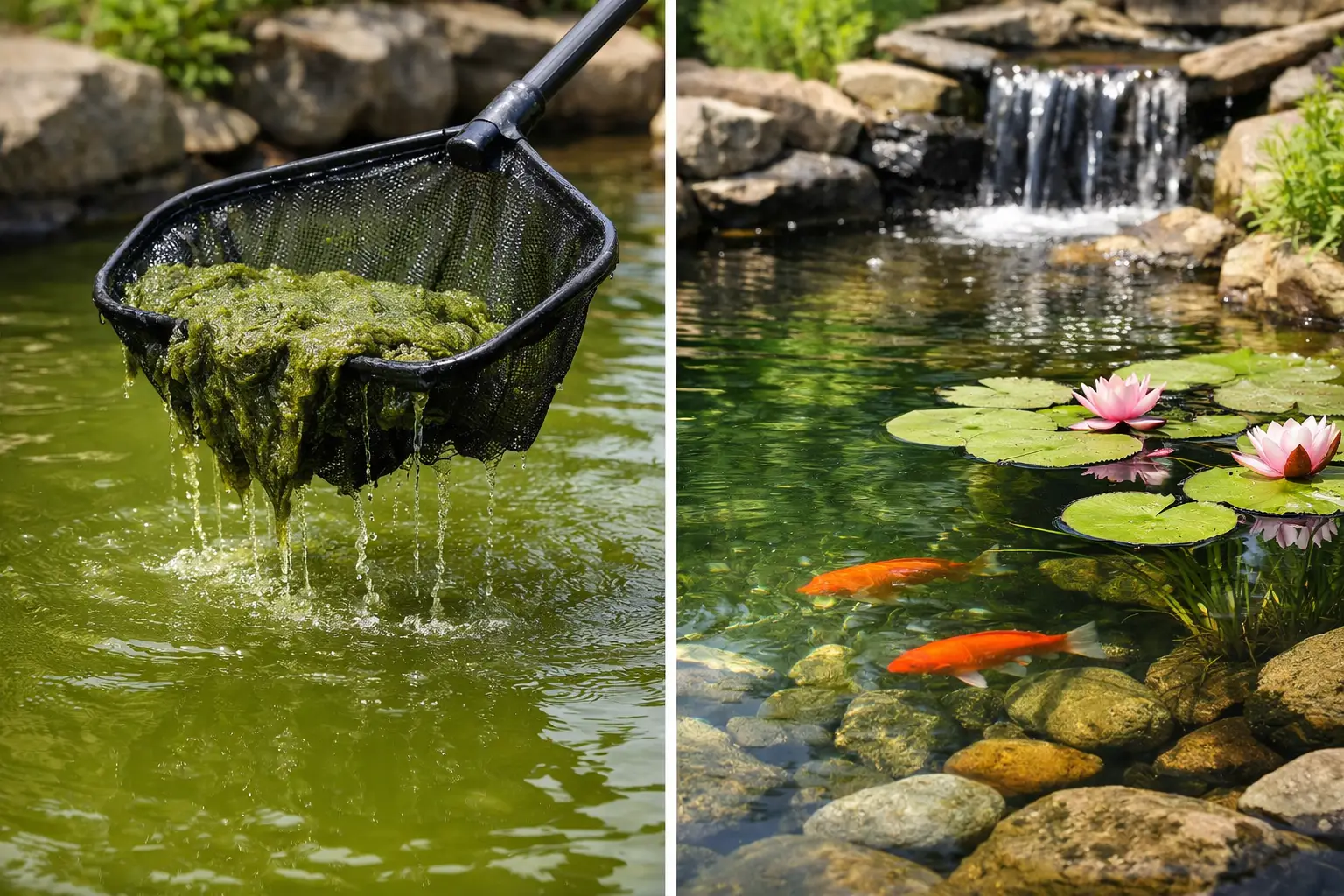
A pond should draw your eye toward moving water, natural stone, and the quiet rhythm of koi beneath the surface. When green pond water takes over, that peaceful focal point can quickly feel like another chore waiting outside. The good news is that green water is usually a correctable algae issue, not a sign that your pond is beyond saving.
A clear pond is not created by one quick treatment. It comes from restoring balance between sunlight, nutrients, circulation, filtration, and plant life. Once those pieces work together, your water feature can return to being the calm, beautiful part of the backyard it was meant to be.
Why Green Pond Water Happens
Most green pond water is caused by suspended algae. These are tiny, free-floating organisms that multiply quickly when conditions are right. Unlike string algae, which attaches to rocks, waterfalls, and pond edges, suspended algae turns the entire water column green and makes it difficult to see fish, stonework, or the pond bottom.
Algae needs light, water, and nutrients. A pond naturally provides all three, but an imbalance gives algae the advantage. In Southwest Florida, abundant sunshine and warm temperatures can make that growth happen especially fast. A pond that looked clear last week may look pea green after a few bright, hot days.
Too Much Sunlight
Sun is a major driver of algae growth. A pond in full afternoon sun may need more shade, more plant coverage, or stronger filtration than a pond tucked beneath a canopy of trees. This does not mean a sunny pond cannot be beautiful and clear. It simply needs to be designed and maintained for its conditions.
Water lilies, floating plants, strategic landscaping, and carefully placed shade can reduce direct exposure without making the pond feel closed in. The goal is not to cover every inch of water. It is to soften the most intense light while preserving open views and the reflections that make a pond feel alive.
Excess Nutrients in the Water
Fish food, fish waste, decomposing leaves, lawn runoff, and organic debris all add nutrients to a pond. Those nutrients feed algae. Overfeeding is one of the most common causes. Fish should generally finish what they are given within a few minutes, with food adjusted for the season, water temperature, and fish activity.
Fertilizer runoff is another concern, especially in landscapes with lush turf and planting beds near the water. Even a carefully maintained yard can send nutrients toward the pond after a hard rain. A professional landscape plan can help direct runoff away from the water feature while keeping the surrounding garden healthy and polished.
Weak Circulation or Undersized Filtration
Still, poorly filtered water gives algae room to grow. A pump must move enough water to support the pond’s volume and features, while mechanical filtration captures debris and biological filtration supports beneficial bacteria. Those bacteria help process fish waste before it becomes algae fuel.
A waterfall can make a pond feel more relaxing, but it is not automatically enough circulation on its own. Dead zones can develop in corners, behind rock shelves, and at the bottom of deeper ponds. The right pump placement and return flow help keep water moving through the entire system.
How to Clear Green Pond Water Safely
The fastest-looking solution is not always the best one. Strong algaecides can kill algae quickly, but a sudden die-off may reduce oxygen and create more organic waste in the pond. That can stress fish and leave you with a new water-quality problem. A better approach clears the current bloom while correcting the reason it formed.
Start With the Pond’s Basic Condition
Before adding a treatment, look closely at the pond. Check the pump intake, skimmer, filter pads, and waterfall flow. Remove leaves, sludge, and trapped debris, but avoid washing biological filter media in chlorinated tap water. That can harm the beneficial bacteria your pond needs.
If fish are present, observe their behavior. Gasping at the surface, clamped fins, or unusual lethargy can point to poor water conditions that need immediate attention. Water testing can reveal concerns with ammonia, nitrite, pH, and other conditions that affect both fish health and algae growth.
Partial water changes can help when nutrient levels are high, but avoid replacing too much water at once. A large change can create a sudden shift in temperature and chemistry. Smaller, measured changes are gentler on the pond ecosystem.
Use UV Clarification for Suspended Algae
For classic green water, a properly sized ultraviolet clarifier is often one of the most effective tools. As water passes through the unit, UV light damages the free-floating algae cells. The filtration system can then remove the clumped material from the water.
UV clarification is particularly useful for ponds with koi, where homeowners want a clear view of the fish without relying heavily on chemicals. It does not solve every underlying issue, though. If the pond receives too much nutrient-rich runoff or the filter is too small, green water may return once the UV unit is off or the bulb loses effectiveness.
Reduce What Is Feeding the Bloom
Once you begin clearing the water, make a few practical adjustments. Feed fish less, remove debris before it breaks down, and make sure the filtration system is cleaned on schedule. If you use a beneficial bacteria treatment, choose one intended for ornamental ponds and follow its directions carefully. These treatments work gradually, supporting the biological balance rather than masking the problem overnight.
Adding plants can also help by competing with algae for nutrients. Marginal plants around the edge, aquatic plantings in shelves, and floating coverage all have a place. The right mix depends on the pond’s size, depth, fish load, and desired appearance. A formal pond with crisp stone lines may call for a different planting approach than a naturalistic water garden.
Keeping Green Pond Water From Coming Back
A pond is easiest to enjoy when maintenance happens in small, regular intervals instead of after the water has already turned. The following habits create a more stable environment throughout the year:
- Remove leaves, grass clippings, and other debris before they settle and decay.
- Feed fish conservatively, especially when their activity slows in cooler weather.
- Clean mechanical filters as needed while protecting the biological media that supports beneficial bacteria.
- Inspect pumps, skimmers, plumbing, and UV equipment so circulation remains consistent.
Seasonal shifts matter, too. Summer heat increases fish metabolism and algae pressure, while rainstorms can wash soil, mulch, and fertilizer toward the pond. After heavy weather, take a moment to check the water level, skimmer basket, and clarity. A few minutes of attention can prevent a larger cleanup later.
When Green Water Needs Professional Help
Some algae blooms are simple maintenance issues. Others point to a pond system that no longer fits the way the space is being used. Perhaps koi have grown larger, the pond receives more sun after tree trimming, or the current filter was never sized for the volume of water and fish load. In those cases, repeated treatments may become frustrating and expensive without providing a lasting answer.
A professional pond evaluation can identify whether the issue is filtration capacity, circulation, nutrient loading, plant balance, or a combination of factors. Enhancements such as a larger biofilter, improved skimming, a correctly sized UV clarifier, or better water movement can protect both the appearance and the health of the feature.
For homeowners in Cape Coral, Fort Myers, and nearby coastal communities, pond care also needs to account for intense sun, heat, rainfall, and the outdoor entertaining season that lasts much of the year. A water feature should feel dependable when family visits, friends gather around the patio, or a quiet evening calls for the sound of a waterfall.
Design Choices That Support Clear Water
The best time to prevent green water is during pond design or renovation. Thoughtful depth, adequate filtration, accessible equipment, plant shelves, and natural shade all make maintenance easier. Rockwork should create beauty without trapping excessive debris, and the water’s movement should be visible, audible, and effective.
This is where a pond becomes part of a larger outdoor sanctuary rather than a stand-alone feature. A clear pond can reflect landscape lighting after sunset, soften the edge of a flagstone patio, and create a natural backdrop for an outdoor kitchen or fire pit. The design should invite you outside, not leave you worrying about what the water will look like when guests arrive.
At Uni-Scape, pond maintenance and water-feature enhancements are approached with that full backyard experience in mind. The goal is not merely clearer water. It is a pond that supports the calm, connection, and beauty you want to feel every time you step outside.
When the water clears, resist the urge to treat the pond as finished. Keep watching its rhythm – the flow over the falls, the behavior of the fish, the amount of sun on the surface, and the debris collecting after a storm. That steady care protects the peaceful view and lets your pond remain a place to slow down, gather close, and enjoy home.