

A pool should feel like the heart of the backyard, not an island surrounded by struggling plants. This Florida native pool landscaping guide is designed for homeowners who want the water, stone, shade, and planting around their pool to feel connected – a private retreat built for slow mornings, family afternoons, and evenings outdoors.
In Southwest Florida, a beautiful pool landscape has to do more than look lush on installation day. It needs to handle intense sun, reflected heat, salty air near the coast, summer downpours, occasional dry stretches, and pool splash. Native and Florida-friendly plants can give a pool area a more natural, settled feeling while helping reduce the constant cycle of replacing stressed landscaping.
Start With the Experience You Want Around the Pool
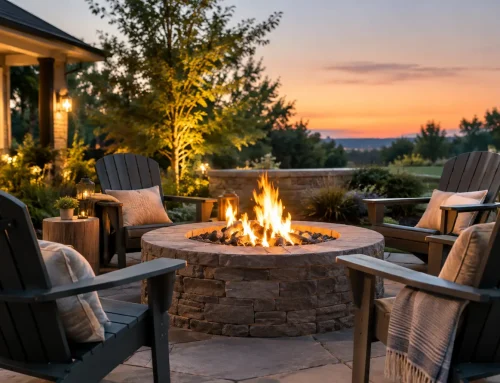
Before selecting a single plant, think about how the space should feel when you walk outside. Do you picture a clean, open pool deck for entertaining? A tropical garden with a tucked-away spa? A family gathering space where children can play while adults relax near an outdoor kitchen or fire feature?
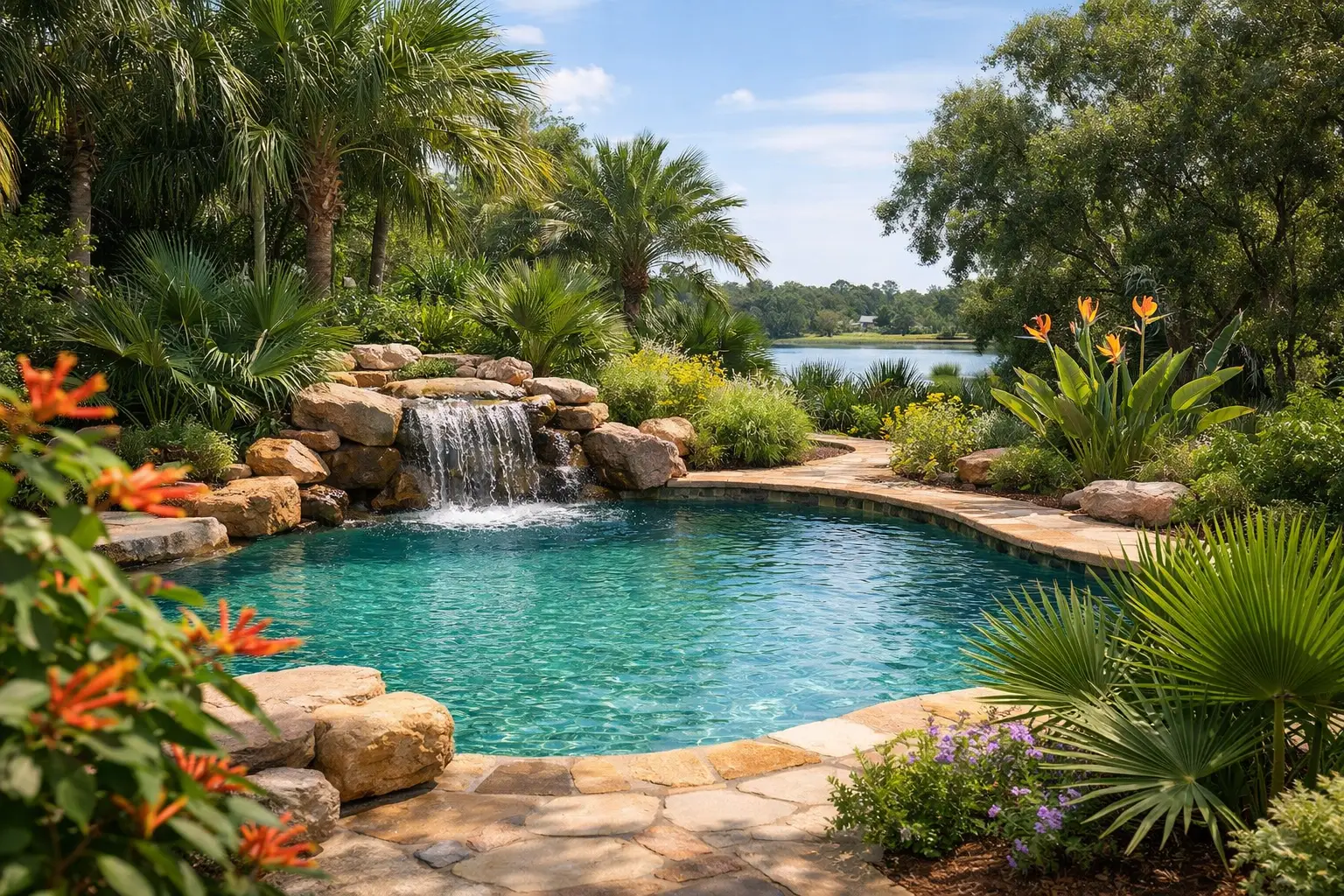
The answer shapes the planting plan. A resort-inspired backyard may use layered palms, soft grasses, natural boulders, and a gentle water feature to create privacy without closing in the view. A more contemporary pool may call for crisp planting bands, sculptural native accents, and generous open areas around the patio. Neither approach is automatically better. The right one is the one that supports how your family actually spends time outdoors.
A thoughtful design also creates transitions. Instead of stopping the pool deck at a line of shrubs, let pathways, flagstone, planting beds, lighting, and seating areas lead the eye through the yard. The pool becomes one part of a complete outdoor living environment.
Choose Natives That Can Handle Poolside Conditions
Poolside planting comes with its own microclimate. Pavers and coping hold heat, water reflects sunlight upward, and splashing can leave traces of chlorinated or salt water on nearby foliage. Even a plant that thrives elsewhere in the yard may struggle right against the deck.
For that reason, place your toughest selections closest to the pool and reserve more delicate plants for protected beds farther away. Native plants are adapted to Florida’s soils, rainfall patterns, and seasonal weather, but they are not all interchangeable. Match each plant to its light, drainage, mature size, and exposure.
Strong Structural Plants
Use larger native plants to establish privacy, define the edge of the outdoor room, and soften fences or screen enclosures. Saw palmetto can create a fuller, natural backdrop in larger spaces. Simpson’s stopper offers evergreen screening, small white flowers, and berries that add seasonal interest. Firebush brings warm color and attracts butterflies and hummingbirds, though it needs room to grow and looks best when allowed a relaxed shape rather than sheared into a tight hedge.
For smaller yards, consider working with selective groupings instead of a continuous wall of plants. A layered view is more inviting than a solid green barrier: taller palms or shrubs in back, medium flowering plants in the middle, and lower textures near the patio.
Color and Movement at the Deck Edge
Muhly grass is a favorite for soft movement and airy fall color. It can bring a light, calming texture to stone patios and pool coping, especially when planted in drifts rather than scattered as individual specimens. Coontie offers a low, orderly foundation with a distinctly Florida character and works well in beds where a clean profile matters.
Beach sunflower can brighten sunny areas with cheerful yellow blooms, while native groundcovers may help soften the outer edge of a planting bed. These choices should be kept far enough from heavy foot traffic that they can spread naturally without becoming a tripping hazard or spilling across the deck.
Flowering plants add life, but restraint matters. Too many colors and leaf shapes can compete with the water and make a premium pool setting feel busy. Repeat a limited palette through the landscape so the design feels intentional from the patio, the spa, and the view from inside the home.
Design for Privacy Without Losing the Breeze
Privacy is one of the most requested pool-landscape features, particularly in neighborhoods where homes sit close together. The instinct is often to plant dense hedges immediately around the deck. That can work, but it can also trap humidity, block cooling breezes, and make a pool feel smaller.
A better approach is to identify the views that truly need screening. Use layered planting, decorative walls, pergolas, or carefully placed palms to frame those sightlines while leaving open views where the yard feels most spacious. In Cape Coral, Fort Myers, and nearby coastal communities, allowing air to move through the landscape can make the pool area more comfortable through much of the year.
Remember mature size. A plant that looks appropriately small in a nursery pot may eventually crowd the coping, press against a screen, or obscure the pool from the house. Designing for the plant’s future size protects both the investment and the peaceful, open feeling you want around the water.
Pair Native Plants With Stone, Water, and Light
Native landscaping feels especially at home when it is paired with natural materials. Boulders, flagstone walkways, and carefully shaped rock work can ground planting beds and create an organic connection between the pool and the rest of the yard. The goal is not to make the space look wild. It is to create a landscape that feels settled, dimensional, and believable.
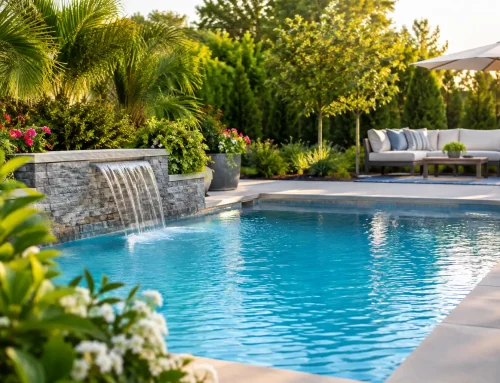
A fountain, pondless waterfall, or small recirculating water feature can extend the sound of water beyond the pool itself. This is particularly effective in a seating area or near a spa, where the gentle sound can soften neighborhood noise and encourage a slower pace. Placement matters, though. A water feature should complement the pool rather than compete with its view or take up the deck space needed for gatherings.
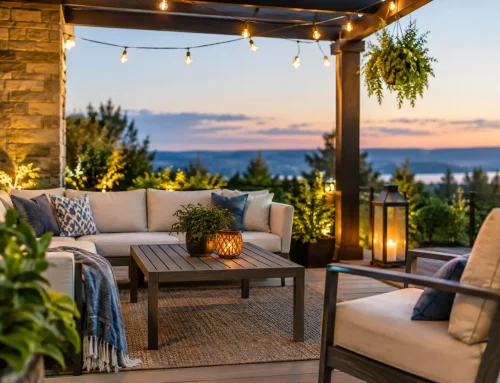
Landscape lighting changes the experience after sunset. Soft uplighting can reveal palm trunks and layered foliage, while low path lights make movement safer around patios and walkways. Warm, carefully aimed fixtures are usually more relaxing than bright, evenly spaced lights. They create depth, guide guests naturally, and let the pool remain the evening focal point.
Plan for Maintenance From the Beginning
Native does not mean no-maintenance. Every pool landscape needs a plan for pruning, irrigation during establishment, leaf cleanup, mulch refreshes, and seasonal attention. The difference is that well-chosen plants generally ask for less correction once they are established in the right location.
Avoid plants that drop excessive fruit, large seed pods, or constant leaf litter close to the water. A lush canopy may look beautiful, but if it fills the skimmer every day, it can take away from the easygoing experience you wanted. Likewise, avoid thorny plants beside circulation paths, lounge areas, and spots where children or guests will brush past them.
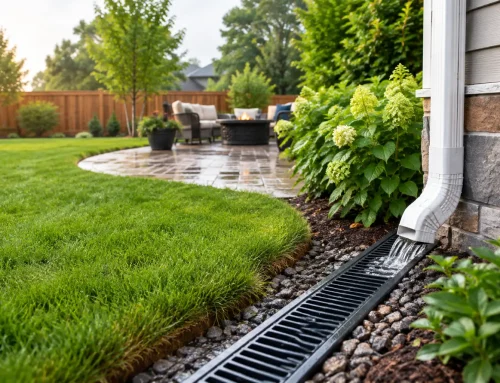
Irrigation should be zoned to the landscape rather than treated as a one-size-fits-all system. Plants near the pool deck may have different moisture needs than a shaded side garden or a rain-fed native bed. Proper drainage is equally important in Florida, where a summer storm can quickly expose a low spot that was overlooked during design.
Let the Backyard Feel Like One Complete Retreat
The most memorable pool landscapes do not rely on a single dramatic plant or a crowded collection of tropical color. They balance open space with shelter, clean pool lines with softer textures, and practical maintenance with moments that invite you to stay outside a little longer.
A custom plan from Uni-Scape can bring those choices together around your pool, patio, water features, stonework, and lighting so the finished backyard feels personal rather than pieced together. Start with the feeling you want to come home to, then let every plant, path, and poolside detail help create it.