

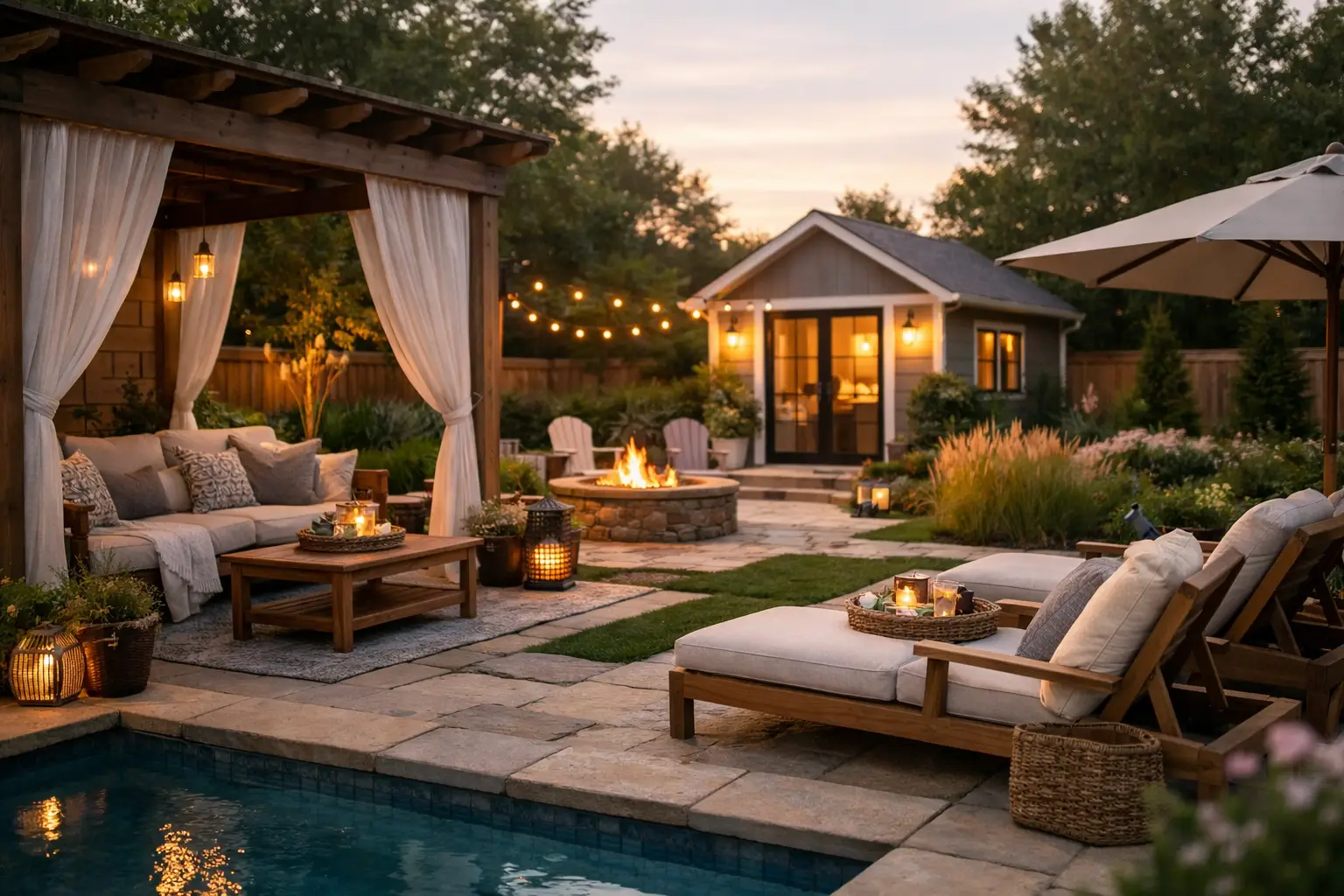
The best backyard retreat design starts with a feeling, not a feature. Before you choose a fire pit, a fountain, or a new patio, picture the moment you want to have there – quiet coffee at sunrise, dinner with friends under soft lighting, kids splashing while adults unwind nearby. When the space is designed around how you want to live, the result feels less like a collection of upgrades and more like a true escape just outside your door.
For many homeowners, that is the real goal. Not simply a prettier yard, but a place that lowers stress, brings people together, and makes home feel fuller. A well-planned retreat can do that beautifully, but only when every element works together.
What backyard retreat design really means
Backyard retreat design is about creating an outdoor environment with purpose, comfort, and atmosphere. It goes beyond lawn, shrubs, and a patio slab. A retreat feels intentional. It has places to gather, places to rest, and details that shape mood, movement, and sound.
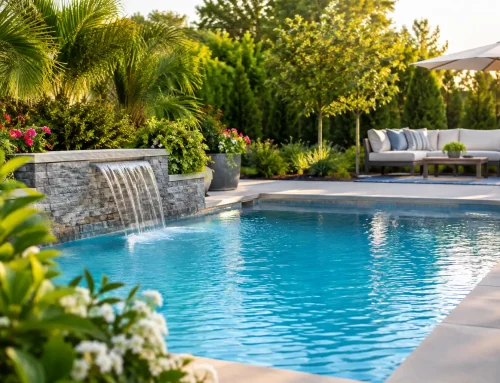
That might mean a custom pool paired with natural stone decking and landscape lighting. It might mean a koi pond tucked beside a flagstone walkway, with a small waterfall that softens the noise of the neighborhood. In another yard, it may center on an outdoor kitchen, a fire feature, and seating arranged so guests naturally settle in and stay awhile.
The specific ingredients can vary, but the common thread is cohesion. Nothing feels random. Materials, textures, and features support one another, and the space feels as good as it looks.
Start with lifestyle, not layout
The most successful backyard retreats are shaped by daily habits and real priorities. That sounds simple, but it is where many projects go sideways. Homeowners often begin with a wish list of features without first deciding how the backyard should function on an ordinary Tuesday, not just during a holiday gathering.
If your family spends most evenings outside, comfortable seating and lighting may matter more than a dramatic statement piece. If you love entertaining, circulation becomes critical. Guests should be able to move easily between the kitchen, dining area, pool, and lounge spaces without the yard feeling crowded. If relaxation is the top priority, privacy, water sound, and shaded seating may deserve the strongest investment.
This is also where trade-offs come into play. A large pool can be stunning, but it can also consume the very yard space needed for open gathering. An elaborate outdoor kitchen adds convenience and value, though not every family will use a full cooking setup often enough to justify the footprint. Good design is not about adding everything. It is about choosing what will improve your life most.
The features that create a true retreat
Some elements do more than fill space. They change the emotional tone of the backyard.
Water features bring calm and movement
Water has a way of changing how a yard feels the moment you step into it. A pond, waterfall, fountain, or spillway spa introduces motion, sound, reflection, and a sense of coolness that is especially welcome in warm Florida climates. Water can make a backyard feel private even when neighbors are nearby, simply because it masks background noise and creates a softer atmosphere.
Naturalistic water features often work especially well in retreat-focused spaces because they feel settled into the landscape rather than placed on top of it. Rock work, plantings, and subtle lighting can make a pond or waterfall feel like it belongs there. Koi ponds add another layer of experience, giving homeowners something peaceful to watch and care for over time.
Of course, water features require planning and, in some cases, maintenance. That does not make them less worthwhile. It simply means design choices should match your comfort level and how involved you want to be after installation.
Stone and hardscape create structure
A retreat should feel grounded. Flagstone patios, walkways, retaining edges, and natural rock details help define the space while giving it texture and permanence. Stone also plays well with water, fire, and planting, which is why it often becomes the visual backbone of a high-end outdoor environment.
The right hardscape does more than look beautiful. It guides movement, creates usable gathering zones, and makes the backyard easier to enjoy year-round. In areas like Cape Coral and Fort Myers, durable materials that perform well in heat, moisture, and frequent outdoor use matter just as much as appearance.
Fire features extend the evening
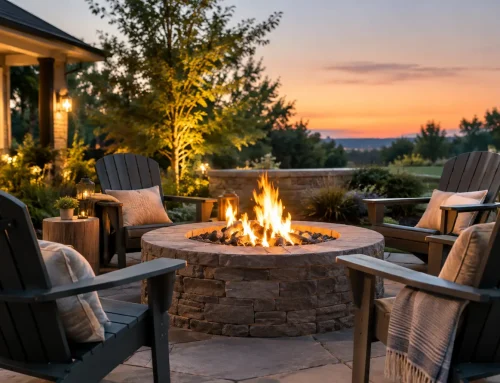
There is a reason people gather around fire so naturally. A fire pit or outdoor fireplace adds warmth, light, and a focal point that makes the backyard feel inviting after sunset. It encourages slower evenings, longer conversations, and that easy kind of family time that does not need much planning.
The choice between a fire pit and a fireplace depends on the yard and the way you entertain. Fire pits are more communal and open. Fireplaces can feel more architectural and intimate. Both can be beautiful when scaled properly to the space.
Outdoor kitchens make entertaining easier
When cooking, serving, and gathering all happen outside, the backyard becomes more than a backdrop. It becomes part of daily life. Outdoor kitchens are especially appealing for homeowners who host often, but even a modest setup can transform the rhythm of entertaining by keeping everyone connected.
The key is honesty about use. Some families need refrigeration, prep space, a grill, and seating. Others will be happier with a simpler arrangement that preserves room for a lounge area, pool deck, or garden feature. Bigger is not always better. Better is better.
Why lighting matters more than most homeowners expect
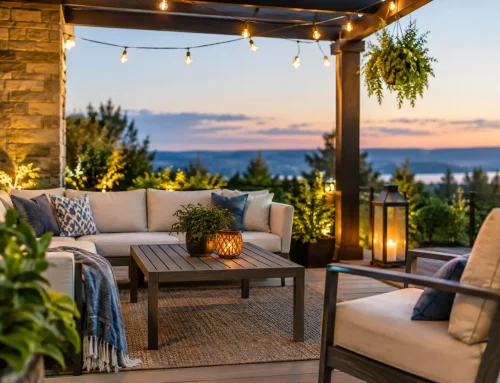
A beautiful backyard can disappear at night without the right lighting plan. More importantly, a retreat can lose its mood. Lighting is what carries the space from afternoon to evening and gives it depth, warmth, and usability.
Soft landscape lighting along walkways improves safety and guides movement. Uplighting can highlight palms, specimen plants, or stone textures. Under-cap and step lighting adds a polished feel to patios and seating walls. Around ponds, waterfalls, and pools, lighting turns reflective surfaces into one of the most memorable parts of the design.
This is one area where restraint matters. Too much brightness can flatten the atmosphere. The goal is not to flood the yard with light. It is to create glow, contrast, and comfort.
Designing for privacy without closing everything in
A retreat should feel sheltered, but not boxed in. That balance takes thoughtful design. Privacy can come from layered planting, strategic walls, pergolas, elevation changes, screen elements, or the orientation of gathering spaces. It does not always require tall fences or heavy barriers.
In many backyards, the smartest approach is a combination of visual screening and sensory buffering. A line of planting may soften views, while a fountain or waterfall helps mask noise. Covered structures can make seating areas feel tucked away without disconnecting them from the rest of the yard.
This is where custom design matters. Privacy solutions should fit the property, not fight it.
A retreat should fit the home, too
The backyard should feel like a natural extension of the house. When materials, colors, and architectural cues connect indoors and out, the whole property feels more complete. That does not mean everything has to match exactly. It means the transitions should feel intentional.
A sleek modern home may call for cleaner lines and more restrained planting. A more relaxed Florida home may feel right with natural stone, lush greenery, and water features that create a resort-like atmosphere. The point is harmony. A backyard retreat should belong to the home and still offer its own distinct experience.
Backyard retreat design works best as one complete vision
One of the biggest mistakes in outdoor projects is building in disconnected phases without a clear master plan. A patio gets added first, then lighting later, then a water feature, then maybe a fire pit. Sometimes that works. Often it leaves the space feeling pieced together.
A complete design vision does not require building everything at once, but it should guide every decision. That way, future additions support the original concept instead of competing with it. It is the difference between a yard that has nice features and a retreat that feels immersive.
That is also why experienced design-build guidance matters so much. Bringing together pools, spas, ponds, rock work, kitchens, patios, and lighting takes more than product selection. It takes someone who can shape the whole environment around the lifestyle you want to create.
A backyard should not be the part of the property you look at from inside. It should be the place that calls you out at the end of the day, where the noise drops, the lights come on, and everyone finds their place. If your outdoor space can do that, it is not just improved. It is transformed.