

A quiet pool can feel beautiful. A pool with moving water feels alive.
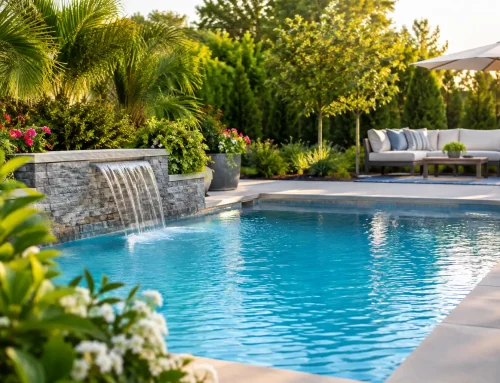
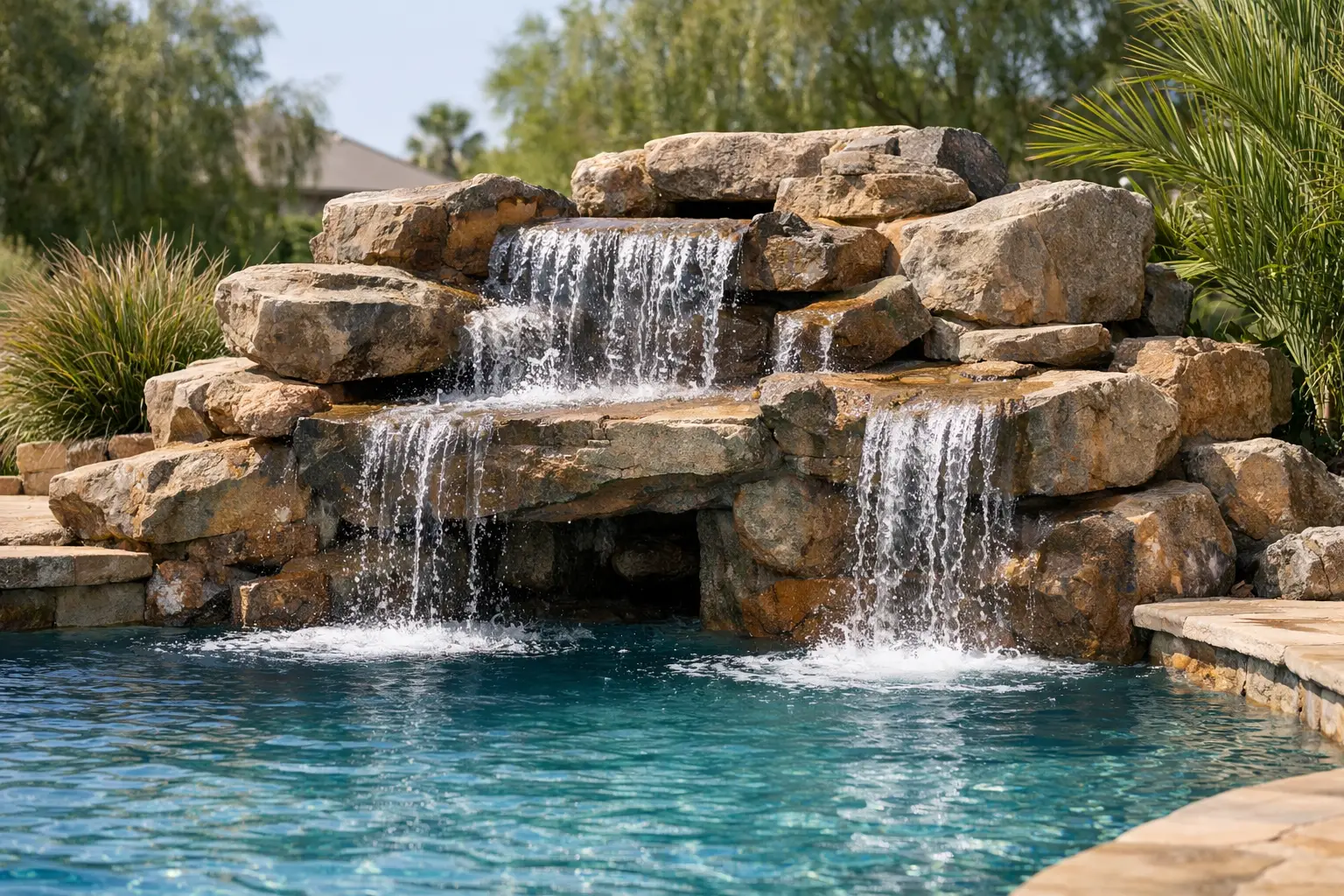
That is the real appeal of a rock waterfall for pool design. It changes the mood of the entire backyard. The sound softens traffic noise, the stone adds texture and depth, and the water creates movement that makes the space feel more like a retreat than a standard patio and pool setup. For homeowners who want a backyard that helps them unwind, entertain, and spend more time outside, a waterfall is often the feature that makes the whole environment click.
Why a rock waterfall for pool design changes the space
A pool on its own gives you a place to cool off and gather. A rock waterfall adds atmosphere. That difference matters more than people expect.
When natural stone or carefully crafted faux rock is built into the poolscape, the feature starts to do several jobs at once. It becomes a visual anchor, especially in yards where the pool needs a stronger focal point. It introduces the soothing sound of water, which can make the backyard feel more private and calm. It also helps blend hardscape, planting, lighting, and the pool itself into one experience instead of a collection of separate elements.
For families, that experience is part of the value. Kids are drawn to the movement and excitement. Adults tend to appreciate the way a waterfall softens the space and makes evening swims or outdoor dinners feel more relaxing. If your goal is a backyard that supports both play and peace, this is one of the few features that truly speaks to both.
The style matters more than size
Many homeowners assume a waterfall has to be large to make an impact. In reality, proportion matters far more than scale.
A compact rock waterfall can feel elegant and natural when it fits the size of the pool and the architecture of the home. An oversized one can overwhelm the yard and make the setting feel forced. The best designs work with the lines of the pool, the grade of the property, and the way people actually use the space.
In a more tropical Florida backyard, for example, a rock waterfall often works best when it feels tucked into lush planting, integrated with boulders, and supported by soft lighting. In a cleaner, more contemporary outdoor setting, the stonework may need tighter shaping and more restraint so the feature feels intentional rather than rustic. There is no single right look. The right choice depends on the atmosphere you want to create.
Natural rock vs. faux rock
This is one of the first decisions that shapes budget, appearance, and long-term maintenance.
Natural stone has unmatched character. The variation in color, shape, and texture gives a waterfall an organic look that is hard to fake. For homeowners who want the space to feel grounded, timeless, and connected to the landscape, real rock often has the strongest visual payoff.
Faux rock has advantages too. It can be easier to engineer around specific pool designs, easier to shape for dramatic forms, and sometimes more cost-effective depending on the project. High-quality faux rock can look convincing when it is designed well, but quality matters. Poorly done faux finishes tend to age badly and can make an otherwise beautiful backyard feel less refined.
This is one of those areas where craftsmanship makes a major difference. The feature should not look like it was added as an afterthought. It should feel like it belongs to the pool from the beginning.
What homeowners love most about pool waterfalls
The obvious benefit is beauty, but that is usually not the reason people love the feature years later.
They love the sound. Flowing water changes how a backyard feels on an ordinary Tuesday evening, not just when guests are over. It can make the space feel more restful after work and more immersive on weekends. In neighborhoods where homes are close together, that sound can also help mask nearby activity and create a stronger sense of escape.
They also love the way a waterfall gives the pool more personality. Without one, a pool can feel flat from certain viewing angles. With one, there is a destination point. The eye has somewhere to land. That matters if you spend as much time looking at the pool from the patio, kitchen, spa, or outdoor living area as you do swimming in it.
There is also a tactile side to the appeal. Water catching sunlight on stone, subtle splashing near the edge, evening lighting reflecting through the flow – those sensory details are what make a backyard feel memorable.
The trade-offs to think through
A rock waterfall for pool installation is not a universal yes. It depends on your priorities, your yard, and how you want the pool to function.
First, waterfalls add cost. That includes design, materials, structural work, plumbing, and pump considerations. If you are deciding between a waterfall and other meaningful upgrades, such as better lighting, a spa, a fire feature, or an outdoor kitchen, it is worth thinking about which improvement will most affect how you use the space.
Second, waterfalls require maintenance. Water movement can contribute to splash-out, and stone surfaces may need periodic cleaning depending on the water chemistry and surrounding conditions. If the feature is designed poorly, it can create unwanted noise levels, awkward water spray, or maintenance headaches that take away from the calm effect you were hoping for.
Third, not every pool style wants a rock feature. If the home and landscape are highly modern, a naturalistic waterfall may feel out of place unless it is interpreted in a more architectural way. Good design is not about adding the most dramatic feature. It is about choosing the feature that belongs.
Design details that make the difference
The most successful waterfall projects are not just about stacking rocks and adding flowing water. They are about composition.
The shape of the cascade affects whether the sound is gentle or loud. A thin sheet of water feels different from multiple drops over irregular stone. The placement matters too. A waterfall seen from the main outdoor seating area has more day-to-day value than one hidden at the far end of the pool.
Surrounding materials matter just as much. A waterfall becomes more convincing when the stonework relates to nearby patios, steps, retaining elements, or planting beds. Landscape lighting can completely change its impact at night, turning it into a glowing focal point instead of a feature that disappears after sunset.
Planting is another important layer. Tropical and soft-textured greenery can help a rock waterfall feel settled into the space rather than newly installed. In Southwest Florida, where outdoor living often extends through much of the year, that integration can make the backyard feel like a private resort instead of a simple recreation area.
Should you add a slide, grotto, or spa spillway?
Sometimes a homeowner starts by asking for a waterfall and quickly realizes they are really imagining a more immersive water feature.
A slide can make sense for families with young children and frequent gatherings, but it changes the tone of the space. It becomes more playful and active. A grotto creates drama and a strong resort feel, though it needs enough room and the right overall design to avoid feeling crowded. A spa spillway offers a cleaner, more controlled water feature and may be a better fit if the goal is elegance rather than a natural rock statement.
This is where priorities should lead the design. If your dream backyard centers on calm evenings, subtle sound, and refined texture, a well-composed rock waterfall may be enough. If the space is meant to be energetic, social, and family-focused, a larger feature might fit beautifully.
Building for long-term enjoyment
The best water features are built with both emotion and practicality in mind.
That means considering pump sizing, plumbing access, stone stability, finish durability, and how the waterfall will age in your climate. It also means thinking about how the feature works with future maintenance, pool cleaning, and any adjacent enhancements you may want later.
For a custom outdoor environment, every major element should support the same feeling. The pool, the stone, the lighting, the patio, and the planting should all move in the same direction. That is when the backyard stops feeling like a project and starts feeling like a place you genuinely want to be.
A thoughtfully designed waterfall does more than decorate the pool. It gives your outdoor space a pulse. And when that sound meets warm evening air, soft lighting, and the people you most enjoy being around, the backyard starts doing what it was always meant to do – help you slow down and stay awhile.