

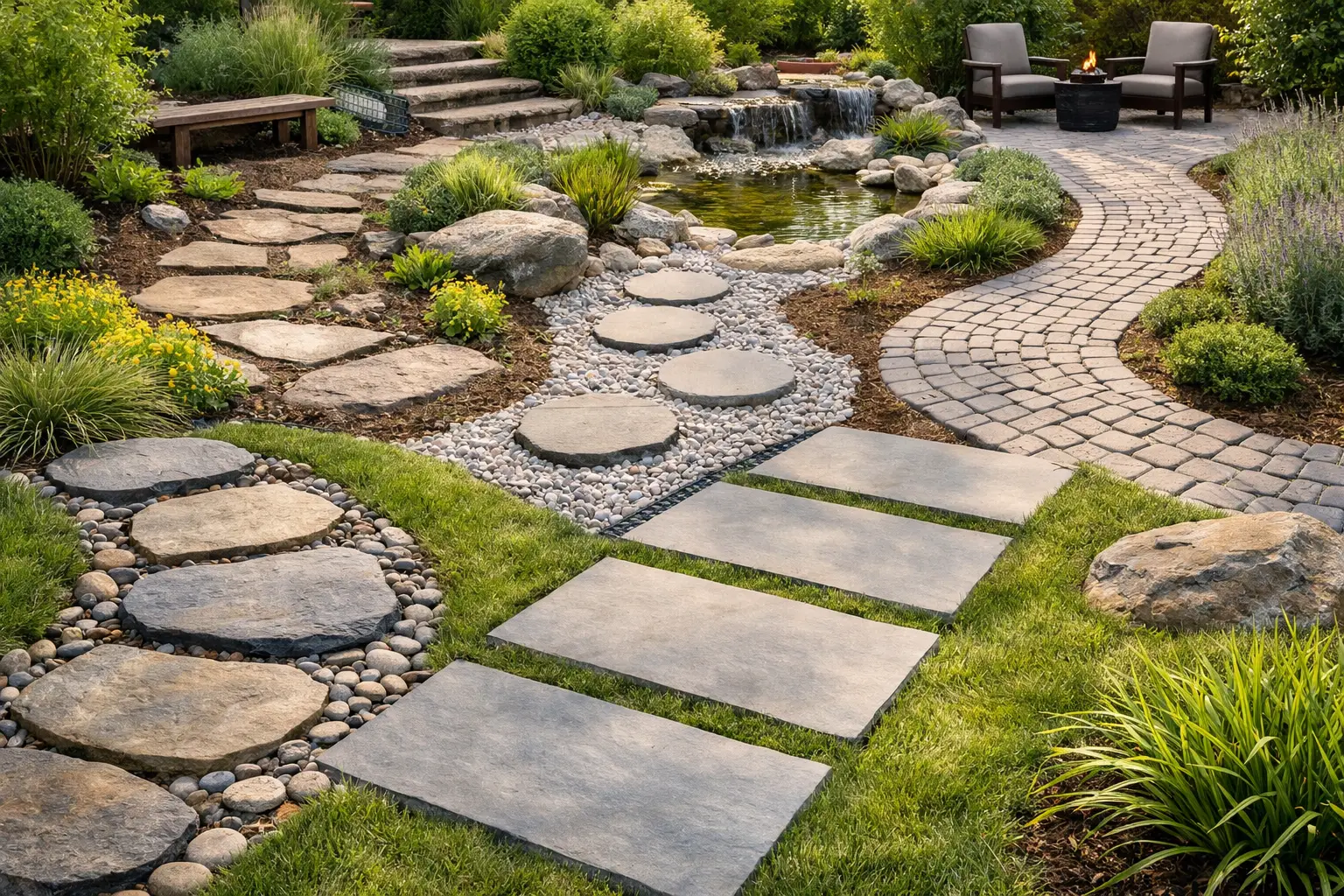
A backyard path does more than connect one space to another. The right walkway sets the mood before anyone reaches the patio, fire pit, pool, or garden gate. Thoughtful walkway stone design ideas can make an outdoor space feel calmer, more natural, and more complete, especially when the stone works with the home, the landscape, and the way your family actually uses the yard.
In a high-end outdoor setting, a walkway should feel like part of the experience, not an afterthought. It can slow the pace, guide guests naturally, soften transitions between gathering spaces, and bring structure to a lush landscape. Stone is especially powerful here because it adds permanence, texture, and a connection to nature that concrete alone rarely delivers.
Why walkway stone design matters
A well-designed stone walkway creates flow. That sounds simple, but it changes how a backyard feels. When a path leads comfortably from the driveway to the front entry, from the lanai to the pool, or from a seating area to a tucked-away fountain, the whole property becomes easier to enjoy.
It also shapes first impressions. Wide, graceful paths feel welcoming. Irregular stones nestled in planting beds feel relaxed and organic. Cleanly cut pavers read more formal and architectural. None of these choices are universally better. The best option depends on the mood you want and how your outdoor spaces are meant to be used.
For Florida homeowners, material choice matters for practical reasons too. Rain, heat, humidity, and frequent outdoor use all affect how a walkway performs over time. Beauty matters, but so do traction, drainage, and durability.
Walkway stone design ideas that feel custom
1. Create a natural flagstone path through planting beds
Flagstone is one of the most timeless walkway materials because it feels grounded and relaxed without looking unfinished. Large irregular pieces can wind through tropical planting, ornamental grasses, or low garden beds in a way that feels effortless.
This style works especially well when the goal is a sanctuary feel. Instead of forcing straight lines, the path can gently curve and reveal the backyard in stages. That sense of arrival is part of what makes a landscape memorable.
The trade-off is that irregular stone takes a thoughtful installation. Spacing, leveling, and joint treatment all matter. If it is done casually, the path can feel uneven rather than natural.
2. Use cut stone for a cleaner, more formal look
Not every backyard calls for rustic edges. If your home has strong architectural lines, a cut stone walkway may feel more at home. Rectangular or square stones create a cleaner visual rhythm and pair beautifully with modern pools, structured planting plans, and outdoor kitchens.
This approach often feels more intentional near front entries or formal entertaining spaces. It can also make a smaller yard feel more organized. The key is to avoid making the path too rigid if the surrounding landscape is soft and lush. A little contrast is beautiful. Too much can feel disconnected.
3. Mix stone sizes for a more layered design
Some of the most compelling walkway stone design ideas come from using more than one size or shape of stone. A path made with larger primary stones and smaller accent pieces can feel richer and more custom than a one-pattern installation.
This is especially effective in transitional spaces, like the route from a patio to a garden feature or from a pool deck to a shaded seating area. It gives the eye more to take in and helps the walkway feel integrated with nearby rock work, retaining details, or water features.
The caution here is balance. Too many shapes or competing tones can make the walkway feel busy.
Let the path support the backyard experience
4. Widen key sections where people pause
A walkway does not need to stay the same width from beginning to end. In fact, one of the best design moves is to widen the path where people naturally slow down. That might be near a fountain, beside a pond, or at the entrance to a patio.
This subtle change makes the walkway more comfortable and more inviting. It also creates room for a bench, planter, or lighting feature without making the path feel crowded. For families who entertain often, this is a practical upgrade that improves the flow of gatherings.
5. Pair stone with a destination feature
A walkway becomes more meaningful when it leads somewhere worth noticing. A quiet bench under a tree, a fire pit, a koi pond, or a tucked-away fountain gives the path a purpose beyond basic circulation.
This matters because outdoor design is emotional as much as functional. When the walkway builds anticipation and ends in a place made for conversation or quiet, the entire yard feels more like a retreat. Natural stone is especially effective around water features because it mirrors the textures found in nature and softens the mechanical feel that some hardscape can create.
6. Use curves where the goal is relaxation
Straight paths move people quickly. Curved paths invite them to slow down. Neither is wrong, but the difference is worth paying attention to.
If your goal is a restful, resort-like backyard, a gently curved stone walkway often supports that feeling better than a direct line. Curves work particularly well around ponds, freeform pools, layered planting beds, and shaded garden areas. In smaller yards, though, too much winding can feel impractical. Sometimes a slight bend is all you need to soften the layout.
Stone choices that affect the final look
7. Choose lighter tones to keep the space bright
Stone color changes the atmosphere more than many homeowners expect. Lighter stones can make a walkway feel open, airy, and cool, which is especially appealing in sunny climates like Southwest Florida. They also tend to complement pools, stucco exteriors, and tropical landscapes beautifully.
That said, lighter stone may show stains, leaf debris, or mildew more readily in shaded or damp areas. A beautiful path still needs to be livable, so maintenance expectations should be part of the design conversation.
8. Use deeper, earthy tones for warmth and contrast
Darker stones or warm blends of tan, rust, charcoal, and brown create a more grounded, intimate feel. They can anchor lush green planting and make landscape lighting stand out dramatically in the evening.
These tones are often a strong choice when the backyard includes natural boulders, fire features, or a more rustic style. They can absorb more heat, though, so placement matters in barefoot zones.
9. Add joints that match the mood of the space
The space between stones has a surprisingly big effect on the finished result. Tight joints create a cleaner, more tailored look. Wider joints filled with gravel, groundcover, or low turf can feel softer and more relaxed.
This is one of those details that separates a generic path from a custom one. It also affects maintenance and comfort underfoot. A lush planted joint looks beautiful, but it may need more upkeep than a tightly finished joint in a high-traffic area.
Make the walkway safer and more usable
10. Plan for lighting from the start
A stone walkway should feel just as inviting after sunset as it does during the day. Low landscape lighting can wash across the stone surface, highlight texture, and guide people comfortably from one outdoor room to the next.
This is not only about safety, although that matters. It is also about extending the backyard experience into the evening. When stone, planting, and lighting are planned together, the path becomes part of the atmosphere.
11. Prioritize drainage and slip resistance
The prettiest path in the yard will disappoint you if it puddles after rain or becomes slick near the pool. This is where design and installation need to work together.
Natural stone can be a strong choice, but the finish, base preparation, slope, and surrounding grade all influence performance. In Florida, where afternoon storms and moisture are part of life, drainage is not a minor technical detail. It is part of whether the walkway continues to feel effortless over time.
Bringing walkway stone design ideas into a cohesive plan
The strongest walkways are rarely designed on their own. They work because they belong to a larger outdoor vision. The stone may echo a patio surface, complement rock work around a waterfall, or help connect the house to a pool, spa, or outdoor kitchen in a way that feels unified.
That is why the best walkway stone design ideas are not always the most elaborate ones. Often, the most successful path is the one that fits the setting so naturally you can imagine it was always meant to be there. It supports daily life, welcomes guests, and gives your backyard a sense of calm movement from one experience to the next.
If you are planning a new outdoor space or reworking an existing yard, start by thinking less about the path alone and more about the feeling you want when you step outside. A beautiful stone walkway should not just move you across the yard. It should draw you into the kind of outdoor life you want to come home to.