

A pool should feel like the most relaxing place on your property, not a beautiful feature sitting in full view of every neighboring window. Learning how to create poolside privacy landscaping starts with a simple shift in perspective: privacy is not just about blocking a view. It is about shaping a calm, sheltered setting where you can float, gather, dine, and let the day slow down.
For homeowners in Southwest Florida, that setting must also stand up to intense sun, tropical rain, salt air in coastal areas, and a long growing season. The most successful designs create privacy without making the pool deck feel boxed in, dark, or crowded. They combine living greenery, architectural materials, gentle sound, and lighting into a backyard sanctuary that feels intentional from every angle.
Start With the Views You Want to Change
Walk your pool area at the times you use it most. Stand near the lounge chairs, sit at the outdoor dining table, and look outward from inside the pool. Notice exactly where sightlines reach a neighbor’s patio, a second-story window, a street, or an unsightly utility area.
This step prevents a common mistake: planting one continuous wall of greenery around the entire pool. A solid hedge can create privacy, but it can also close off a welcome view of the sky, a pond, a garden bed, or a beautiful mature tree. Instead, identify the specific places that need screening and the places where openness makes the space feel larger.
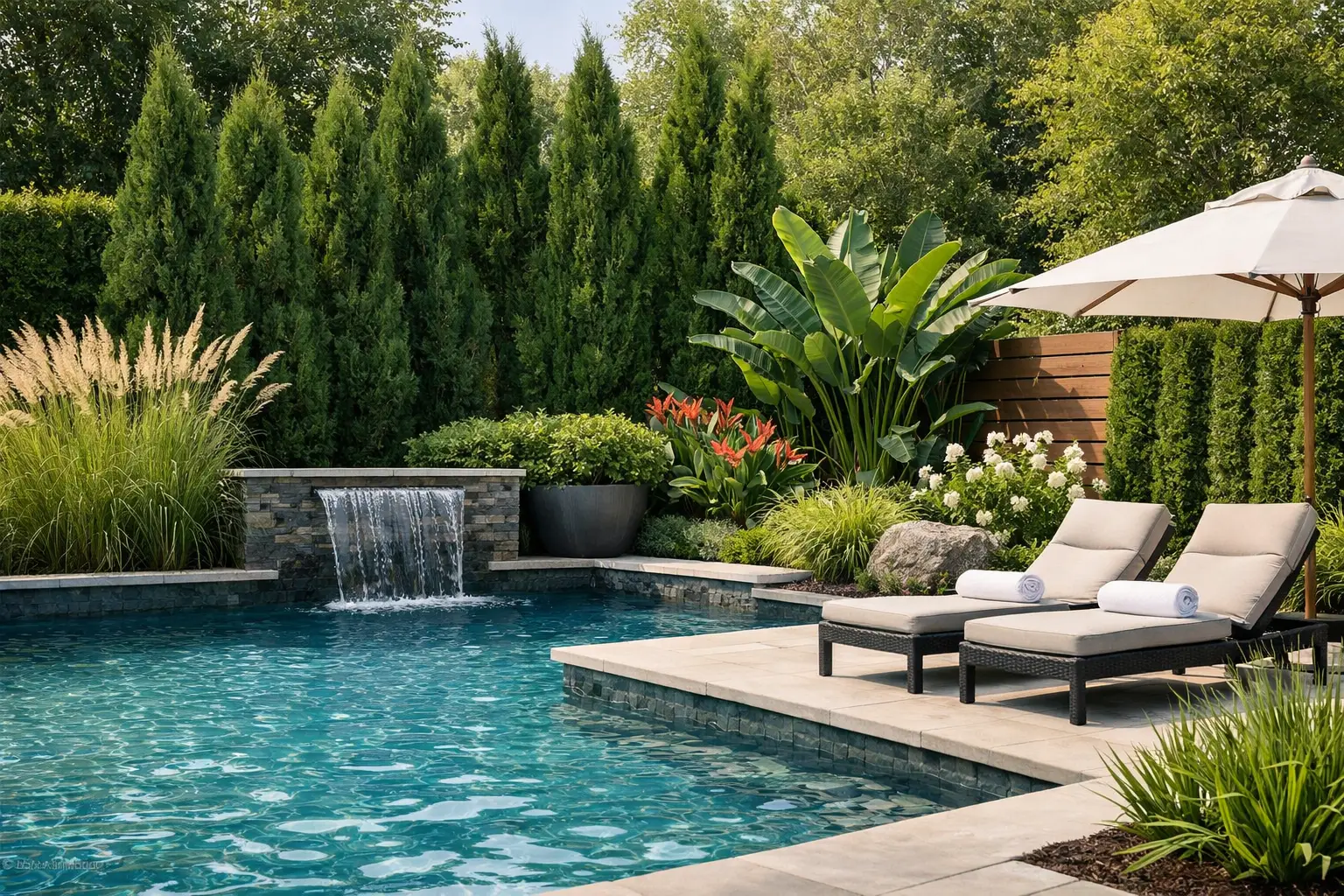
Also consider how the view works in reverse. From your home, the pool should feel like part of a finished landscape rather than an isolated rectangle behind a barrier. Privacy planting should frame the water and guide the eye toward attractive focal points, such as a stone waterfall, a fire feature, or a sculptural palm.
Build Privacy in Layers, Not a Single Wall
The most natural poolside privacy landscaping has depth. It is usually built with a taller background layer, a middle layer of texture and color, and lower planting along the deck edge. This approach softens the boundary while allowing air and light to move through the garden.
Evergreen hedges and clumping palms can establish the main screen. In Florida landscapes, options may include clumping bamboo selected for non-invasive growth, areca palms, podocarpus, cocoplum, clusia, or viburnum. The right choice depends on available space, sun exposure, soil conditions, irrigation, and the desired maintenance level. A narrow side yard needs a more upright plant than a broad rear boundary, while a waterfront property may require species suited to wind and salt exposure.
In front of that screen, add medium-height plants with a different leaf shape. Broad tropical foliage, ornamental grasses, flowering shrubs, and native accents keep the planting from reading as one flat green surface. Low groundcovers or clean stone borders near the pool deck complete the transition without dropping leaves directly into the water.
Plant spacing matters as much as plant selection. Setting plants too close together may create an instant screen, but overcrowding can lead to weak growth, disease, and constant pruning. A professional plan accounts for the mature width of every plant, giving the landscape room to fill in gracefully.
Choose Plantings for the Work They Need to Do
A privacy plant does not have to do only one job. A palm canopy can filter views from upper windows while preserving breezes at ground level. Dense shrubs can hide equipment or a fence line. Fragrant plants near a sitting area can make an evening swim feel more restorative.
Think about the pool’s maintenance needs, too. Avoid placing messy fruiting trees, heavy shedders, or thorny plantings where they can drop debris into the water or snag bare feet. For families, softer foliage and clear pathways are often more practical than a densely packed jungle look. The goal is a landscape that feels lush while remaining easy to enjoy.
Use Stone and Structures Where Plants Cannot Solve the Problem
Plants are living materials. They need time to mature, and some locations are simply too narrow, shaded, or exposed for a dependable green screen. In those areas, an architectural feature can provide immediate privacy and give the poolscape more character.
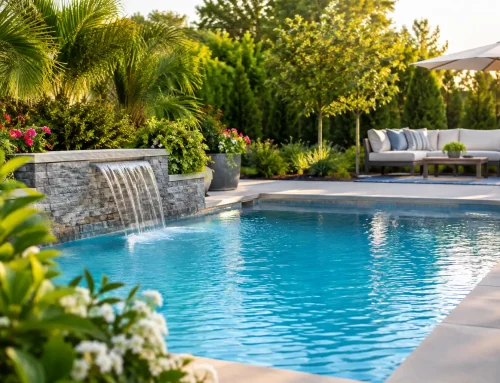
A natural-stone wall, decorative masonry screen, or carefully placed section of fencing can conceal a direct view without enclosing the entire yard. Warm flagstone can connect a patio to a tucked-away lounge area, while rock work around a waterfall creates a visual destination that draws attention away from a neighboring property.
Pergolas, covered seating areas, and outdoor kitchens can also create useful privacy through placement. A roofline, privacy panel, or tall planter behind a dining area can make guests feel sheltered without interrupting circulation around the pool. This is especially helpful on compact lots, where every square foot has to serve more than one purpose.
The materials should echo the home and pool design. A sleek contemporary pool may call for clean-lined screens and large-format stone, while a freeform pool can feel at home with natural boulders, lush foliage, and a waterfall that resembles a hidden tropical spring. Mixing styles without a plan can make even expensive elements feel disconnected.
Add Sound for a More Complete Sense of Seclusion
Visual screening is only part of privacy. Traffic, nearby conversations, pool equipment, and neighborhood activity can pull attention away from a peaceful afternoon outside. The soft movement of water helps create a more private experience because it gives the space its own gentle soundtrack.
A waterfall, fountain, or pond feature placed near a seating zone can mask intermittent noise while adding movement and reflection. The sound should fit the setting. A small spillway may be ideal for a quiet reading corner, while a broader cascade can complement a more energetic entertaining area. It depends on how close the feature is to bedrooms, neighbors, and the primary gathering spaces.
Water also makes privacy landscaping feel less like a boundary and more like an environment. When paired with stone, layered planting, and warm lighting, it brings the senses into the design and gives the backyard a retreat-like character after sunset.
Plan Lighting Before the Landscape Is Finished
Privacy disappears at night when bright floodlights expose every corner of the yard. Thoughtful landscape lighting creates safety and atmosphere while preserving the soft, protected feeling you worked to build.
Use low path lights to define walkways, subtle uplighting to reveal palms or textured trunks, and gentle downlighting for lounge and dining areas. A softly lit water feature can become the evening focal point, while carefully aimed fixtures prevent glare across the pool surface. Lighting should help people move comfortably through the space, not turn the backyard into a stage.
It is wise to plan wiring and fixture locations before patios, planting beds, and stonework are complete. Retrofitting is possible, but coordinating these elements from the beginning produces a cleaner result and protects the finished landscape from unnecessary disruption.
Create Private Moments Within the Whole Backyard
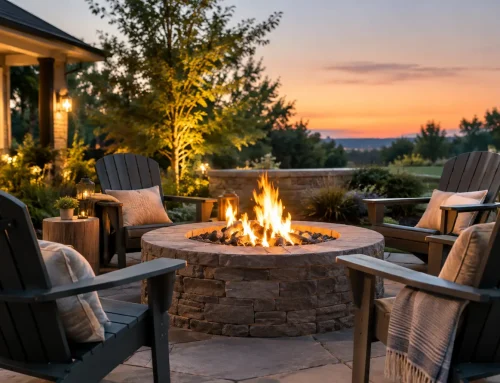
Not every private area needs to be the pool itself. A well-designed poolscape often includes smaller destinations that give family and guests different ways to enjoy the outdoors. A pair of lounge chairs behind a planting screen can become a quiet morning spot. A fire pit framed by palms can create a comfortable place for conversation after swimming. An outdoor kitchen can face inward toward the pool rather than outward toward nearby homes.
These zones make the backyard feel more generous and personal. They also allow privacy to happen gradually. Rather than stepping from the house into an exposed pool deck, you move through a sequence of shaded paths, textured plantings, water, stone, and gathering spaces that feel increasingly removed from the outside world.
Work With a Long-Term Maintenance Plan
A beautiful privacy screen can lose its shape quickly without consistent care. Hedges need pruning that supports healthy growth rather than harsh shearing. Palms and flowering plants need seasonal attention. Irrigation must reach roots effectively without soaking pool decking or creating wasteful runoff.
Before installing, be honest about how much maintenance you want to handle. Fast-growing plants provide faster coverage but can demand frequent trimming. Slower-growing screens take patience, yet may offer a more manageable long-term result. A balanced design often uses a few mature specimens for immediate presence, supported by younger plants that fill in over time.
For a pool landscape that is both private and inviting, every element should support the next: plantings soften stone, stone anchors the garden, water quiets the surroundings, and lighting extends the experience into the evening. Uni-Scape can help turn those individual choices into a cohesive outdoor sanctuary designed around the way your family relaxes, entertains, and makes memories at home.
The best privacy landscaping does not make you feel shut away. It makes your pool feel like it has always belonged to you.