

One heavy Florida rain can turn a peaceful backyard into a muddy, unusable mess. If your lawn stays soggy, water collects near the patio, or runoff threatens your pool, this guide to backyard drainage solutions will help you understand what is happening and what it usually takes to fix it well.
Good drainage is not just a technical detail. It shapes how your yard feels, how long your hardscapes last, and whether your outdoor space invites people to relax or pushes them back inside. A backyard should feel like a retreat. Standing water, erosion, mildew, and muddy foot traffic get in the way of that experience fast.
Why backyard drainage problems rarely fix themselves
Most drainage issues start with one of three conditions: the yard is not pitched correctly, the soil drains too slowly, or hard surfaces send water to the wrong place. In many homes, it is a mix of all three. A new patio, pool deck, or walkway can change the way water moves across the property, even if the yard seemed manageable before.
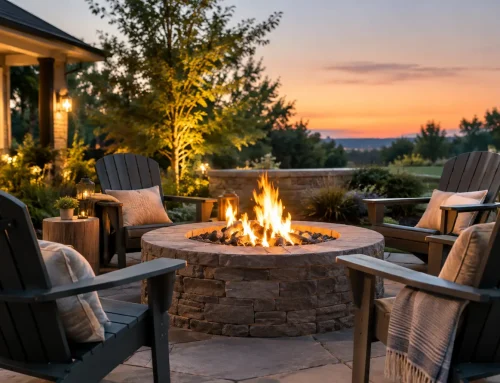
That is why drainage should be treated as part of the overall outdoor design, not as an afterthought. A beautiful flagstone patio or a carefully placed fire pit will not stay beautiful for long if water keeps washing soil away from the edges or pooling at the base. The same goes for planting beds, landscape lighting, and water features. Every element works better when the site handles rain well.
A practical guide to backyard drainage solutions
The right fix depends on where the water comes from, where it collects, and how quickly it needs to move away. There is no single best answer for every yard.
Regrading for better flow
Sometimes the most effective solution is also the least visible. Regrading changes the slope of the yard so water naturally moves away from the house and outdoor living areas. If puddles form in the middle of the lawn or near the foundation, poor grading is often part of the problem.
This approach can be simple or extensive. A minor adjustment may solve a shallow low spot. More serious cases may involve reshaping larger sections of the yard and coordinating the grade with patios, pool decks, planting zones, and drainage inlets. The benefit is long-term performance. The trade-off is that grading can affect existing sod, beds, and hardscape elevations.
French drains for persistent saturation
A French drain is useful when water lingers below the surface or repeatedly collects in the same area. It typically uses a gravel-filled trench and perforated pipe to capture water and redirect it away from the problem zone.
This is a strong option for soggy side yards, low lawn areas, and spaces between structures where runoff has nowhere to go. It is less about making water disappear instantly and more about giving it a controlled path. Installation matters here. A poorly designed French drain can clog, hold water, or discharge it somewhere equally troublesome.
Catch basins and channel drains near hardscapes
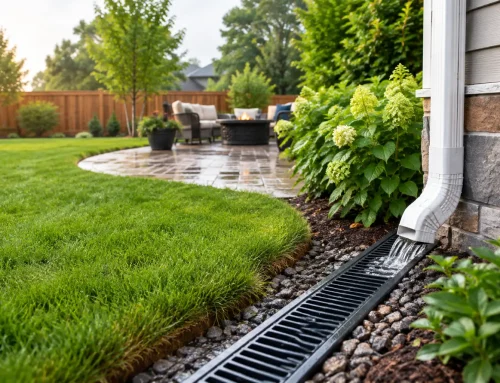
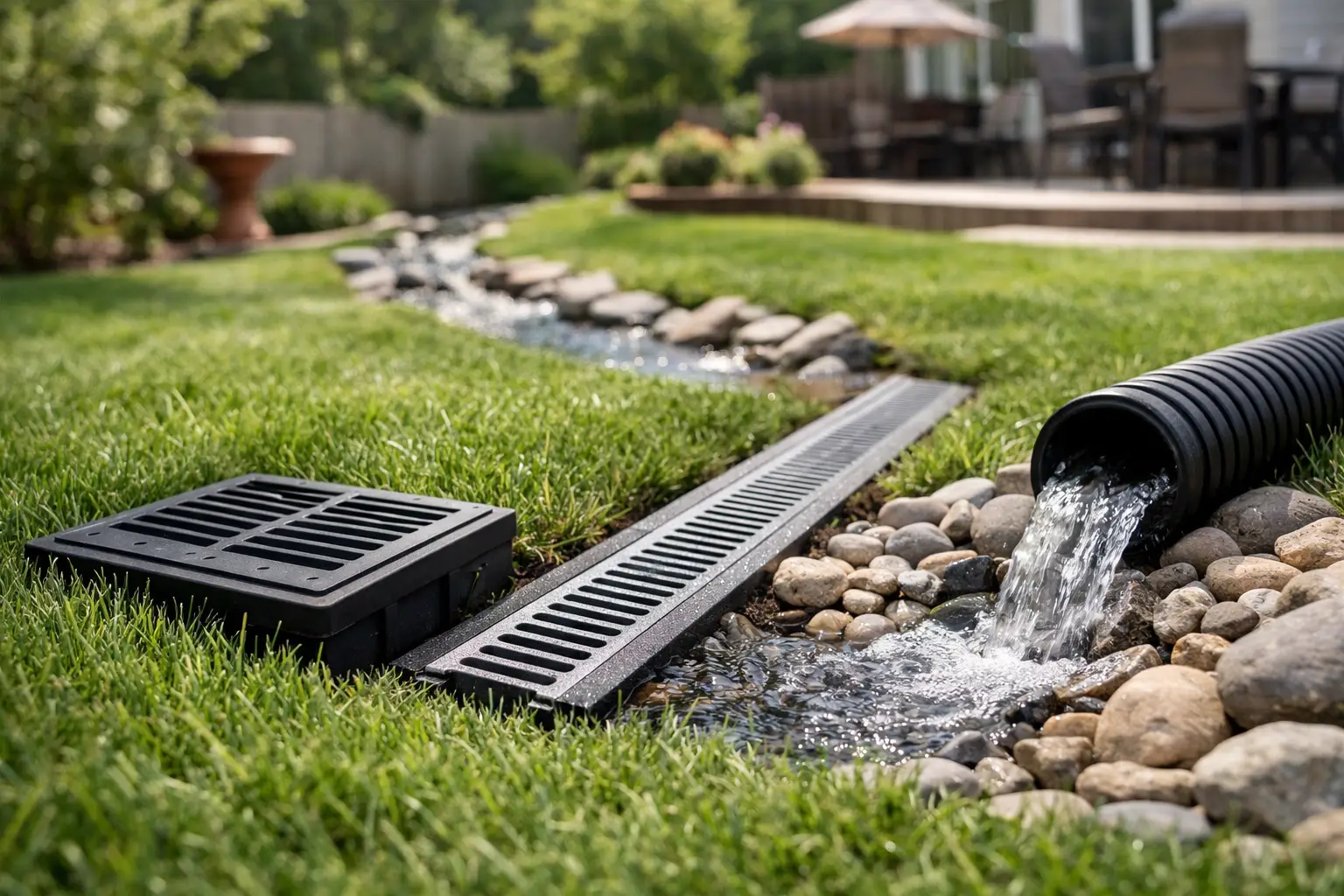
When water runs across a patio, driveway, pool deck, or outdoor kitchen area, surface drains are often the better answer. Catch basins collect water at low points, while channel drains intercept sheet flow before it crosses the entire surface.
These systems are especially valuable in entertainment spaces where standing water creates slip hazards and disrupts the comfort of the area. If your goal is a backyard that feels polished and ready for guests, surface drainage is one of those behind-the-scenes details that protects the whole experience. The key is placing drains where water already wants to go, not where they are easiest to install.
Dry creek beds and drainage that looks intentional
Not every drainage solution has to look utilitarian. A dry creek bed can guide runoff through the landscape while adding texture, stone, and a more natural feel to the yard. In the right setting, it becomes part of the design rather than something you try to hide.
This approach works best when there is enough slope to carry water and when the stone layout fits the style of the property. It may not solve severe drainage on its own, but it can be an excellent companion to grading and subsurface systems. For homeowners who want function without sacrificing beauty, this is often an appealing middle ground.
Downspout extensions and runoff control
Sometimes the biggest source of backyard water is the roof. Gutters and downspouts can dump a surprising volume of water into one small area, which then spills into beds, lawns, or patios.
Extending downspouts or tying them into an underground drainage line can make a major difference. It is not glamorous, but it is often one of the smartest first moves. If water is being concentrated near the house, no backyard drain will fully solve the problem until roof runoff is handled correctly.
Signs your backyard needs more than a quick fix
A few puddles after a storm are normal. What matters is how long they last and what they are affecting. If water remains for more than a day or two, grass dies in repeating patterns, mulch keeps washing away, or patios develop slick green buildup, the issue is probably structural rather than seasonal.
You may also notice shifting pavers, exposed roots, mosquito activity, or soft ground around a pool or spa. Those are not just annoyances. They are signals that water is settling where it should not. In a high-end backyard, these problems tend to ripple outward. The drainage issue starts in one spot, but the damage spreads into the spaces meant for rest, entertaining, and family time.
Designing drainage into a backyard sanctuary
The most successful outdoor spaces feel effortless because the practical pieces were considered early. Drainage should support the experience of the yard just as much as lighting, stonework, and planting design do.
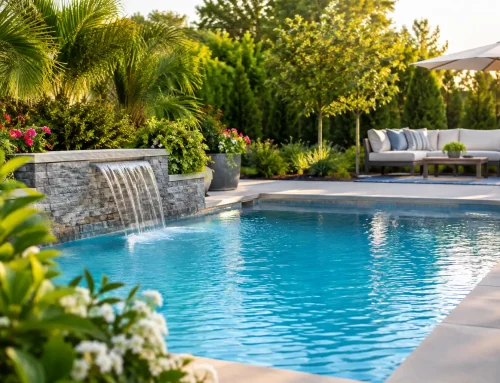
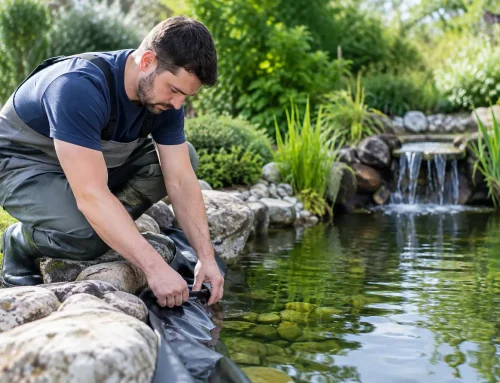
A pool area, for example, needs more than attractive decking. It needs water directed away from gathering zones, safe walking surfaces, and edges that stay stable over time. A fire pit patio should remain dry enough to enjoy after rain, not surrounded by soggy turf. A pond or waterfall needs surrounding grades and runoff patterns designed carefully so stormwater does not overwhelm the feature or wash debris into it.
That is where custom planning matters. When drainage is integrated into the design, the finished space feels cleaner, calmer, and more dependable. You are not constantly working around wet areas or worrying about what the next storm will do.
Guide to backyard drainage solutions for Florida yards
In Southwest Florida, drainage deserves even more attention because intense rain can overwhelm a yard quickly. Flat lots, compacted soil, pool decks, screened enclosures, and lush planting beds all influence how water behaves. What works in one region may not be enough here.
That is why the answer is often layered. A yard may need subtle regrading, a drain system near hardscape, and a way to move roof runoff away from the home all at once. Homeowners in places like Cape Coral and Fort Myers often benefit from a whole-property view rather than chasing one wet spot at a time.
When to call a professional
If the problem keeps returning, affects hardscapes, or sits close to the home, professional design and installation are usually worth it. Drainage mistakes are expensive because they tend to hide underground until the damage shows up somewhere else.
A well-trained landscape team can look at elevations, runoff sources, soil behavior, and how the backyard is meant to function as a living space. That last part matters. The goal is not only to move water. It is to protect the comfort, beauty, and long-term enjoyment of the yard.
For homeowners investing in a more refined outdoor environment, drainage should feel like part of the craftsmanship. It supports the patio where friends gather, the walkway that stays clean after rain, the lawn where kids play, and the quiet corner where the sound of water and natural stone make the whole space feel like an escape.
The best backyard drainage solution is the one that disappears into the design while quietly doing its job every time it rains. When that happens, your outdoor space feels the way it should – welcoming, calm, and ready to enjoy.