

The best outdoor kitchens do more than move dinner outside. They give the backyard a natural center of gravity: a place where someone can grill while the kids swim, friends settle in with a drink, and a quiet weeknight meal feels less rushed. In Southwest Florida, where outdoor living can be part of nearly every season, that shift can change how a home is enjoyed.
A beautiful outdoor kitchen is not simply a grill surrounded by stone. It is a thoughtfully planned gathering space that connects cooking, conversation, comfort, and the surrounding landscape. When it is designed as part of a complete backyard retreat, the result feels personal, useful, and wonderfully easy to come home to.
Start With the Life You Want to Live Outside
Before choosing a grill, countertop, or cabinet finish, consider what a great evening in your backyard looks like. Maybe it is Sunday lunches with the whole family around the pool. Maybe it is a peaceful meal for two beside the soft sound of a waterfall. Or perhaps it is hosting neighbors without having to make repeated trips through the house.
That vision should guide the layout. A homeowner who loves large gatherings may need generous counter space, bar seating, and clear paths between the kitchen, patio, and pool. A couple focused on relaxing after work may prefer a more intimate cooking area near a fire feature, with comfortable seating and a view of a pond or garden.
The goal is not to add every available feature. It is to create a space that supports the way your family actually gathers. A well-designed kitchen can feel expansive without being oversized, because every surface, seat, and pathway has a purpose.
Plan an Outdoor Kitchen for Florida Conditions
Florida’s sunshine is part of the appeal, but heat, humidity, summer rain, salt air in coastal areas, and strong storms all affect material and layout choices. A kitchen that looks impressive on installation day should also be practical years later.
Shade is often one of the most valuable decisions. A covered lanai, pergola, or thoughtfully placed umbrella can make midday cooking more comfortable and protect guests from a passing shower. The amount of cover depends on the property and how open you want the space to feel. Too much enclosure can block breezes or make the kitchen feel disconnected from the landscape, while too little shade can limit when the space is enjoyable.
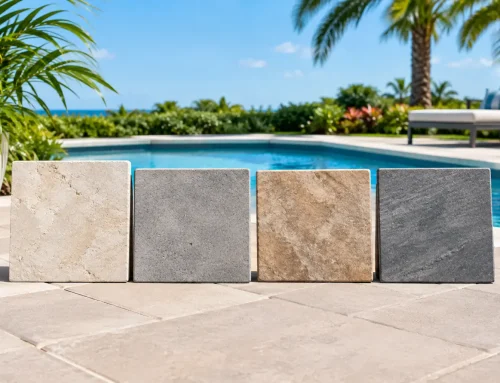
Durable materials matter just as much. Outdoor-rated stainless steel components, weather-resistant cabinetry, quality stone or porcelain surfaces, and properly installed appliances are better suited to changing conditions. Natural stone brings warmth and character, especially when it echoes a flagstone patio, rock work, or water feature elsewhere in the yard. It does require the right care and sealing, so the material should be selected with both beauty and maintenance in mind.
Drainage deserves early attention. Countertops, patio surfaces, and the surrounding grade should move water away from structures while preserving a clean, finished appearance. This is the kind of planning that rarely gets noticed when it is done well, yet it protects the long-term comfort and value of the space.
Choose Appliances Around Real Habits
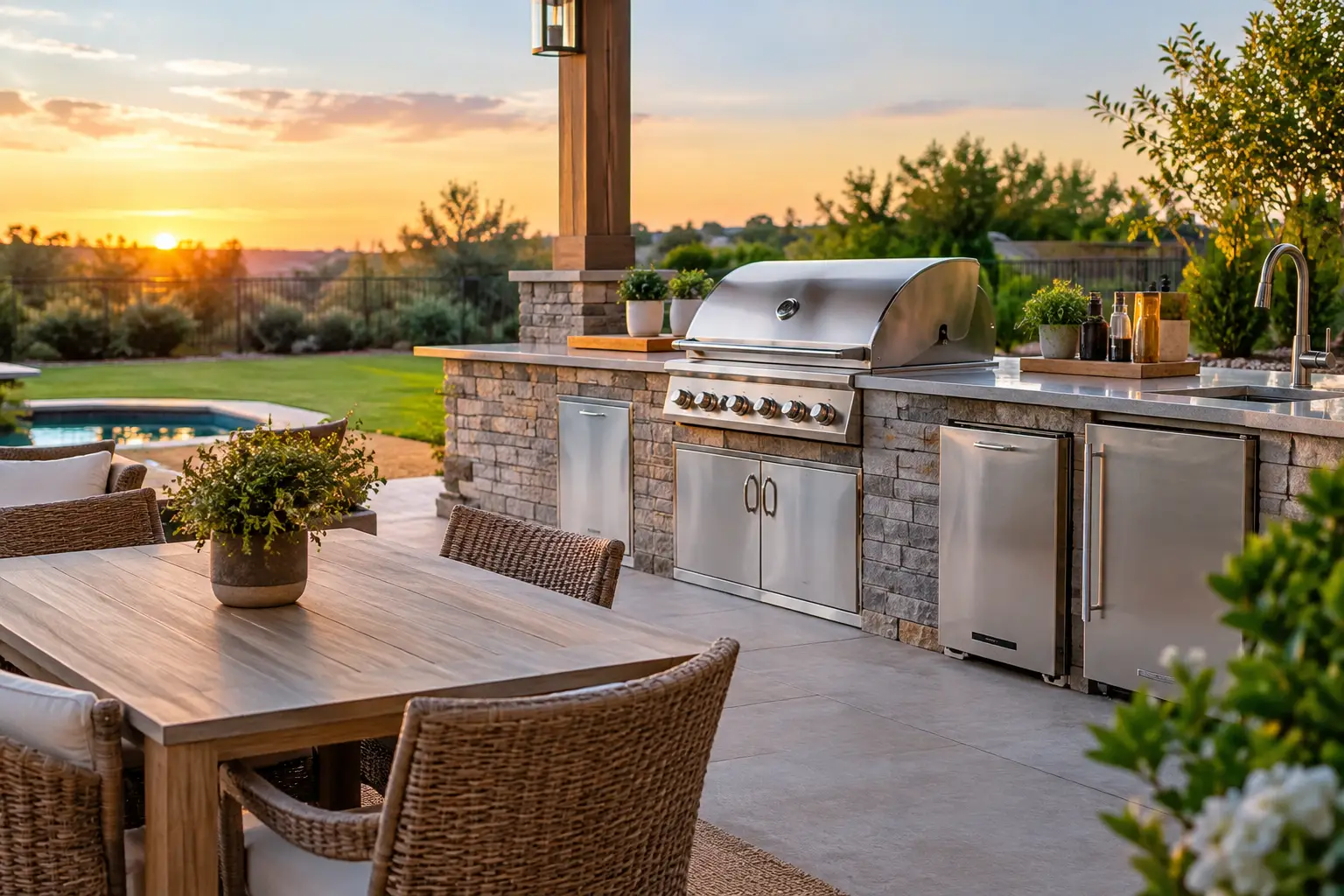
A grill is the heart of many outdoor kitchens, but it is only one part of the experience. Consider whether you would use refrigeration for cold drinks, a sink for simple cleanup, a side burner for sauces, storage for grilling tools, or an ice maker when entertaining. The best combination is the one that reduces the back-and-forth between the backyard and indoor kitchen.
For frequent hosts, a beverage refrigerator and a serving counter can be more useful than a specialty appliance used twice a year. For serious cooks, additional prep space may matter more than extra seating. These choices become clear when the design begins with real routines rather than a checklist of upgrades.
Let the Kitchen Belong to the Whole Backyard
An outdoor kitchen should not look as though it landed in the middle of a patio as an afterthought. It should feel connected to the home, pool, landscape, and favorite views.
This is where a full backyard design makes a meaningful difference. A stone finish can carry through from the kitchen island to the patio border. Plantings can soften the edges of the structure without crowding the cooking area. A nearby fire pit can extend the evening after dinner, while a fountain or koi pond adds a calming focal point beyond the counter.
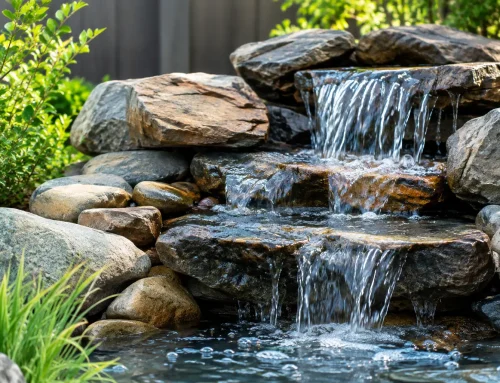
Water and fire create a particularly inviting balance. The glow of a fire feature brings people together after sunset, while moving water adds a peaceful sound that softens neighborhood noise and makes the space feel more private. Neither feature is required, but both can turn a functional cooking area into a true sanctuary.
Sightlines are important, too. If the kitchen faces a pool, seating area, or water feature, the person cooking remains part of the gathering rather than turned away from it. If there are children or grandchildren in the pool, clear visibility provides practical reassurance as well.
Lighting Changes How Long the Space Lives
A backyard can be beautiful at noon and disappear after sunset without a lighting plan. The right lighting lets outdoor kitchens remain warm, useful, and safe well into the evening.
Task lighting near the grill and preparation areas helps with cooking. Softer ambient lighting around seating creates an easy, welcoming mood. Path lights and subtle illumination along steps or changes in elevation make it safer for guests to move around after dark. The most successful designs use layers of light rather than one bright fixture that flattens the entire space.
Warm lighting also gives stone, water, and plant textures a different life at night. A softly lit palm, the reflection of pool water, or a gentle wash across natural rock can make an ordinary Tuesday evening feel like time away from the daily rush.
Make Room for Connection, Not Just Cooking
An island with stools is often the social anchor of an outdoor kitchen. It gives guests a place to stay close to the cook, and it keeps conversation moving without crowding the work area. Still, bar seating is not the only answer. A nearby dining table may be better for families who share full meals outside, while a lounge area can suit homeowners who prefer casual cocktails and small plates.
Leave enough circulation room for people to pass comfortably, especially around grills and hot surfaces. A kitchen should invite people in without creating a bottleneck. This matters most during the gatherings you are designing for: birthday dinners, game-day cookouts, holiday visits, and unplanned evenings when everyone decides to stay outside a little longer.
Privacy can also shape comfort. Strategic landscape plantings, decorative walls, or the sound of a waterfall can create a sense of separation from neighboring homes. The backyard does not need to be hidden from the world to feel sheltered. It simply needs places where your family can exhale.
Build for Ease of Care
A premium outdoor space should feel restorative, not like another long weekend of chores. That does not mean maintenance disappears. Grills need cleaning, stone may need periodic sealing, and plants need seasonal care. It means designing with realistic upkeep in mind from the start.
Choose finishes that can handle regular use, leave access for appliance service, and avoid placing delicate materials where grilling heat, grease, or standing water will create recurring problems. Landscape selections should suit the light, soil, and watering conditions of the property. A simpler, well-considered design often stays more beautiful than an elaborate one that demands constant attention.
For homeowners in Cape Coral, Fort Myers, and nearby coastal communities, local experience matters. Salt exposure, drainage patterns, sun orientation, and permitting considerations can influence the choices that make sense for a specific home. A custom plan accounts for those realities while keeping the finished space centered on comfort and enjoyment.
A thoughtfully designed outdoor kitchen gives you a reason to step outside even when no one is visiting. It can be the place for a slow breakfast, a family dinner, or one more conversation under the lights. When the cooking space, stonework, water, plantings, and seating all work together, the backyard stops being an area behind the house and becomes the part of home everyone looks forward to using.