

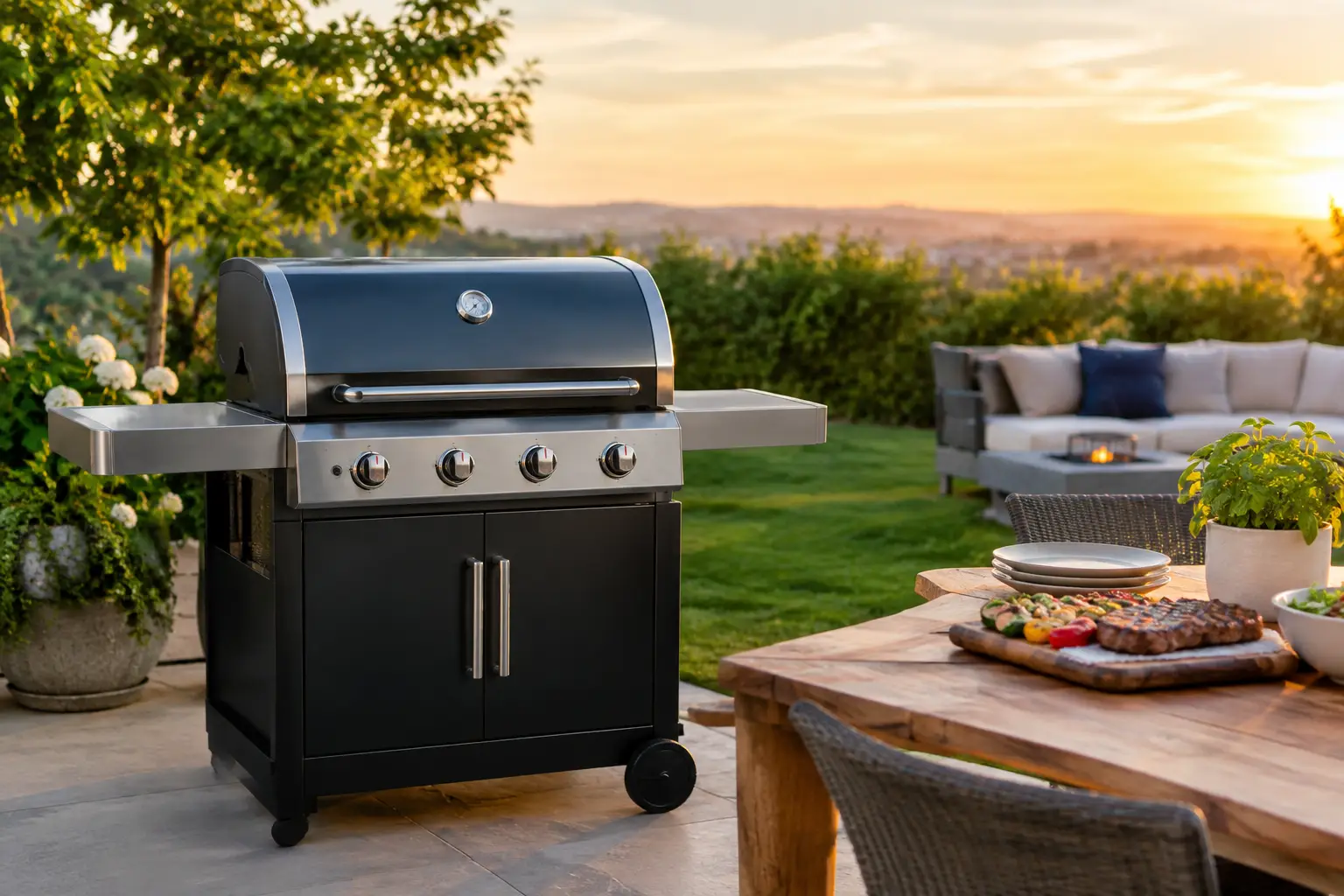
The first meal from a new grill should feel easy: friends settling around the patio, something sizzling under the evening sky, and no one missing the conversation because the cook is stuck in a cramped corner. This outdoor grill review looks beyond burner counts and glossy finishes to help you choose a grill that truly belongs in a backyard sanctuary.
For homeowners in Southwest Florida, a grill is rarely a stand-alone purchase. It often becomes the working heart of an outdoor kitchen, set between a pool deck, a flagstone gathering area, a fire feature, or the quiet sound of a waterfall. The right choice supports the way your family actually spends time outside.
Outdoor Grill Review: Start With How You Gather
A grill can be technically impressive and still be wrong for your home. Before comparing brands or materials, picture a normal weekend. Are you making burgers for four after a swim, hosting holiday dinners for a dozen people, or enjoying slow-cooked ribs while neighbors stop by? Your answers should shape the size, fuel source, and features you choose.
For a couple or small family, a compact grill with a practical cooking surface may be all you need. It heats quickly, leaves more room for seating and landscaping, and keeps the kitchen from overwhelming the patio. Larger families and frequent hosts usually appreciate a wider grill with multiple temperature zones. That flexibility lets you sear steaks on one side while keeping vegetables or seafood gently cooking on the other.
Do not confuse a larger grill with a better experience. An oversized appliance can make an intimate patio feel crowded and may require more gas, more cleaning, and more countertop space than you will use. A well-proportioned cooking area creates a calmer, more useful outdoor room.
Choosing the Right Fuel for Your Lifestyle
Fuel affects flavor, convenience, installation, and how naturally grilling fits into your routine. There is no universal winner.
Natural Gas: Built for Easy Entertaining
A natural gas grill is a strong choice for a permanent outdoor kitchen. It connects to your home’s gas line, so there are no propane tanks to monitor before guests arrive. For homeowners who grill often, that consistency is a real comfort: turn the knob, light the burners, and start cooking.
The trade-off is permanence. Once installed, the grill stays where it is, and extending a gas line should be handled as part of a thoughtful, code-compliant kitchen design. It is best for homeowners who know where their outdoor kitchen will live and want it to serve them for years.
Propane: Flexible and Familiar
Propane grills offer reliable heat with fewer installation demands. They can work beautifully in freestanding grill stations or in some built-in configurations, and they are easy to replace if your needs change. For a smaller patio or a phased backyard project, propane can be a practical starting point.
Its limitation is simple: tanks run out. Keeping a spare full tank prevents a dinner interruption, but it is one more detail to manage. If the goal is effortless, frequent entertaining, a natural gas connection may feel more at home in the finished space.
Charcoal and Wood: Flavor With More Ritual
Charcoal grills and smokers create the deep, unmistakable flavor many backyard cooks love. They ask for more time, more attention to airflow and temperature, and more cleanup afterward. That is not a flaw. For someone who enjoys the process as much as the meal, tending coals can become part of a relaxed Saturday afternoon.
In a refined outdoor kitchen, charcoal equipment often works best as a specialized companion rather than the only cooking source. Pairing it with a gas grill gives you fast weeknight meals and the option for slower, smoke-kissed cooking when the occasion calls for it.
What Construction Quality Really Means Outdoors
Florida heat, humidity, coastal air, rain, and bright sun are demanding on exterior finishes. A grill that looks polished in a showroom should also be able to handle the climate around Cape Coral, Fort Myers, and nearby coastal communities.
Stainless steel is popular for good reason, but not all stainless steel is equal. Higher-grade stainless components generally resist corrosion better and hold up more gracefully near salt air. Look beyond the lid. Grates, burners, warming racks, fasteners, and cabinet frames all matter. A heavy lid that closes cleanly and solid grates that retain heat often tell you more about daily performance than a long list of accessories.
Even a premium grill needs care. Wipe surfaces after use, empty grease trays regularly, and use a fitted cover when the grill has cooled. In humid or coastal settings, occasional cleaning with gentle, appropriate products helps preserve the finish. Maintenance is not glamorous, but it protects the investment and keeps the cooking area welcoming.
Features Worth Paying For
A built-in thermometer, interior lighting, a warming rack, and quality ignition are useful because they make cooking calmer and more predictable. Side burners can be valuable when you regularly prepare sauces, boil corn, or keep food warm without going indoors. A rotisserie is worth considering for homeowners who enjoy whole chickens, roasts, or special-occasion meals.
Sear burners are another appealing feature, especially for steak lovers. Their intense heat can produce a restaurant-style crust, though they should not substitute for a grill with strong overall heat control. The fundamentals come first: dependable ignition, even heat, enough primary cooking space, and grates that are easy to clean.
Smart controls, app connectivity, and integrated temperature probes can be convenient for low-and-slow cooking. Still, technology should support the experience rather than complicate it. If an outdoor kitchen is meant to be a place to unplug, a straightforward grill you understand at a glance may bring more satisfaction than a screen-filled appliance.
Plan the Grill as Part of the Outdoor Kitchen
The most memorable outdoor kitchens are designed around movement, comfort, and connection. The grill needs safe clearance from combustible materials, a protected location that does not send smoke directly toward the dining area, and enough landing space for trays, utensils, and plated food. A beautiful grill with no room beside it quickly becomes frustrating.
Counter space on both sides of the grill makes a meaningful difference. One side can hold raw ingredients and tools, while the other supports finished dishes. Nearby refrigeration, storage drawers, a sink, and a trash pullout can reduce trips inside, but they are not essential for every project. A smaller kitchen with a smart layout often serves a family better than a large kitchen filled with rarely used components.
Think about the cook’s connection to guests as well. Facing a blank wall while everyone gathers behind you can make meal preparation feel separate from the event. Orienting the grill toward seating, a pool, or a fire pit keeps the person cooking part of the conversation. Soft landscape lighting extends the usefulness of the space after sunset, while stone finishes and surrounding plantings can help the kitchen feel rooted in the backyard rather than placed on top of it.
Safety and Comfort Deserve a Place in the Design
A professional installation protects more than the grill. Proper ventilation is especially important for built-in units, and fuel lines, electrical components, and clearances should follow manufacturer requirements and local codes. A grill should never be squeezed into an enclosed porch or placed beneath a structure unless the materials, ventilation, and appliance specifications support that use.
Comfort matters, too. Shade can make a kitchen usable through sunny afternoons, but the selected structure must accommodate heat and smoke safely. Consider prevailing breezes, especially near water, so smoke does not drift over the dining table or into open doors. These details are easy to overlook during a product search and impossible to ignore once the kitchen is finished.
A Grill Should Make the Backyard Feel More Like Home
The best grill is not necessarily the one with the most burners or the most impressive badge on the hood. It is the one that fits your cooking habits, your climate, your available space, and the people you hope to gather around it. When the grill, patio, lighting, water features, and seating work together, dinner outside becomes less of a production and more of a familiar family ritual.
If you are planning a complete backyard transformation, Uni-Scape can help place an outdoor kitchen within a setting that feels peaceful, polished, and genuinely personal. Start with the moments you want to create, then choose the grill that makes those moments easier to enjoy.