

A patio changes the way a backyard feels underfoot. It can be the cool path leading to a waterfall, the gathering place beside an outdoor kitchen, or the quiet corner where the sound of moving water helps the day fade away. When homeowners compare natural stone versus concrete pavers, the best choice is rarely about one material being universally better. It is about how the patio needs to feel, perform, and connect with the rest of the sanctuary you want to create.
For homes in Southwest Florida, that decision also has to account for intense sun, seasonal rain, pool water, salt air in coastal areas, and the easy indoor-outdoor living that makes a well-designed backyard so valuable.
Natural Stone Versus Concrete Pavers: The First Difference You Notice
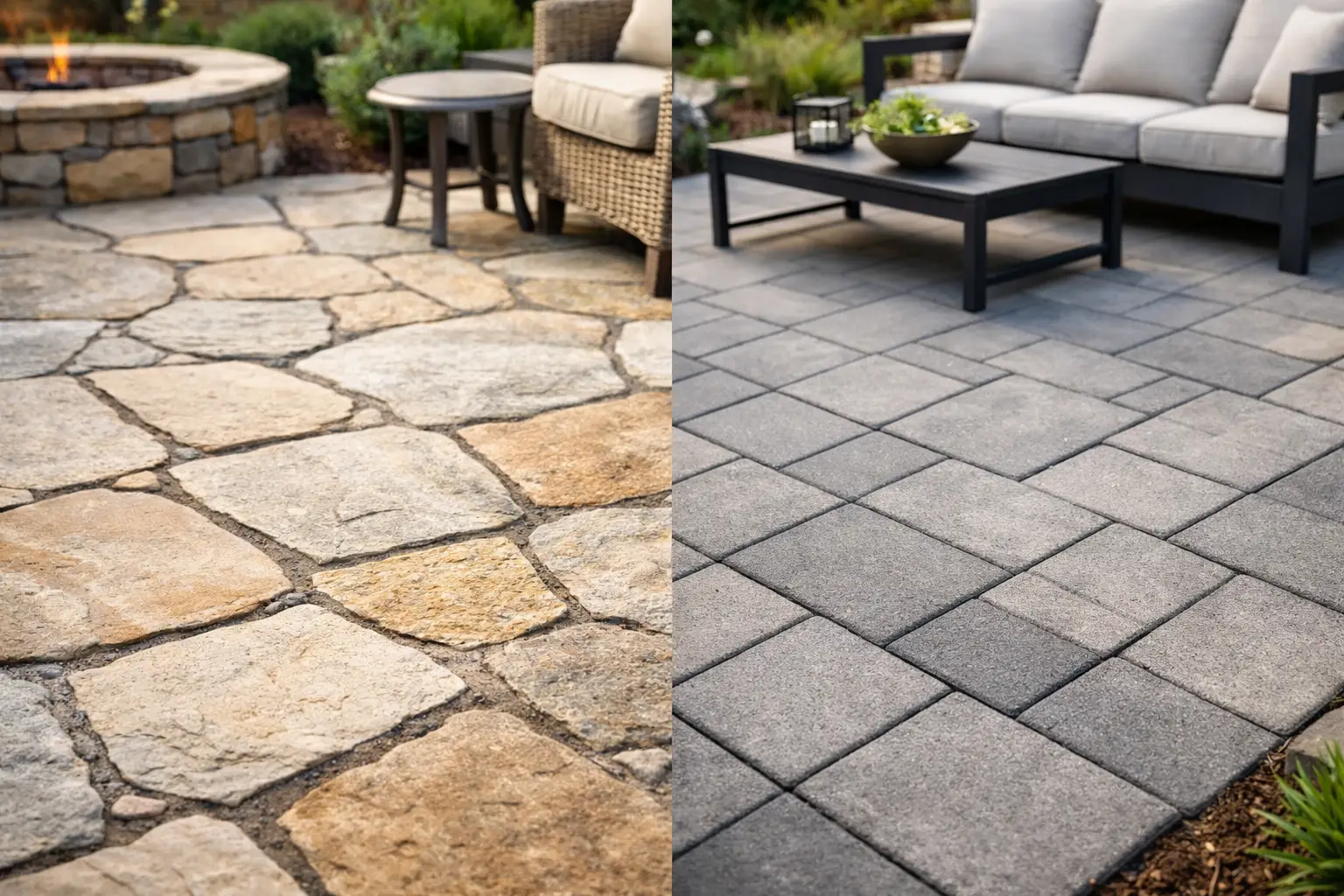
Natural stone has a presence that is difficult to duplicate. Flagstone, travertine, limestone, and other stone surfaces carry small shifts in color, texture, and shape formed by nature rather than a mold. A stone patio can make a new pool, pond, fire feature, or garden wall feel established, as though it has always belonged to the property.
Concrete pavers offer a more controlled appearance. They are manufactured in repeatable sizes, colors, and patterns, which creates clean lines and a polished sense of order. That consistency can be especially appealing around contemporary pools, outdoor kitchens, and structured entertaining areas where the architecture calls for a more tailored finish.
Neither look is automatically more luxurious. Natural stone tends to create an organic, layered atmosphere, while high-quality concrete pavers can bring an intentional, refined rhythm to a space. The right visual choice depends on whether you picture your backyard as a lush garden retreat, a modern resort-style terrace, or a blend of both.
How Each Material Feels in a Florida Backyard
Natural stone brings variation and character
Stone is often chosen for the feeling it creates as much as its appearance. The slight variation between pieces gives patios, walkways, and rock work a relaxed, natural movement. It pairs beautifully with ponds, waterfalls, tropical planting, landscape lighting, and fire pits because it does not compete with those features. Instead, it grounds them.
Travertine is a frequent favorite for pool decks and patios because many varieties stay more comfortable under bare feet than denser, darker materials. Its natural pores can also help create texture and drainage, although those pores need to be understood and maintained. Flagstone offers a more rustic, irregular look and can be an excellent choice for a garden path or patio designed around existing trees and planting beds.
The trade-off is variability. Stone color, veining, thickness, and surface texture can differ from pallet to pallet. That is part of its beauty, but it means the selection process deserves care. A sample is helpful, yet it will never show the full range of a natural material.
Concrete pavers offer design control
Concrete pavers are available in a wide range of colors, shapes, sizes, and laying patterns. A homeowner can choose a crisp linear layout, a traditional running bond, or a more decorative pattern without losing consistency from one section of the patio to the next. They also work well when a project needs clearly defined borders, inlaid accents, or a coordinated transition from driveway to walkway to pool deck.
Because individual pavers are separate pieces, repairs can be relatively straightforward. If a small area settles or a paver becomes stained or damaged, a skilled installer can lift and replace the affected units rather than rebuilding the entire surface.
Still, concrete pavers are manufactured products. Even premium options may slowly fade under strong Florida sun, particularly in deeper or more saturated colors. Sealing can help preserve their appearance, but it adds a maintenance consideration that should be discussed before installation.
Heat, Water, and Safety Matter More Than Color Swatches
A beautiful patio that feels painfully hot at noon will not get used the way it should. Material color, finish, exposure, and surrounding shade all affect surface temperature. In general, lighter colors reflect more sun and feel cooler than dark finishes. Travertine is often selected near pools for this reason, but a light-colored concrete paver can also be comfortable when the right product and finish are chosen.
Texture matters, too. Around pools, fountains, and water features, the surface should provide dependable traction when wet without being so rough that it is unpleasant for bare feet. Smooth polished stone may look elegant indoors, but it is usually not the right fit for a wet exterior area. The same caution applies to overly slick sealed pavers.
Drainage is equally important. Florida rain can arrive quickly and heavily, so the patio should be graded to move water away from the home and toward appropriate drainage areas. The material choice cannot correct poor base preparation or improper slope. A well-built patio begins below the surface, with excavation, a stable base, edge restraint where needed, and thoughtful water management.
Durability and Maintenance: What Ownership Really Looks Like
Natural stone can last for generations, but different stones have different needs. Denser stones may be highly resistant to wear, while more porous materials may benefit from sealing to reduce staining from food, leaves, sunscreen, or spilled drinks. Some stones can also react poorly to harsh cleaners or acidic products, so routine care should be matched to the specific material.
Concrete pavers are durable and made for exterior use, but they are not maintenance-free. Joint sand can wash out over time, weeds may appear if joints are neglected, and efflorescence – a whitish mineral haze – can occasionally show up on newer concrete products. Periodic cleaning, joint-sand renewal, and optional sealing help keep the surface looking cared for.
For both materials, the practical maintenance routine is similar: sweep regularly, rinse away organic debris, address spills early, and avoid aggressive pressure washing that can damage joints or surface finishes. The difference is in the details. Stone asks for material-specific care; pavers ask for attention to their joints and color retention.
Cost Is About More Than the Initial Square Footage
Natural stone often carries a higher material and labor cost, especially when pieces vary in thickness or require more detailed fitting. The installation can be more artisanal, particularly with irregular flagstone layouts, custom coping, steps, or stonework integrated around a pond or waterfall.
Concrete pavers can provide a more predictable budget because the product dimensions and installation process are standardized. They can be an excellent value for larger patios, walkways, and entertaining spaces where coverage and repeatability matter.
But the lowest installed price is not always the best long-term value. A patio is the floor of your outdoor life. It holds dining tables, lounge chairs, bare feet, birthday gatherings, and quiet mornings with coffee. Choosing a material that supports the design of the entire space can be worth more than choosing solely by initial cost.
Which Paver Material Fits Your Vision?
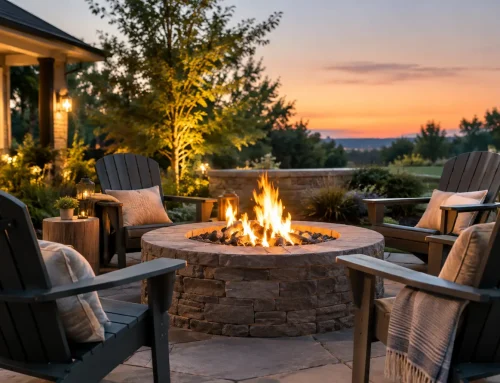
Natural stone may be the stronger fit if you want a backyard that feels connected to water, gardens, and the landscape around it. It is especially compelling when a project includes flagstone walkways, boulder accents, waterfalls, naturalistic ponds, or a fire pit tucked into a planted setting. Its variation helps the finished space feel personal rather than assembled from a catalog.
Concrete pavers may be the stronger fit when you want uniformity, a precise pattern, easy future repairs, or a large entertaining surface with a more architectural look. They can also be a smart choice when the patio must coordinate with existing hardscape or when budget needs to cover several outdoor improvements at once.
Many of the most inviting backyards use both. Concrete pavers may establish a clean pool terrace or outdoor kitchen floor, while natural stone creates a softer transition through a garden, around a water feature, or toward a secluded seating area. The result can feel composed without feeling rigid.
Let the Whole Backyard Make the Decision
Choosing between natural stone and concrete pavers should happen alongside the rest of the design, not after everything else has been selected. Consider the home’s architecture, where the afternoon sun falls, how guests move from the house to the pool, where children will play, and whether the patio should frame a view of water, fire, or planting.
At Uni-Scape, those details shape the material recommendation because the goal is not simply a new surface. It is a place that makes you want to step outside more often. When the right material supports the way your family rests, gathers, and enjoys the evening air, the patio becomes part of the memory instead of just the backdrop.