

A pond should feel like the calmest part of your backyard: water moving softly over stone, koi gliding beneath the surface, and a place where family and friends naturally gather. When the water turns green, cloudy, or foul-smelling, that sense of escape disappears quickly. Learning how to maintain pond water is less about chasing a perfectly sterile surface and more about creating a healthy, balanced environment that looks beautiful and supports the life within it.
For homeowners in Southwest Florida, pond care also comes with a few local realities. Strong sun, warm temperatures, afternoon rain, falling leaves, and an active growing season can all change water conditions quickly. A consistent routine protects your investment and keeps your pond ready for quiet mornings, outdoor dinners, and weekends by the water.
How to Maintain Pond Water Without Overcorrecting
Clear pond water begins with balance. Every pond contains organic material, beneficial bacteria, plants, fish, and microscopic organisms. The goal is not to remove all of it. A healthy pond is a living ecosystem, and trying to treat every small change with chemicals can create larger problems.
Instead, pay attention to what you see and smell. Water that is lightly tea-colored from tannins may be harmless, especially after leaves or natural debris enter the pond. Green water, floating algae, thick string algae, foam, murky sediment, or a sour odor tell a different story. Those signs usually point to excess nutrients, inadequate filtration, poor circulation, too much sun, or a buildup of decaying debris.
The most dependable approach is simple: remove waste before it breaks down, keep the water moving, support biological filtration, and make gradual adjustments rather than dramatic ones.
Start With Good Circulation and Filtration
A pond filter and pump are the quiet workhorses behind clear water. The pump circulates water through the system, while the filter captures debris and gives beneficial bacteria a place to grow. Those bacteria convert fish waste and decaying organic material into less harmful compounds.
If a waterfall has slowed to a trickle or a fountain no longer has its usual lift, inspect the pump intake and filter first. Leaves, algae, mulch, and sediment can restrict flow. Cleaning a clogged mechanical filter is helpful, but avoid aggressively scrubbing every surface of a biological filter. That can remove the beneficial bacteria your pond needs.
Run circulation equipment consistently, particularly in warm weather. In a fish pond, moving water also improves oxygen exchange. During hot Florida afternoons, oxygen levels can drop while fish and plants need more of it. A waterfall, stream, aerator, or fountain adds visual beauty while helping the pond breathe.
Clean Filters on the Pond’s Schedule
There is no single calendar date that works for every pond. A heavily stocked koi pond beneath trees may need attention more often than a lightly stocked ornamental pond with strong filtration. Check the system weekly and clean it when flow begins to decline or debris is visibly accumulating.
Use pond water, rather than chlorinated tap water, to gently rinse biological filter media when possible. Tap water can harm the bacteria that keep the system balanced. Replace worn filter pads as needed, but do not replace all biological media at once unless there is a major system repair.
Keep Debris and Sludge From Feeding Algae
Algae need light, water, and nutrients. You cannot eliminate light outdoors, nor should you try to eliminate every natural nutrient. You can, however, reduce the excess food source that lets algae take over.
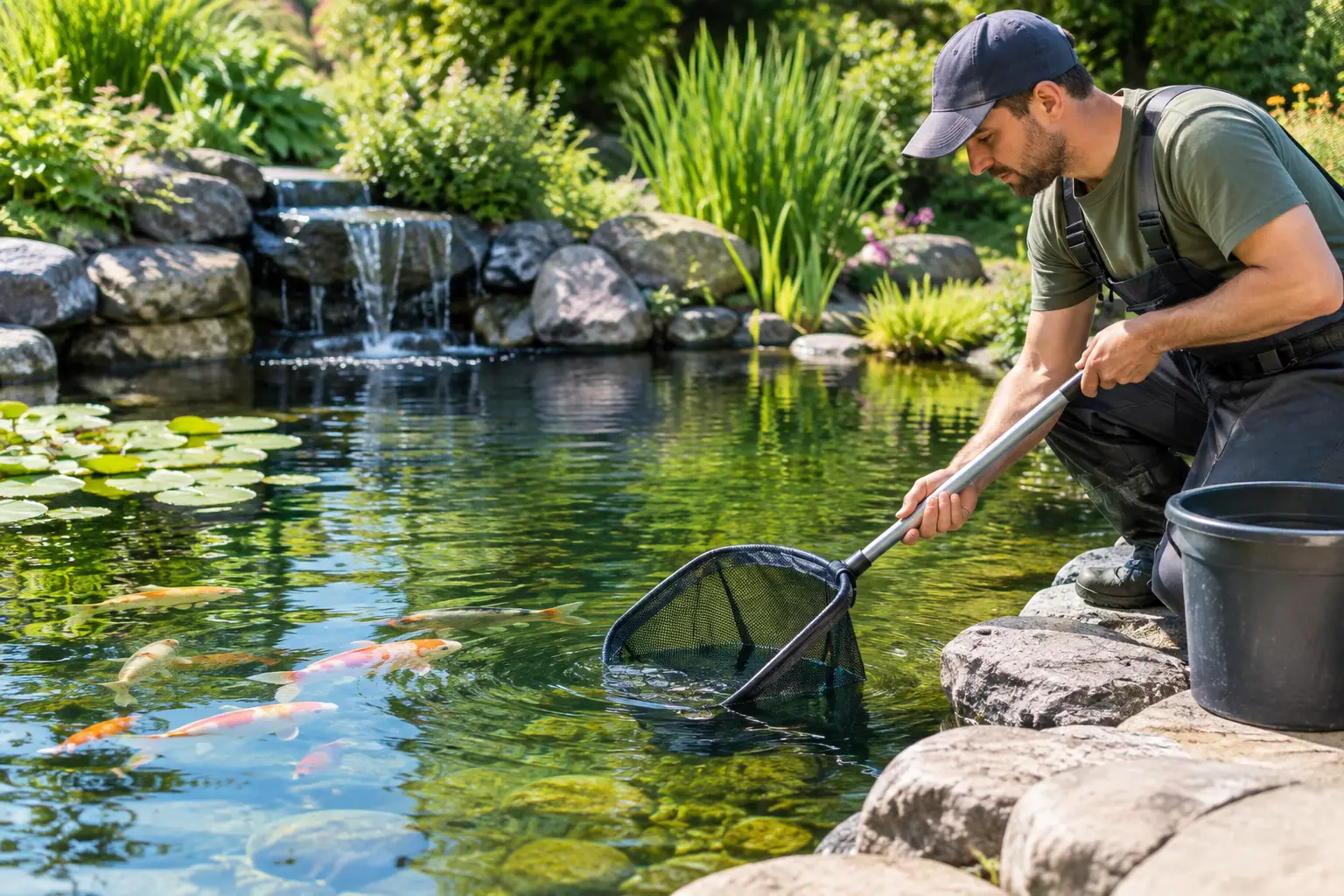
Skim floating leaves, seed pods, grass clippings, and uneaten fish food before they sink. Use a pond net after a storm or windy day, and trim back nearby plants before large amounts of material fall into the water. A skimmer can make this routine far easier by collecting surface debris before it reaches the bottom.
At the base of the pond, sludge forms as leaves, fish waste, dead plant material, and other organics decompose. A modest amount is normal. Thick sludge, however, can cloud water, create odors, and release nutrients that fuel algae. A pond vacuum or professional cleanout can remove buildup without disrupting the stonework, liner, plants, and fish.
Avoid spraying lawn chemicals, fertilizer, or herbicides near the pond. Rain can carry these products into the water, where they contribute to algae growth and may harm fish. When planning plant beds around a water feature, create a buffer between fertilized turf and the pond edge.
Feed Fish for Health, Not for the Surface Show
Fish are often the heart of a pond, especially when koi swim close enough for children and guests to enjoy. They also create waste, so feeding habits have a direct effect on water quality.
Offer only what your fish can eat in a few minutes. If food remains floating after that, remove it and reduce the next feeding. Extra food breaks down into nutrients that algae readily use. In cooler conditions, fish metabolism slows, so they need less food. During periods of intense heat, feed carefully and watch for signs of stress, such as gasping near the surface.
Fish stocking matters just as much. A pond can look spacious while still carrying more fish than its filtration and oxygen levels can comfortably support. If water quality problems persist despite routine maintenance, the pond may need improved filtration, added aeration, or a reassessment of the fish load.
Use Plants and Shade With Intention
Aquatic plants soften the edges of a pond and make the whole setting feel more natural. They can also help compete with algae by using nutrients in the water. Water lilies, marginal plants, and floating plants each play a different role, from shading the surface to creating texture around boulders and waterfalls.
Shade is especially valuable in sunny backyards. Covering part of the pond surface with lilies or other appropriate plants can limit direct sunlight and help moderate water temperature. The trade-off is that plants require their own care. Dead leaves need to be removed, aggressive varieties must be thinned, and too much surface coverage can reduce gas exchange.
A balanced pond often has a mix of open water, planted edges, and partial shade. The right proportion depends on the pond’s depth, fish population, sun exposure, and design. A pond tucked beneath mature trees may need less shade but more frequent debris removal. A pond in full sun may benefit from more plant coverage, stronger filtration, or ultraviolet clarification.
Test Water Before Adding Treatments
When water changes color, it is tempting to reach for an algaecide or clarifier right away. Some treatments have a place, but they should follow observation and testing, not replace them.
Use a pond test kit to check pH, ammonia, nitrite, and nitrate, particularly in fish ponds. Ammonia and nitrite should remain at safe, near-zero levels. A sudden spike can indicate a filter issue, overfeeding, a dead animal or plant mass in the pond, or a recent disruption to beneficial bacteria.
Make water changes gradually. Replacing a small portion of pond water is often safer than draining a large amount at once, which can shock fish and disturb the ecosystem. If you add municipal water, use a conditioner formulated to neutralize chlorine and chloramine. Well water can also require testing because mineral content and pH vary by property.
Cloudy water after a major cleaning or new pond installation is not always an emergency. Biological filtration takes time to mature. Give the system time to establish, maintain steady circulation, and avoid adding multiple treatments at once. Patience often does more for a new pond than another bottle of product.
Build a Seasonal Pond Care Routine
Small, regular tasks prevent the kind of buildup that turns pond care into a weekend-long rescue project. Once a week, skim debris, check water movement, inspect the pump intake, and observe your fish. Healthy fish are active, responsive, and swimming normally.
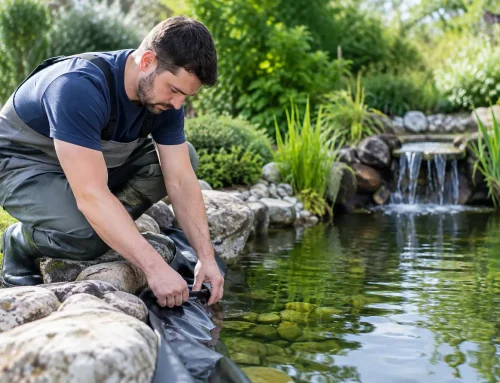
Once a month, inspect filters, test the water, trim dying plant material, and look over the pond edges for leaks or settling stone. After heavy rain, check for runoff carrying mulch, soil, or fertilizer into the pond. During the hottest months, keep a closer eye on evaporation and water temperature.
A deeper seasonal service can be worthwhile before peak entertaining season or when organic buildup becomes noticeable. This is also a good time to inspect lighting, waterfalls, plumbing, and rockwork so the entire water feature continues to feel polished and inviting after sunset.
When Professional Pond Maintenance Makes Sense
Some pond concerns need more than a net and a test kit. Persistent green water, recurring fish stress, leaks, pump failures, unexplained water loss, or an overloaded filtration system deserve a closer evaluation. A professional can identify whether the problem is biological, mechanical, structural, or simply related to how the pond is being used.
For a custom water feature, ongoing maintenance also protects the details that make it special: carefully placed natural stone, clear views of koi, a waterfall with the right sound, and plantings that frame rather than overwhelm the space. Uni-Scape can help homeowners keep those elements working together, so the pond remains a source of calm instead of another item on the weekend checklist.
The best pond care routine is one you can keep. A few attentive minutes each week preserve the clear water, gentle movement, and peaceful atmosphere that make a backyard pond feel like a true retreat.