

A pond should invite you to slow down: water moving gently over stone, koi gliding beneath the surface, and a peaceful view from the patio at the end of the day. Cloudy water, algae blooms, and unpleasant odors interrupt that feeling fast. Learning how to choose pond filtration is what protects the clear, balanced water that makes a backyard pond feel like a true sanctuary.
The right system is not simply the biggest filter available. It needs to suit the pond’s water volume, fish population, sun exposure, waterfall design, and the amount of hands-on care you want to provide. A well-planned filtration system works quietly in the background, letting the beauty of the pond take center stage.
How to Choose Pond Filtration Around Your Pond Design
Start with the pond itself, not a product label. Filtration is most effective when it is considered as part of the complete water-feature design – including the skimmer, pump, waterfall, stream, planting areas, and the pond’s intended use.
A small decorative pond with a few goldfish has very different needs than a larger koi pond that serves as the focal point of an outdoor living space. Koi produce a substantial amount of waste, and they require stronger biological filtration and more consistent circulation than a pond built primarily for plants and moving water.
Measure the pond’s actual water volume before selecting equipment. For a rectangular pond, multiply length by width by average depth in feet, then multiply that number by 7.48 to estimate gallons. Natural ponds with curves, shelves, boulders, and varying depths are more difficult to calculate, so it is wise to use a conservative estimate or have a pond professional confirm the volume.
It also helps to think ahead. If you plan to add koi later, expand the pond, or introduce a more dramatic waterfall, choose a system that can accommodate that future vision. Replacing undersized filtration after stonework and landscaping are complete is more disruptive and costly than building enough capacity into the original plan.
Understand the Two Jobs of Pond Filtration
Healthy pond water depends on mechanical and biological filtration. These work together, but they solve different problems.
Mechanical filtration removes visible debris
Mechanical filtration captures leaves, fish food, sediment, pollen, and other particles before they settle on the pond floor and begin to break down. A skimmer is often the first line of defense. Positioned at the pond’s edge, it draws in surface debris and keeps leaves from gathering in quiet corners.
For many ponds, a skimmer basket and filter mat are enough to manage routine debris. Heavily wooded properties, however, may need more frequent cleaning during leaf-drop seasons. In Southwest Florida, windblown palm fronds, seed pods, and storm debris can add to the workload, especially after summer rain.
A pond without effective mechanical filtration can still have a powerful pump, but the pump may simply move debris around rather than remove it. That leads to a murky appearance, a buildup of organic material, and more work when it is time to clean the pond.
Biological filtration keeps water safe for fish
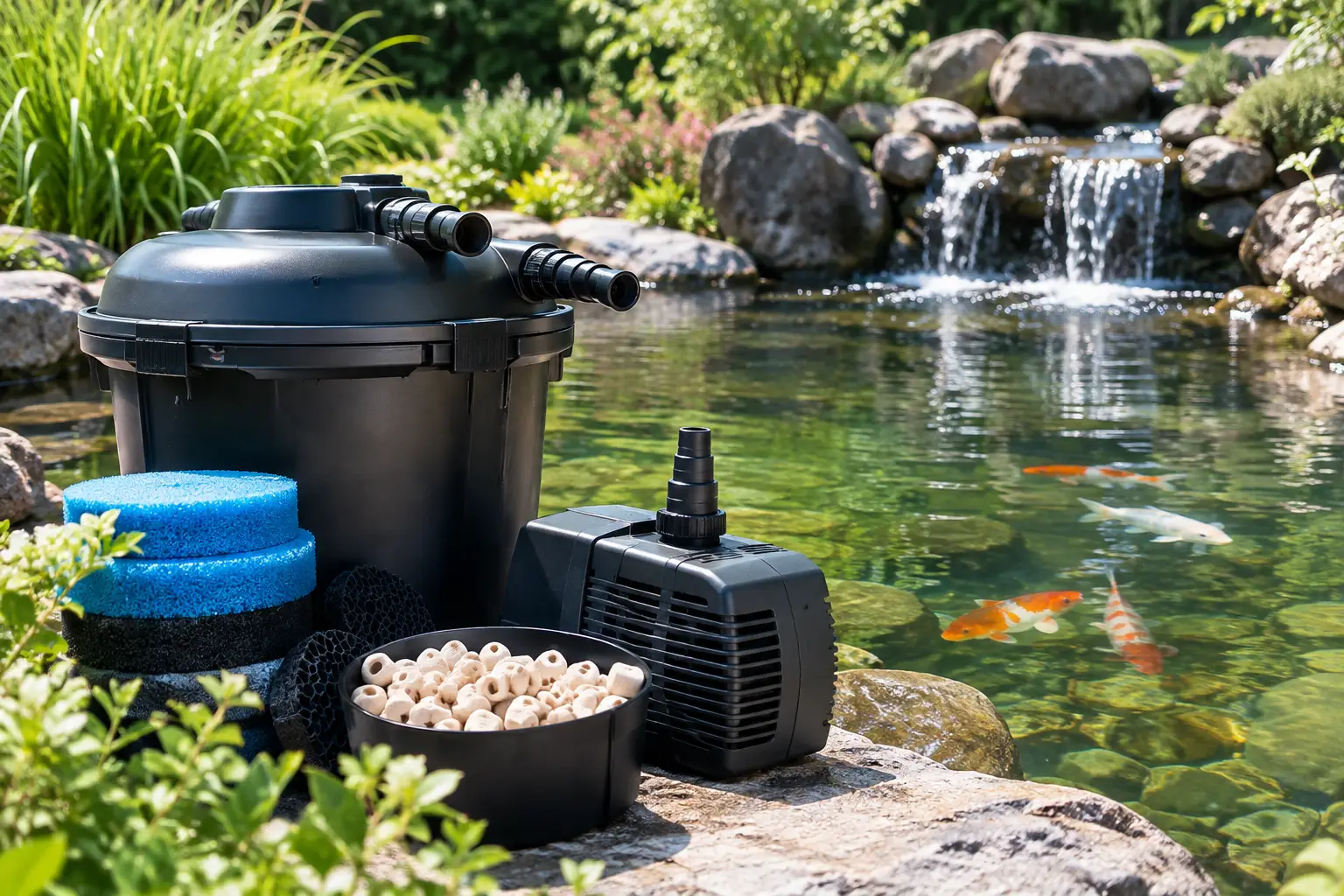
Biological filtration is the part that supports the pond’s living ecosystem. Beneficial bacteria colonize filter media and convert harmful fish waste from ammonia into nitrite, then into less harmful nitrate. Plants can use some nitrate as a nutrient, while regular water changes and proper maintenance help keep levels controlled.
Biological filters need oxygen-rich water and a steady flow. They also need time. A new pond does not become biologically stable overnight, even with quality equipment in place. Adding fish gradually gives the bacteria colony an opportunity to develop without overwhelming the system.
For a fishless reflection pond or a lightly planted water feature, biological demands are lower. For a koi pond, biological capacity should be generous. A filter rated for the pond’s exact number of gallons may be adequate on paper, but a higher-capacity unit offers a safer margin for fish waste, warm weather, and feeding seasons.
Match Pump Flow to Filtration Capacity
The pump and filter must be sized as a pair. As a general starting point, many ornamental ponds benefit from circulating their full volume about once every hour to two hours. Koi ponds commonly need closer to one full turnover per hour, depending on fish load, depth, and water temperature.
That guideline is only a starting point because a pump’s advertised flow rate changes once it pushes water uphill to a waterfall or through plumbing and filter media. This is called head pressure. A pump rated at 4,000 gallons per hour may deliver significantly less when lifting water several feet above the pond surface.
The waterfall matters, too. A wide, lively cascade needs more water than a gentle spillway. If a waterfall is a signature part of your backyard retreat, the pump must provide enough flow for the sound and visual movement you want while still sending adequate water through the filtration system.
A professional design may use separate circuits: one pump dedicated to the skimmer and biological filter, and another for a waterfall, stream, or fountain feature. This creates more control and can keep the pond protected even when you want to adjust the water display.
Consider Sun, Heat, and Your Fish Load
Clear water is not only about equipment. It is also about the conditions around the pond.
Ponds in full sun are especially prone to algae because sunlight fuels growth. Florida’s heat can intensify this challenge, while warm water also holds less dissolved oxygen. Shade from thoughtfully placed plantings, aquatic vegetation, and carefully designed rock features can help, but avoid covering the pond so heavily that leaves become a constant source of debris.
Fish load is another major factor. A pond can look spacious while still being overstocked from a filtration standpoint. As fish grow, their waste output grows with them. Feed only what fish can consume quickly, remove excess food, and avoid adding fish just because there appears to be open water.
Ultraviolet clarifiers can be useful for controlling free-floating algae that causes green water. They do not replace mechanical or biological filtration, and they will not resolve an underlying issue such as excess fish waste or poor circulation. Think of UV as a helpful finishing component for suitable ponds, not the foundation of a healthy system.
Choose a Filtration Style That Fits Maintenance Expectations
Every pond filter requires care. The question is how often and how much.
Pressure filters are compact and can be easier to conceal in a planted landscape. They may work well for smaller ponds or water features where space is limited, though they require periodic backwashing or cleaning. External box filters offer substantial media capacity and are often paired with waterfalls, but they need thoughtful placement and regular attention.
Wetland filters are another attractive option for homeowners who value a natural look. Water flows through gravel and plant roots, where beneficial bacteria help clean the water before it returns to the pond. When designed correctly, they blend filtration into the landscape and can create the look of a planted stream or bog garden. They do require adequate space and should be planned from the beginning rather than treated as an afterthought.
No matter which approach you choose, make maintenance access easy. Filter components should not be buried behind thorny shrubs, squeezed beneath a deck, or placed where cleaning them becomes a frustrating chore. A beautiful backyard works best when its practical systems are easy to care for.
Build Filtration Into the Entire Backyard Experience
Filtration equipment does not need to dominate the view. Skimmers can be integrated into pond edges, biofalls can disappear beneath a waterfall, and pipes can be routed beneath planting beds and stone. The goal is for guests to notice clear water, natural boulders, and the sound of a cascade – not the technology supporting it.
This is where an integrated design makes a difference. A pond beside a flagstone patio, fire feature, or outdoor kitchen should feel connected to the whole space. The water feature can provide a calming backdrop for a family dinner, a gathering with friends, or a quiet morning outside. Reliable filtration protects that experience by preventing the pond from becoming another weekend project.
For complex koi ponds, established water features, or recurring water-quality problems, a professional evaluation can reveal issues that are not obvious from the surface. Improper pipe sizing, inadequate bottom circulation, a poorly positioned skimmer, and undersized biological media can all contribute to trouble over time. Uni-Scape designs and maintains water features with both the visible experience and the working system in mind.
A clear pond is not meant to feel clinical or overengineered. It should feel effortless: living water, healthy fish, and a peaceful place waiting just outside your door. Choose filtration that supports that feeling, then give it the occasional care it needs to keep the sanctuary inviting season after season.