

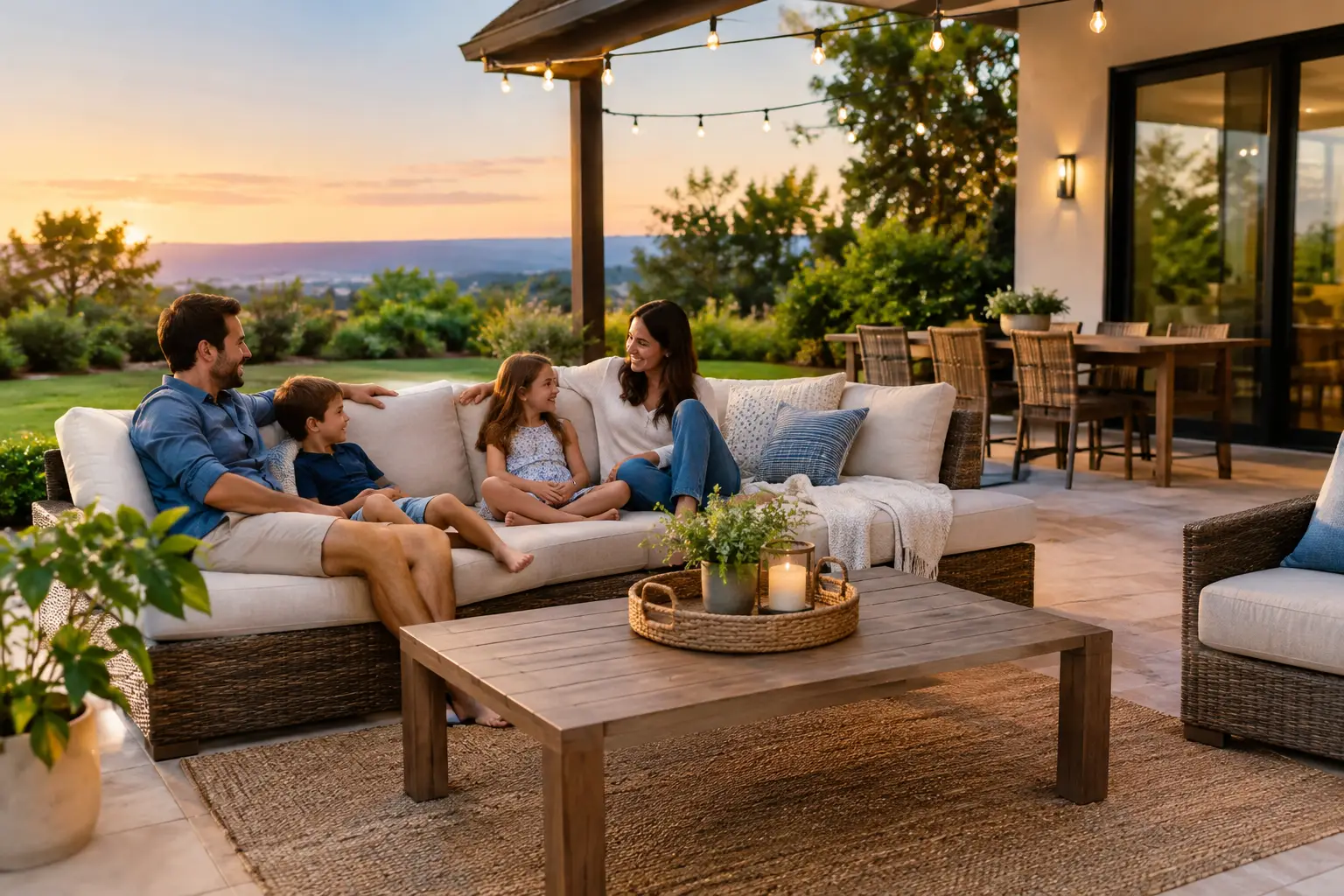
The best family patios are not designed around a single impressive feature. They are designed around the small moments that happen without planning: children padding outside after dinner, grandparents settling into a comfortable chair, friends gathering while something good cooks nearby, and the quiet hour when the whole yard finally belongs to you. Knowing how to design a family patio means making room for all of it.
A beautiful patio should feel like a natural extension of your home, but it also needs to work hard. It has to handle wet feet, dropped drinks, busy weekends, Florida sunshine, and the changing rhythms of family life. The goal is not to fill every square foot with amenities. It is to create a backyard sanctuary where everyone has a reason to stay awhile.
Begin With How Your Family Actually Lives
Before choosing flagstone, furniture, or a fire feature, picture an ordinary week at home. Where does everyone enter the yard? Do you eat outside often, or do you want the option to host larger celebrations? Are young children using the space for play? Is a pool, spa, pond, or outdoor kitchen part of the vision?
The answers shape the patio more than a style board ever could. A couple who wants peaceful evenings may prioritize a tucked-away seating area beside a waterfall. A family that hosts birthdays and game-day gatherings may need a broad dining zone, generous walkways, and room for people to move without crowding the cook.
Think in activity zones rather than one large, empty paved surface. A family patio often works best with a central gathering area and a few connected destinations: a dining table near the kitchen, a lounge area with deep seating, a fire pit circle, or a quiet bench that looks toward a water feature. These spaces do not need walls between them. Changes in stone pattern, furniture placement, planting, and lighting can give each area a distinct purpose while keeping the backyard visually connected.
Give the Patio a Comfortable Scale
One of the most common design mistakes is building a patio that technically fits the furniture but leaves no breathing room around it. A dining table may fit on paper, yet feel cramped once chairs are pulled out and someone needs to walk behind them. The same is true for outdoor kitchens, lounge chairs, and fire features.
Start with the largest gathering you realistically expect, then design for circulation. If your family regularly hosts eight people, a patio sized for four will quickly feel limiting. On the other hand, an oversized hardscape can make a modest backyard feel stark and disconnected from the landscape. The right scale creates a sense of welcome, not exposure.
This is where an integrated design matters. Natural stone, planting beds, rock work, and water can soften the perimeter of a patio so it feels settled into the property rather than dropped onto the lawn. Curved edges often create an easy, relaxed feel, while cleaner lines can complement a more contemporary home. Neither approach is automatically better. The home’s architecture, views, lot shape, and the way your family uses the yard should lead the decision.
Plan for shade before selecting furniture
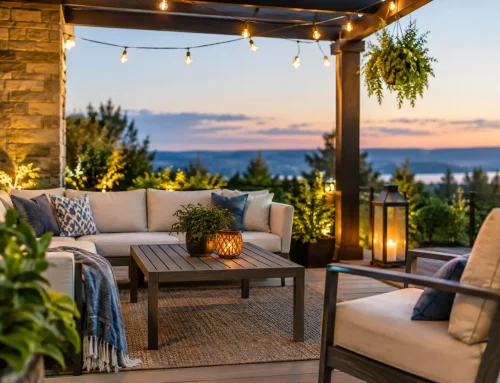
In Southwest Florida, shade is not an accessory. It determines whether a patio is enjoyable at noon or only usable after sunset. Existing trees may provide a welcome canopy, but they should be evaluated for the amount and timing of shade they offer. A covered area, pergola, or strategically placed umbrella can protect the dining space while leaving a sunny zone available for those who enjoy it.
Consider sun direction throughout the year, especially where the afternoon heat lands. A beautiful lounge area facing west may need added shade, taller planting, or a layout adjustment to remain comfortable. Planning this early avoids the disappointment of investing in a patio that sits empty during the hours your family most wants to use it.
Choose Materials That Feel Good and Hold Up
For a high-use family patio, the surface should be attractive, stable, and comfortable underfoot. Flagstone brings natural variation and a timeless, grounded character that pairs beautifully with lush planting, pools, and water features. Thoughtful stone selection and installation also help create a surface that feels intentional from the main seating area to the smallest walkway.
Material choice depends on your priorities. Natural stone offers rich texture and a sense of permanence, but its colors, finish, and maintenance needs should suit the setting. Some surfaces stay cooler than others in direct sun. Some offer more texture for wet areas. If the patio connects to a pool or spa, slip resistance, drainage, and bare-foot comfort deserve special attention.
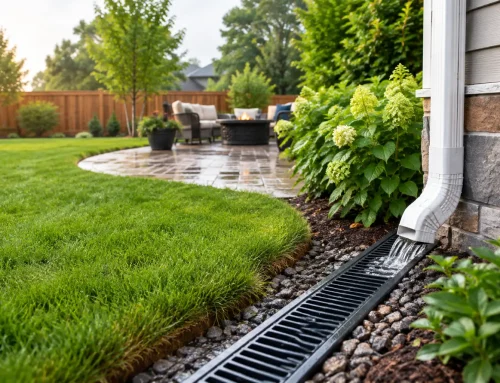
Avoid treating drainage as a behind-the-scenes detail. Water should move away from the home and off the patio without creating puddles or washing soil into planting beds. Proper grading, drainage planning, and installation protect the investment and make the space more pleasant after a summer rain.
Build a Patio Around Connection
A family patio becomes memorable when it gives people a comfortable reason to gather. For some households, that center is an outdoor kitchen with enough counter space for serving and conversation. For others, it is a fire pit where the evening slows down, or a dining area where weekday meals feel a little more like a vacation.
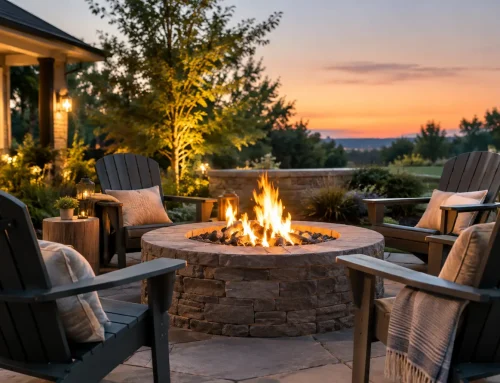
Keep the relationship between these elements practical. An outdoor kitchen should be close enough to the dining area that serving food is easy, but not so close that smoke and heat take over every seat. A fire pit needs a clear, comfortable perimeter for chairs and safe movement. If you are adding a pool or spa, leave room for towels, circulation, and lounging without forcing everyone to cross the wettest part of the patio.
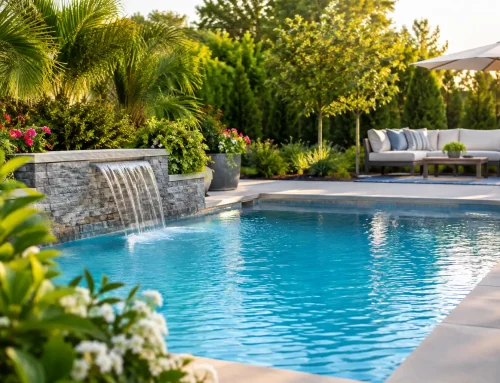
Water features can bring a different kind of connection. The sound of a waterfall can soften neighborhood noise and make a patio feel private even when homes are nearby. A koi pond offers movement, reflection, and a shared point of interest for children and guests. The trade-off is care: ponds and water features need well-planned filtration, access for maintenance, and a design that suits your comfort level with ongoing upkeep. When those details are considered from the beginning, water becomes part of the family ritual instead of another task on the weekend list.
Make Safety Feel Natural, Not Clinical
Family-friendly design should never feel like a collection of warnings. Good planning quietly reduces risks while preserving the calm, resort-style feeling of the yard. Keep primary pathways clear and easy to follow. Use stable, even surfaces. Avoid sharp transitions between patio levels, and make steps visible through material contrast or lighting.
Lighting deserves more thought than a few fixtures by the door. Gentle landscape lighting can guide guests along walkways, define patio edges, illuminate dining and cooking areas, and create a warm glow around stone, palms, and water. It also changes the emotional character of the backyard after dark. The goal is enough light for confidence and safety, without washing out the night or turning the patio into a floodlit stage.
If young children will be near a pool, pond, or spa, discuss safety requirements and supervision needs as part of the original layout. A beautiful backyard should support peace of mind as well as relaxation.
Leave Room for the Landscape to Do Its Work
A patio alone is a surface. The plants, stone accents, water, and light around it are what turn it into a retreat. Layered planting can create privacy, frame a favorite view, and bring softness to the hardscape. In a family setting, it can also establish gentle boundaries between a play lawn, a lounge area, and a more intimate dining space.
Choose planting with maintenance and mature size in mind. A fast-growing screen may seem appealing, but it can become demanding if it needs frequent trimming to keep paths and views open. Similarly, delicate plants may not be the best fit beside an active play area. The most satisfying landscapes balance color and texture with a realistic level of care.
At Uni-Scape, patio design is approached as part of a complete outdoor environment, where flagstone, water, lighting, planting, and gathering spaces work together instead of competing for attention. That unified approach helps a backyard feel peaceful on a quiet Tuesday and ready for a full house on Saturday.
How to Design a Family Patio for the Years Ahead
A patio should serve the family you have now, while making space for the family life that is still ahead. Small children grow into teenagers who want room for friends. Casual dinners become holiday traditions. The couple who first wanted a peaceful place to sit may later want a larger dining area for grandchildren.
Choose a layout with flexibility. Movable furniture can change with the occasion. Open areas can shift from play space to extra seating. Well-designed paths and utility planning can make future additions less disruptive. You do not have to install every feature at once, but the overall plan should leave a clear path for what comes next.
The most successful family patio is not the one with the most features. It is the one that feels easy to use, beautiful to look at, and deeply connected to the people who call the house home. Give it places for laughter, rest, shared meals, and a little quiet, and your backyard can become the setting for the moments your family will remember most.