

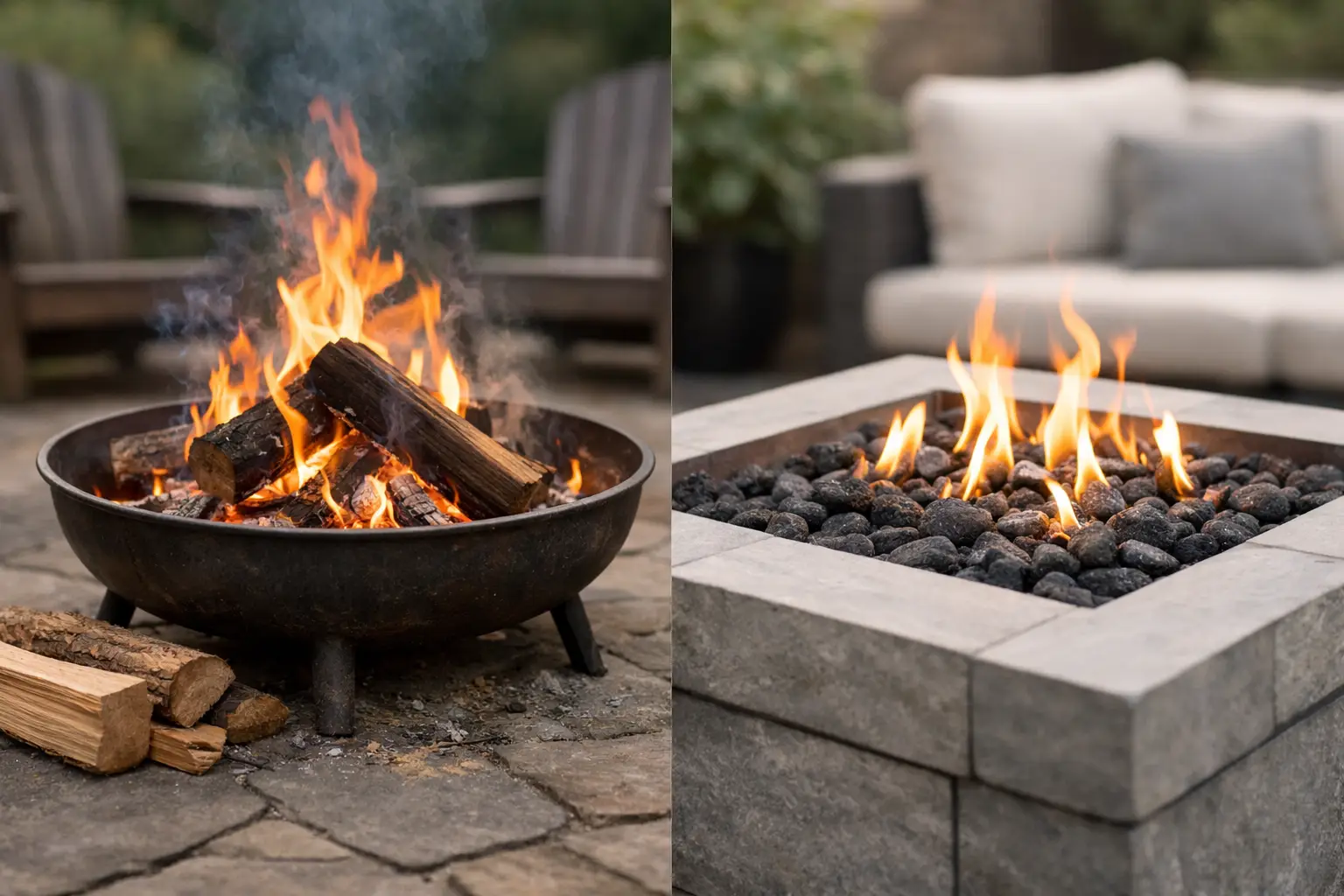
The first time you picture your backyard fire feature, you usually do not picture BTUs, fuel lines, or ash cleanup. You picture people. Kids leaning in for one more story. Friends lingering after dinner. A quiet evening when the glow of a flame helps the whole yard feel softer and more settled. That is why the wood fire pit versus gas decision matters more than it seems. It shapes how your outdoor space feels, how often you use it, and how naturally it fits into the way your family relaxes.
For some homeowners, the right answer is the crackle, scent, and ritual of a real wood-burning fire. For others, it is the ease of turning on a clean, controlled flame with almost no effort. Neither is automatically better. The better choice is the one that supports the kind of retreat you want to create outside.
Wood fire pit versus gas: what changes the experience?
A fire pit is never just a utility. It is part atmosphere, part gathering place, and part design anchor. When you compare wood and gas, the biggest difference is not just how the fire starts. It is the mood each one creates.
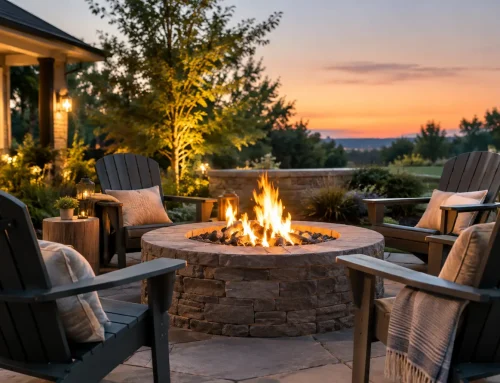
A wood fire pit feels traditional and sensory. You hear the crackle. You smell the smoke. You watch the flame shift and spark in a way that feels organic and a little unpredictable. If your ideal evening includes roasting marshmallows, stacking split logs, and enjoying that familiar campfire feeling, wood has a character gas cannot fully copy.
A gas fire pit feels effortless and polished. The flame is steady, clean, and immediate. You do not need to build the fire, wait for it to catch, or deal with embers the next morning. In a refined outdoor setting with a custom patio, water feature, landscape lighting, and built-in seating, gas often feels more integrated and easy to enjoy on a regular basis.
That difference matters because many homeowners imagine using a fire pit often, but the setup and cleanup can affect whether it becomes part of everyday life or only comes out for special occasions.
If you want atmosphere, wood usually wins
Wood is hard to beat for pure fire experience. There is a reason people still gather around it even when more convenient options exist. It feels grounded and familiar. In a backyard with natural stone, mature plantings, and a quiet water feature nearby, a wood-burning fire pit can make the space feel timeless.
That said, atmosphere comes with trade-offs. Smoke can drift. Clothing and cushions may hold the smell. Depending on the layout of your yard, smoke may move toward seating areas, the pool, or open doors and windows. If you entertain often, especially with guests who prefer comfort over campfire nostalgia, that can become a drawback.
Wood also asks more of you. You need a place to store dry firewood. You need to clean ash. You need to tend the flame. For some families, that ritual is part of the pleasure. For others, it becomes one more task at the end of the night.
If you want convenience, gas usually wins
Gas fire pits are built for easy enjoyment. Turn a key or press an ignition, and you have warmth and glow in seconds. Shut it off, and the evening ends without waiting for logs to burn down. That ease changes how often people use the feature.
A gas fire pit often gets used on weeknights, after dinner, or for short gatherings because there is no real preparation involved. It fits modern outdoor living especially well, where the goal is to move easily between the kitchen, patio, pool, and lounge area without much interruption. If your backyard is designed as a personal retreat rather than a rustic fire circle, gas often supports that lifestyle more naturally.
It also keeps the area cleaner. There is no ash, less residue, and no wood pile to manage. In regions like Southwest Florida, where outdoor spaces are meant to be enjoyed throughout much of the year, simplicity matters. When the weather is pleasant and your patio is already an extension of the home, a low-maintenance fire feature can feel like the more livable choice.
Design flexibility matters more than many homeowners expect
When people compare wood fire pit versus gas, they often focus on flame and fuel. But design integration is just as important.
A wood-burning fire pit usually needs more clearance and more thoughtful placement. Because of smoke and sparks, it benefits from open space and careful consideration around structures, trees, screen enclosures, and seating. It can be beautiful in a naturalistic setting, especially when built with stone or surrounded by a more organic patio layout. But it does place limits on where and how the feature works best.
A gas fire pit tends to offer more flexibility in upscale backyard design. It can be incorporated into a clean-lined patio, a built-in seating wall, a poolside lounge, or an outdoor kitchen area with a more tailored look. The flame media can range from lava rock to fire glass, and the finished structure can feel sleek, rustic, or somewhere in between. That makes gas appealing when the fire feature is one element in a larger outdoor environment rather than a standalone focal point.
The question is not only which flame you like. It is which feature supports the overall look and flow of your yard.
Safety and local use restrictions can shift the answer
This is one of the less romantic parts of the decision, but it matters. Wood-burning fire pits involve open flame, sparks, and smoke. They require more active supervision and more distance from combustible materials. In some neighborhoods or municipalities, there may be restrictions on open burning, especially depending on lot size, conditions, or proximity to structures.
Gas fire pits offer more control. The flame is predictable, the unit can be shut off quickly, and there are no flying embers. For homeowners with children, frequent guests, or a preference for lower-risk operation, that added control can be reassuring.
This does not mean gas is risk-free. Proper installation matters, especially when natural gas or propane connections are involved. But from a daily use standpoint, many people find gas simpler to manage safely.
Cost is not just the purchase price
Wood can seem like the less expensive option at first, especially for a basic fire pit. But the long-term picture depends on how the feature is built and how you plan to use it.
A custom wood-burning pit may require substantial masonry, thoughtful ventilation, and dedicated surrounding space. You will also continue buying or storing firewood. If you use it often, those costs and the labor involved add up over time.
A gas fire pit often costs more upfront, especially when professional installation includes gas lines, ignition systems, and custom hardscape integration. But ongoing use can feel easier and more predictable. For many homeowners, the real value comes from convenience. If a feature gets used regularly because it is simple to enjoy, that can make the investment feel more worthwhile.
There is also the cost of cohesion. A fire feature that looks added on, rather than designed into the patio and landscape, can weaken the overall effect of the space. In a high-end backyard, the best fire pit is usually the one that feels intentional from every angle.
Which fire pit fits your lifestyle?
If your ideal night outside includes the smell of burning logs, a more traditional fire experience, and the simple pleasure of tending a live flame, wood may be the better fit. It suits homeowners who see the fire pit as an event and enjoy the hands-on ritual that comes with it.
If your ideal night outside means stepping onto the patio, turning on a beautiful flame, and settling into a peaceful space without extra work, gas is often the better answer. It suits homeowners who want their backyard to feel elevated, effortless, and ready any time.
There is also a middle ground in how people use their space. Some want the emotional warmth of a fire feature more than actual heat. Others care less about authenticity and more about frequency. If your backyard is part of your daily routine, convenience usually has more value than people expect.
For custom outdoor environments, the best choice often comes down to how the fire feature interacts with everything around it – the stonework, the seating, the pool, the lighting, the water features, and the way your family naturally gathers. A well-designed backyard should not ask you to work around one feature. It should let every element support the same feeling of comfort and escape.
At Uni-Scape, that is often the real goal behind the question. Not just choosing a flame, but choosing the kind of experience you want waiting outside your door.
A beautiful fire pit should make it easier to slow down, stay a little longer, and enjoy the people around you. Start there, and the right choice becomes much clearer.