

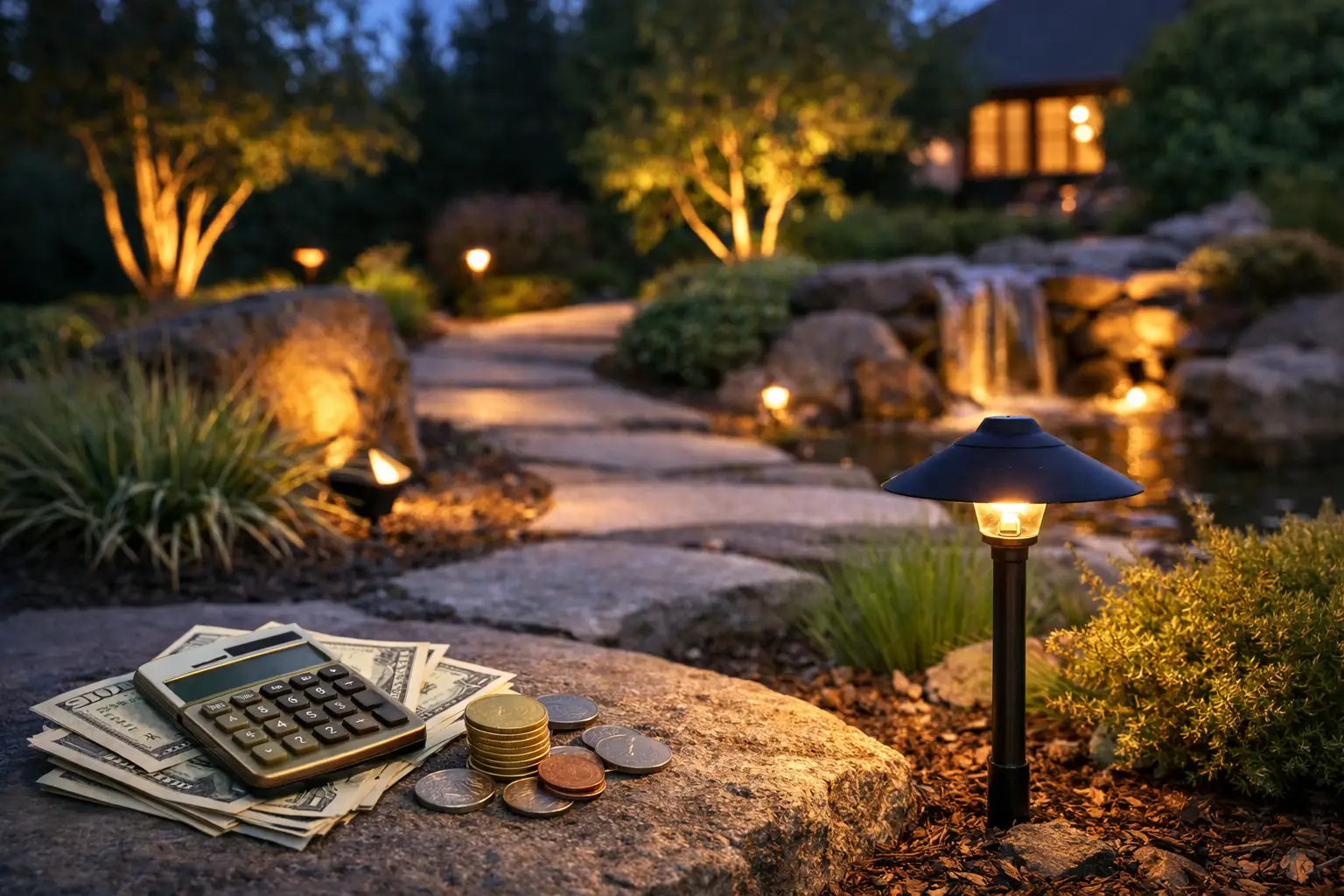
A beautifully lit backyard changes after sunset. Stone paths feel safer underfoot, palms and shade trees take on depth, and the soft glow around a patio or pool can make the whole space feel like a private retreat. If you are asking what does landscape lighting cost, the honest answer is that pricing can range from a modest upgrade to a major custom investment, depending on how much of the property you want to transform.
For most homeowners, landscape lighting is not just about adding a few fixtures. It is about shaping the nighttime experience of the yard. The cost depends on fixture quality, layout complexity, installation conditions, and whether the lighting is being added as a stand-alone project or folded into a larger outdoor living design.
What does landscape lighting cost for most homes?
Most professionally installed landscape lighting systems for a typical home fall somewhere between $2,500 and $8,000. Smaller front-yard projects with a limited number of lights may land near the lower end. More expansive backyard environments with patios, water features, pools, outdoor kitchens, and layered plantings can move well beyond that.
A simple starter system might include pathway lights, a few uplights on trees, and subtle lighting near the front entry. A more developed design may include zone-based controls, lighting around seating areas, accent lighting for stonework, and carefully placed fixtures that highlight focal points without creating glare.
At the premium end, some custom installations reach $10,000 to $20,000 or more. That usually happens when the property is large, the design is highly customized, or the lighting is integrated into a larger sanctuary-style backyard with multiple outdoor rooms.
Why landscape lighting costs vary so much
The biggest reason prices vary is that landscape lighting is part design and part construction. Two homes can have the same square footage and end up with very different lighting budgets.
A basic system uses fewer fixtures and covers fewer focal areas. A more custom system is designed in layers. One layer may guide movement along a walkway. Another may create ambience around a fire pit or dining space. A third may spotlight a specimen tree, fountain, waterfall, or architectural wall. More layers usually mean more fixtures, more wiring, and more labor.
Property conditions matter too. If beds are already finished, hardscape is in place, and the electrical layout is straightforward, installation may be simpler. If the team has to work around mature landscaping, long wire runs, root systems, stone surfaces, or existing outdoor features, labor increases.
In Florida-area landscapes, weather exposure also matters. Materials need to hold up to heat, rain, humidity, and coastal conditions in some locations. That can push homeowners toward better fixture materials and more durable components, which raises the initial investment but often improves long-term performance.
The main cost factors in a lighting project
Fixture quality
Fixture quality has a major impact on price. Entry-level lights are less expensive up front, but they may use thinner materials, age faster, and need replacement sooner. Higher-end brass or copper fixtures generally cost more, but they tend to perform better over time and maintain a more refined look in premium landscapes.
This matters if your goal is not just visibility, but atmosphere. In a backyard built for evening dinners, quiet conversations, or family gatherings, harsh or inconsistent lighting can work against the feeling you are trying to create.
Number of fixtures
More fixtures usually means a higher total cost, but not always in a bad way. A common mistake is under-lighting a property to save money, then ending up with a patchy result. Good lighting design is rarely about flooding the yard with brightness. It is about using the right number of fixtures to create comfort, depth, and balance.
A small front-yard setup might use six to ten fixtures. A full-property system with backyard entertaining areas could use 20, 30, or far more.
Transformer and wiring needs
Low-voltage landscape lighting systems rely on transformers, proper wire sizing, and careful load planning. As systems become larger, electrical infrastructure becomes more important. A bigger layout may need multiple zones or more advanced controls, especially if different areas of the yard are meant to serve different purposes.
For example, pathway and security lighting may stay on longer, while accent lighting around a waterfall or garden feature may be scheduled separately.
Design complexity
Not every project needs a custom lighting plan, but more detailed designs often produce better results. Complexity rises when a property includes pools, spas, outdoor kitchens, paver patios, retaining walls, fountains, dense planting beds, or layered architecture.
These spaces benefit from thoughtful fixture placement and beam control. The goal is to create mood and visibility without hotspots, shadows in the wrong places, or light spilling into windows.
Installation conditions
Labor costs depend heavily on site conditions. Open planting beds are easier to work in than tight areas with established roots, finished hardscape, or difficult access. Retrofits can be more labor-intensive than lighting installed during a larger landscape build, because crews may need to carefully preserve completed surfaces and plantings.
Cost by project type
A front entry lighting project is often the most affordable starting point. Homeowners typically want better curb appeal, safer access, and a welcoming arrival after dark. These projects may cost around $2,500 to $4,500, depending on fixture count and quality.
A backyard entertaining area usually costs more because the lighting serves more than one purpose. It may need to support dining, lounging, cooking, and circulation while still feeling calm and inviting. Lighting for a patio, fire pit area, outdoor kitchen, or pool deck often falls in the $4,000 to $9,000 range, and higher for more custom spaces.
Properties with water features can also run higher. Ponds, waterfalls, and fountains often benefit from specialized placement and layered illumination. Lighting these features well is not just technical. It is emotional. The reflection on moving water, the soft glow on stone, and the way light catches texture at night can become one of the most memorable parts of the yard.
Is LED landscape lighting worth the higher price?
In most cases, yes. LED systems usually cost more initially, but they are generally more energy-efficient and longer-lasting than older lighting technologies. They also offer better consistency in color temperature and output, which helps the entire property feel more cohesive.
That said, not all LED products are equal. Lower-cost fixtures may still fall short on beam quality, finish durability, or overall lifespan. Homeowners focused on long-term value usually do best when they think beyond the fixture price alone.
Should you install landscape lighting in phases?
For many homeowners, phased installation is a smart approach. If you have a larger vision for the yard but want to spread the investment out, lighting can be planned in stages.
You might start with the most-used areas first, such as the front walk, entry, and main backyard seating space. Later, you can add lighting for secondary garden beds, water features, side-yard paths, or architectural accents. The key is to plan the whole system from the beginning so each phase feels connected rather than pieced together.
This is especially helpful when outdoor improvements are happening over time. A homeowner may first build a patio, then add a fire feature, then complete planting and lighting. When everything is designed with the finished experience in mind, the yard feels intentional at every stage.
What homeowners often overlook in the budget
Maintenance and adjustments are easy to forget. Landscapes grow, trees fill in, and focal points shift. A system that looks perfect on day one may need occasional aiming, cleaning, or fixture adjustment over time.
Controls are another budget item that deserves attention. Timers, photocells, and smart controls can improve convenience and efficiency, but they add cost. For many families, that added convenience is worth it because the lighting works automatically and supports the way the space is actually used.
There is also the value of restraint. More lighting is not always better lighting. A peaceful backyard usually feels best when key elements are highlighted and darker areas are allowed to remain soft. Good design protects the mood of the space.
How to budget for the right result
The best budget starts with a clear purpose. If your priority is curb appeal and safer access, your investment may stay modest. If your goal is to turn the backyard into a resort-style evening retreat, the cost will naturally be higher because the design has to do more.
It helps to think about where your family spends time after sunset. Do you want a softly lit dining area for dinners outside? Better visibility around the pool? More drama around a waterfall or natural stone feature? A welcoming path that guides guests from the driveway to the patio? When those priorities are clear, the budget becomes easier to shape.
For homeowners creating a more immersive outdoor environment, landscape lighting is often one of the finishing elements that makes everything else come alive. The patio, planting, water, and stone may define the space during the day, but lighting is what extends that enjoyment into the evening.
A well-lit yard does more than brighten the property. It changes how the space feels at night – calmer, warmer, and more usable. If you are wondering what does landscape lighting cost, the better question may be what kind of nighttime experience you want to come home to.