

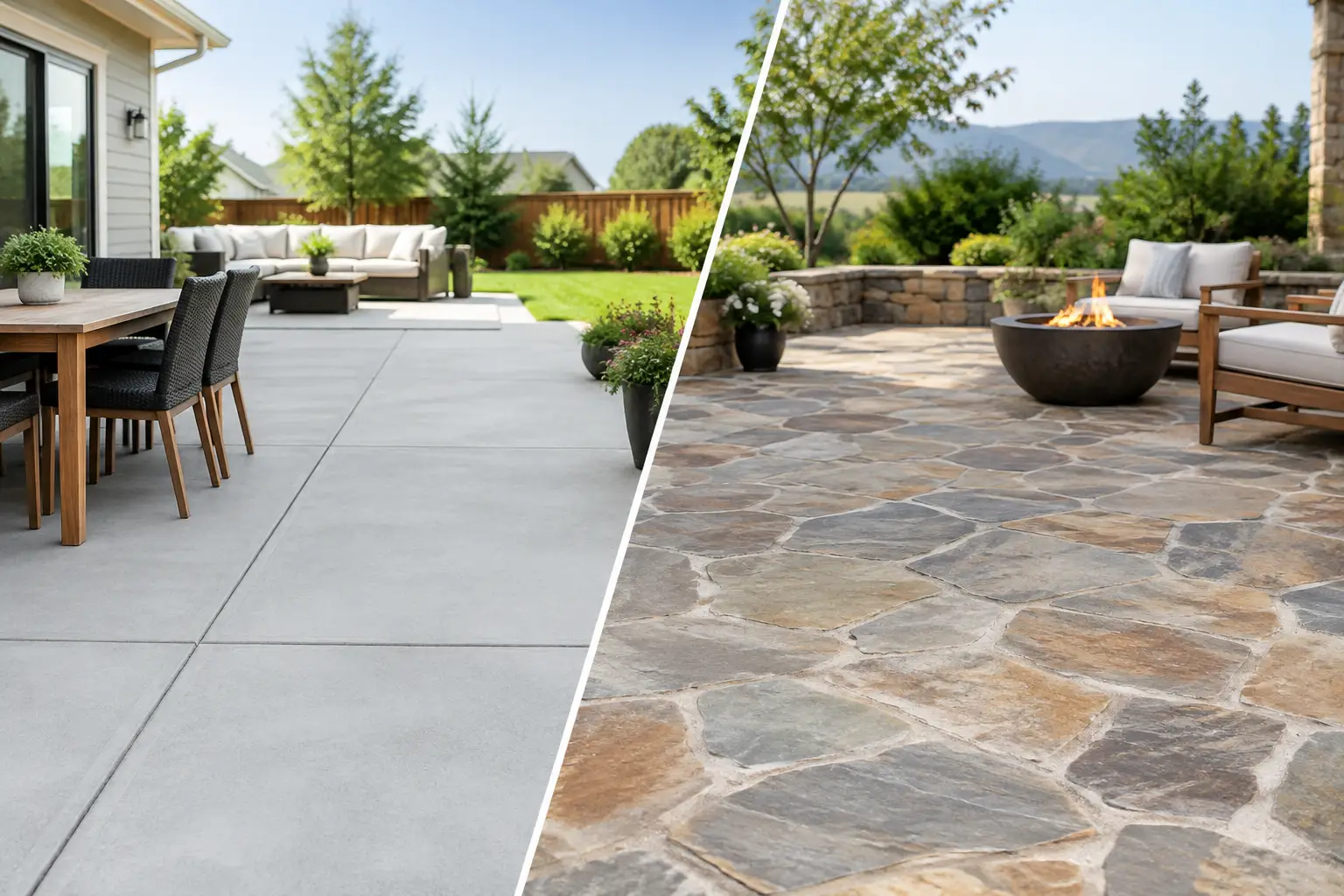
A patio does more than give you a place to set a table and a few chairs. It sets the mood for the entire backyard. In the choice between concrete vs flagstone patios, the right material can make the difference between a basic hard surface and a gathering space that feels like a true retreat.
For homeowners across Southwest Florida, that decision also has practical weight. Intense sun, sudden rain, humidity, pool water, and sandy soil all affect how a patio looks and performs over time. Concrete and flagstone can both be beautiful, durable choices. The better fit depends on the experience you want to create, how the patio connects to the rest of the landscape, and how much natural character matters to you.
Concrete vs Flagstone Patios: The Feeling They Create
Concrete offers a clean, composed foundation. A smooth broom finish, colored concrete, or a stamped pattern can support many design directions, from a simple pool deck to a contemporary outdoor kitchen. It creates an orderly surface that lets statement features – such as a fire pit, fountain, or lush planting beds – take center stage.
Flagstone brings texture, variation, and a sense of permanence that manufactured finishes have a hard time replicating. Each piece has its own shape, color movement, and surface character. Set around a pond, waterfall, or mature palms, natural stone feels as though it belongs to the landscape rather than sitting on top of it.
That difference is emotional as much as visual. Concrete can feel polished and open. Flagstone often feels grounded, relaxed, and intimate. If your ideal evening includes the sound of moving water, warm landscape lighting, and guests lingering around a fire, flagstone creates a particularly natural setting for those moments.
The Cost Question: Upfront Price vs Long-Term Value
Concrete is usually the more budget-friendly option at installation, especially for a larger patio with a straightforward shape. It can be poured efficiently and finished in a range of styles. Decorative finishes increase the investment, but concrete still often provides a cost-effective way to create substantial usable outdoor space.
Flagstone generally costs more because the material itself is premium, and installation is more hands-on. Proper stone selection, base preparation, grading, cutting, fitting, and joint work take skill and time. A well-built flagstone patio is not simply a collection of stones placed on the ground. It is a carefully assembled surface designed to drain correctly, stay stable, and look intentional from every angle.
The best value is not always the lowest initial number. A patio is highly visible and used often. When it is designed as part of a larger outdoor environment – perhaps connecting a pool, spa, kitchen, water feature, and seating area – the material can shape the perceived quality of the whole property. Flagstone can be a worthwhile investment when natural materials are central to the vision. Concrete can be the smarter allocation when the budget needs to support other priority features.
Heat, Rain, and Everyday Comfort in Florida
Southwest Florida patios need to handle conditions that are easy to underestimate during the planning stage. Both concrete and flagstone can become warm in direct sun, particularly in open areas without shade. Color matters significantly. Lighter finishes generally reflect more heat and can be more comfortable under bare feet than darker surfaces.
Concrete provides a relatively even walking surface, which can be appealing near outdoor dining areas, grills, and lounge furniture. It is also easy to sweep after a busy family gathering. However, some decorative concrete finishes can become slick when wet if the finish is not selected with traction in mind.
Natural flagstone has inherent texture that can offer good footing around pools, fountains, and other wet areas. The stone type and finish still matter. Some materials are denser, smoother, or more porous than others, so a professional should help select stone suited to a patio’s use and exposure. A beautiful surface should also be a comfortable, confident surface for children, guests, and bare feet carrying towels in from the pool.
Drainage Is Part of the Design
Rain is not the problem. Water that has nowhere to go is. Whether you choose concrete or flagstone, the patio needs thoughtful slope and drainage planning from the beginning. Standing water can create slippery areas, stain surfaces, affect nearby structures, and leave a backyard feeling less inviting after a storm.
Concrete patios are typically poured with a planned slope to move water away from the home. Flagstone patios require equally careful base work and grading, with joints and surrounding landscape designed to support proper drainage. This is one reason a patio should be planned alongside the landscape rather than treated as an isolated slab or stone surface.
Maintenance and Repairs Over Time
Concrete is low-maintenance in day-to-day life. Regular sweeping and occasional cleaning keep it presentable. Sealing can help protect colored, stamped, or exposed finishes from stains and weathering. The trade-off is that concrete may crack over time due to soil movement, settling, roots, or changing conditions. Small cracks are common, but repairs can remain visible, especially on decorative finishes.
Flagstone also benefits from periodic cleaning and sealing, depending on the stone and finish. Leaves, mulch, and moisture can encourage staining or organic growth in shaded areas, so routine care matters. Yet flagstone has one practical advantage: if an individual piece is damaged or settles, it can often be reset or replaced without rebuilding the entire patio.
The joints between stones deserve attention, too. They may use mortar, polymeric material, gravel, or a design-specific joint treatment. Each approach has different maintenance needs. A quality installation accounts for those details before the first stone is set, not after the patio begins shifting or collecting debris.
When Concrete Is the Better Patio Choice
Concrete makes sense when you want a broad, clean surface with a more controlled look. It is especially effective for contemporary homes, large entertaining zones, outdoor kitchens with straight lines, and projects where the patio needs to cover considerable square footage while preserving room in the budget for lighting, landscaping, or a pool feature.
It can also be the practical choice when accessibility is a primary concern. A smoothly finished, level concrete patio can make moving furniture, rolling carts, and walking between indoor and outdoor spaces easier. With the right color, finish, and design, concrete does not have to feel plain.
When Flagstone Is Worth the Investment
Flagstone is a natural fit when the backyard is meant to feel layered, organic, and deeply connected to the landscape. It pairs beautifully with rock work, freeform pools, waterfalls, ponds, fire features, and planting that softens the edges of the living space. Its irregular pattern helps a patio feel crafted rather than repeated.
It is also an excellent option for homeowners who see the patio as a destination, not just a surface. A flagstone terrace overlooking a koi pond, a curved path leading to a fire pit, or a poolside seating area framed by palms can make ordinary time outside feel restorative. The material carries visual interest even before furniture, décor, or guests arrive.
Choose the Material That Supports the Whole Sanctuary
The strongest patios do not begin with a question about square footage. They begin with how you want to live outside. Think about where people will gather, where the afternoon sun lands, how the space should feel after dark, and what view you want from the kitchen or family room.
A concrete patio may provide the calm, flexible canvas your backyard needs. Flagstone may bring the texture and natural presence that completes the sanctuary you have been picturing. At Uni-Scape, the goal is to make that choice work with every surrounding detail, from water and stone to lighting and places for family to come together.
Choose the surface that makes you want to step outside at the end of the day, stay a little longer, and enjoy the backyard you worked hard to create.