

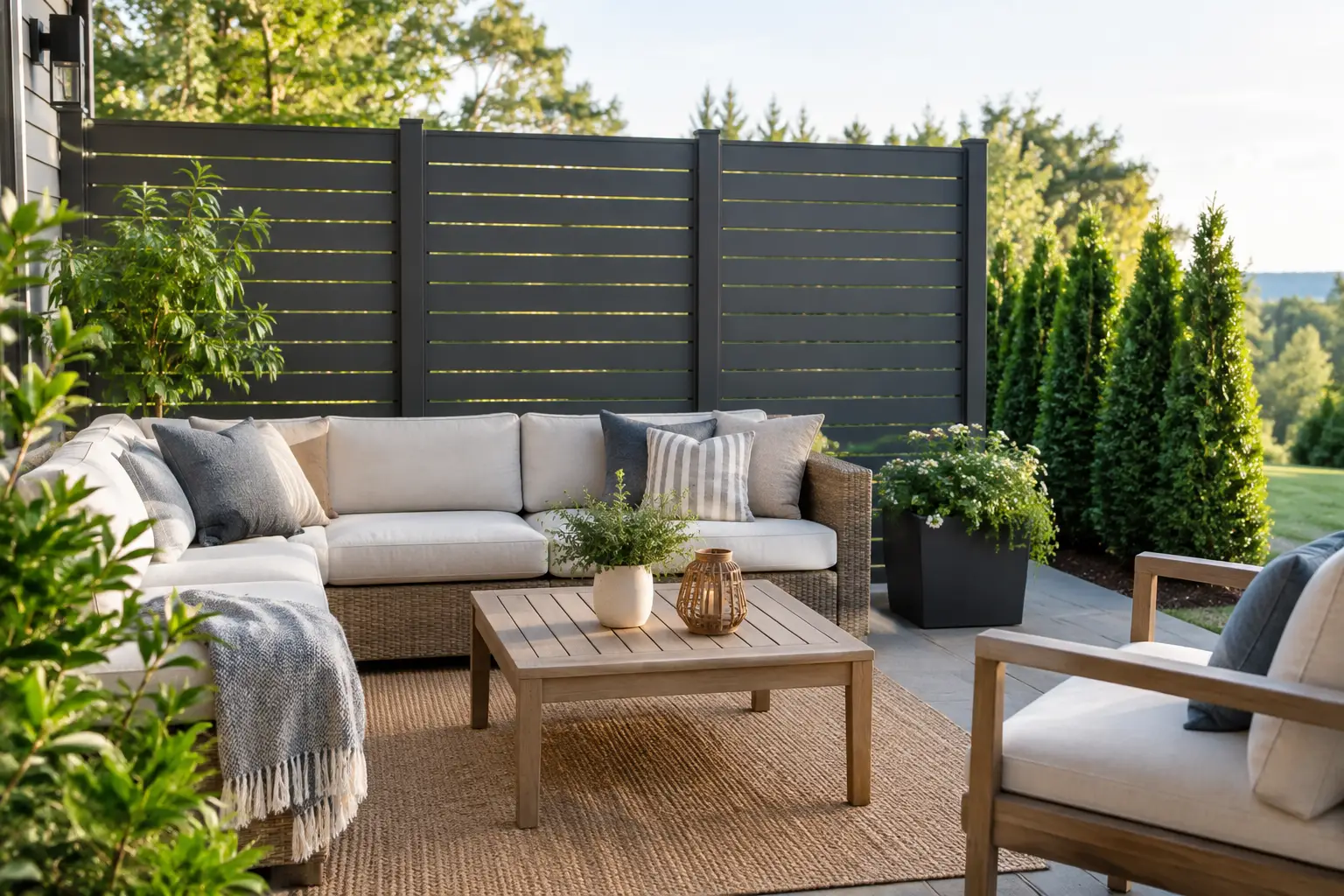
A beautiful patio can still feel unfinished when every conversation, swimsuit, and quiet cup of coffee is on display. The best backyard privacy screens do more than block an unwanted view. They create a sense of arrival – that welcome feeling of stepping into a space that belongs entirely to you and the people you invite in.
For homeowners in Southwest Florida, privacy needs to work alongside sun, wind, humidity, poolside activity, and the open sightlines common in newer neighborhoods. The right solution should feel like part of the landscape, not an afterthought placed along the property line. Whether your goal is a secluded spa corner, a more intimate outdoor kitchen, or a peaceful backdrop for a waterfall or koi pond, the material and placement both matter.
What Makes a Privacy Screen Feel High-End?
A premium backyard screen balances enclosure with openness. It shields the views you do not want while preserving airflow, natural light, and the views you do love. A solid wall may offer maximum coverage, but it can also make a compact yard feel boxed in. An airy slatted screen, layered planting, or stone feature often creates a more relaxed and polished result.
Before choosing a material, consider where privacy is actually needed. Standing in the center of the yard is less useful than sitting in the lounge chair, soaking in the spa, or preparing dinner at the grill. Those are the viewpoints that shape how the space feels. A well-designed screen addresses specific sightlines from neighboring windows, nearby patios, streets, or adjoining lots without unnecessarily closing off the whole yard.
Scale is equally important. A six-foot fence can be functional, but adding another tall screen directly in front of it may feel heavy. In that setting, a lower feature wall paired with tropical planting may provide enough visual separation while giving the backyard depth and softness.
The Best Backyard Privacy Screens for Different Spaces
Horizontal wood or composite slat screens
Horizontal slat screens are a natural fit for contemporary outdoor living spaces. Their clean lines work especially well around pools, outdoor kitchens, modern fire features, and structured patios. Small gaps between the boards allow breezes to move through while limiting direct views, which is valuable in Florida’s warm climate.
Natural wood brings warmth and texture, especially beside flagstone, boulders, and water features. It does require regular care in humid conditions, and its color will change over time unless it is maintained. Composite slats offer a more consistent finish and lower maintenance, though they can feel less organic if not balanced with stone, planting, or warm lighting.
Use a slatted screen when you want defined privacy near a seating area or spa without building a fully enclosed boundary. It also makes an excellent backdrop for a fountain, mounted planters, or soft landscape lighting.
Living screens with layered planting
A living privacy screen is often the most inviting choice because it makes privacy feel like part of the garden. Clumping bamboo, podocarpus, areca palms, cocoplum, and other region-appropriate plantings can create a lush, resort-like edge around a yard. The best plant choice depends on the sun exposure, mature size, desired density, and how much ongoing trimming you are comfortable with.
Layering produces the richest result. Taller evergreen material can block upper-level views, while mid-height shrubs and ornamental grasses soften the base. A few palms or small specimen trees can add movement overhead. This approach is particularly effective around a pool or pond, where greenery helps the water feature feel tucked away in its own peaceful setting.
Living screens take patience. A young hedge does not offer instant coverage, and fast-growing plants may need more frequent pruning. Still, for homeowners who want privacy that feels alive rather than constructed, the wait is often worth it. Mature plant material can also provide a more immediate transformation when the budget allows.
Stone walls and natural rock features
Stone creates privacy with permanence. A low-to-medium-height stone wall can define a patio, shield a dining area from a neighbor’s view, or create a protected backdrop for an outdoor fireplace. When integrated with planting and lighting, it feels less like a barrier and more like an architectural part of the retreat.
Natural rock is particularly compelling near waterfalls, ponds, and fountains. The materials speak the same visual language, helping the backyard feel cohesive rather than assembled one feature at a time. A stone wall can also help direct movement through the landscape, gently separating a quiet lounge area from a more active pool or entertaining zone.
The trade-off is cost and flexibility. Masonry and natural stone work are lasting investments, but changing their location later is not simple. This option works best when it is planned as part of a larger outdoor design rather than added after every other element is finished.
Decorative metal panels
Laser-cut metal panels offer privacy with a more artistic touch. Designs range from geometric patterns to leaves, palms, and abstract organic forms. Because they filter views rather than blocking them completely, they can make a compact patio feel private without making it feel smaller.
Metal panels are especially effective as focal-point screens behind a bench, water bowl, or fire feature. Backlighting can make the pattern glow after sunset, extending the atmosphere of the backyard into the evening. Choose finishes rated for outdoor exposure and consider how the panel will hold up in coastal conditions, where salt air can accelerate wear.
This option provides visual privacy more than total concealment. If a neighbor’s second-story window looks directly down on the patio, a patterned panel alone may not be enough. Pair it with planting or position it closer to the seating area for better coverage.
Pergolas with drapery, vines, or adjustable shades
Some privacy concerns come from above or from angled views rather than a direct look across the property line. A pergola can create a comfortable ceiling over an outdoor dining table, spa, or lounge area while adding side panels, curtains, or adjustable shade elements where needed.
Outdoor drapery feels relaxed and resort-inspired, but it requires quality hardware and occasional care. Retractable shades provide more control, allowing homeowners to open the space for a breeze or close it when the afternoon sun becomes intense. Vines can soften the structure over time, though they need to be selected and maintained carefully so they do not overwhelm the pergola.
A pergola is not the right answer for every yard. It has a larger visual footprint than a simple screen and should be sized to the patio and home architecture. When proportioned well, however, it creates an outdoor room that feels naturally sheltered and ready for long dinners, birthday gatherings, or a quiet evening by the water.
How to Choose a Screen That Works With Your Backyard
Start with the experience you want to protect. If your favorite moment is soaking in the spa after work, focus privacy around the spa rather than fencing off the entire property. If weekends revolve around cooking and gathering, build the screen into the outdoor kitchen or dining area. Privacy becomes more effective when it supports how your family actually uses the space.
Next, think about maintenance. A mature green screen may be the most beautiful option, but it needs irrigation, trimming, and seasonal attention. Composite panels and masonry require less ongoing care but may need landscape layers to avoid looking too hard or bare. The right answer depends on whether you prefer the ease of architectural materials or the softness of a living garden.
Do not overlook weather and local regulations. Freestanding screens, pergolas, and fence extensions should be designed for wind exposure and installed with durable footings and hardware. Property line setbacks, community rules, and height limits can also shape the design. Addressing these details early prevents a beautiful idea from becoming an expensive adjustment later.
Make Privacy Part of the Whole Retreat
The most memorable outdoor spaces rarely rely on a single privacy feature. A screen can frame a fountain. A hedge can soften the edge of a flagstone patio. Landscape lighting can turn a simple slatted wall into a warm evening backdrop, while the sound of moving water helps mask nearby activity and makes the space feel even more secluded.
This layered approach is where a backyard begins to feel like a sanctuary instead of a collection of separate upgrades. At Uni-Scape, privacy is often considered alongside pools, patios, rock work, lighting, and water features so each part of the landscape supports the next.
The best screen is the one that lets you stop noticing the neighboring view and start noticing the people around you, the sound of water, and the calm of having a place to breathe at home.