

A spa can be beautiful on its own, but it rarely feels complete when it looks dropped onto a patio as an afterthought. The best spa patio integration ideas make the water, stone, lighting, seating, and surrounding landscape feel like they belong to one experience. When that happens, your backyard stops feeling like a collection of features and starts feeling like a place you actually want to linger.
For homeowners who want more than a basic upgrade, that difference matters. A well-integrated spa does not just add one more place to sit. It changes how the entire patio works, how people move through it, and how relaxing it feels at the end of a long day.
What makes spa patio integration work
Good integration starts with proportion and flow. The spa should feel connected to the patio, not isolated from it, and that usually means thinking beyond the shell itself. Elevation changes, coping materials, plant placement, nearby seating, and nighttime lighting all shape whether the spa feels natural or disconnected.
There is also a practical side. A spa needs safe access, drainage planning, durable hardscape, and enough surrounding space to enter and exit comfortably. In Florida, where outdoor living happens year-round and sudden rain is part of the rhythm, materials and layout choices need to hold up to heat, moisture, and regular use.
1. Build the spa into the patio layout from the start
The strongest designs treat the spa as part of the patio footprint, not an extra feature added later. That often means shaping the patio around the spa so the lines feel intentional. A curved patio can soften the look of a round or freeform spa, while a rectilinear patio works well with a clean square or rectangular design.
This approach creates visual calm. Instead of seeing one hard edge run into another, you get a layout that feels composed. It also improves function because traffic patterns, furniture placement, and surrounding amenities are planned together.
If your patio already exists, integration is still possible, but it may require selective demolition and reworking of the hardscape. That can add cost upfront, though it often produces a much better finished result than trying to force the spa into an awkward leftover corner.
2. Use natural stone to tie everything together
Material continuity is one of the simplest ways to make a spa feel built in. When the coping, patio surface, retaining edges, or nearby walkways share compatible stone tones and textures, the whole space reads as one environment.
For a sanctuary-style backyard, natural stone is especially effective because it adds warmth and permanence. Flagstone patios, textured rock work, and carefully chosen coping can make a spa feel grounded in the landscape instead of perched on top of it. The finish matters here. Some stones stay cooler underfoot than others, and some become slick when wet, so the right selection depends on both appearance and day-to-day comfort.
This is one place where trade-offs matter. Highly polished materials may look elegant, but they are not always the best fit near water. A slightly more textured surface often gives you better footing and a more relaxed, natural feel.
3. Create a gentle elevation change
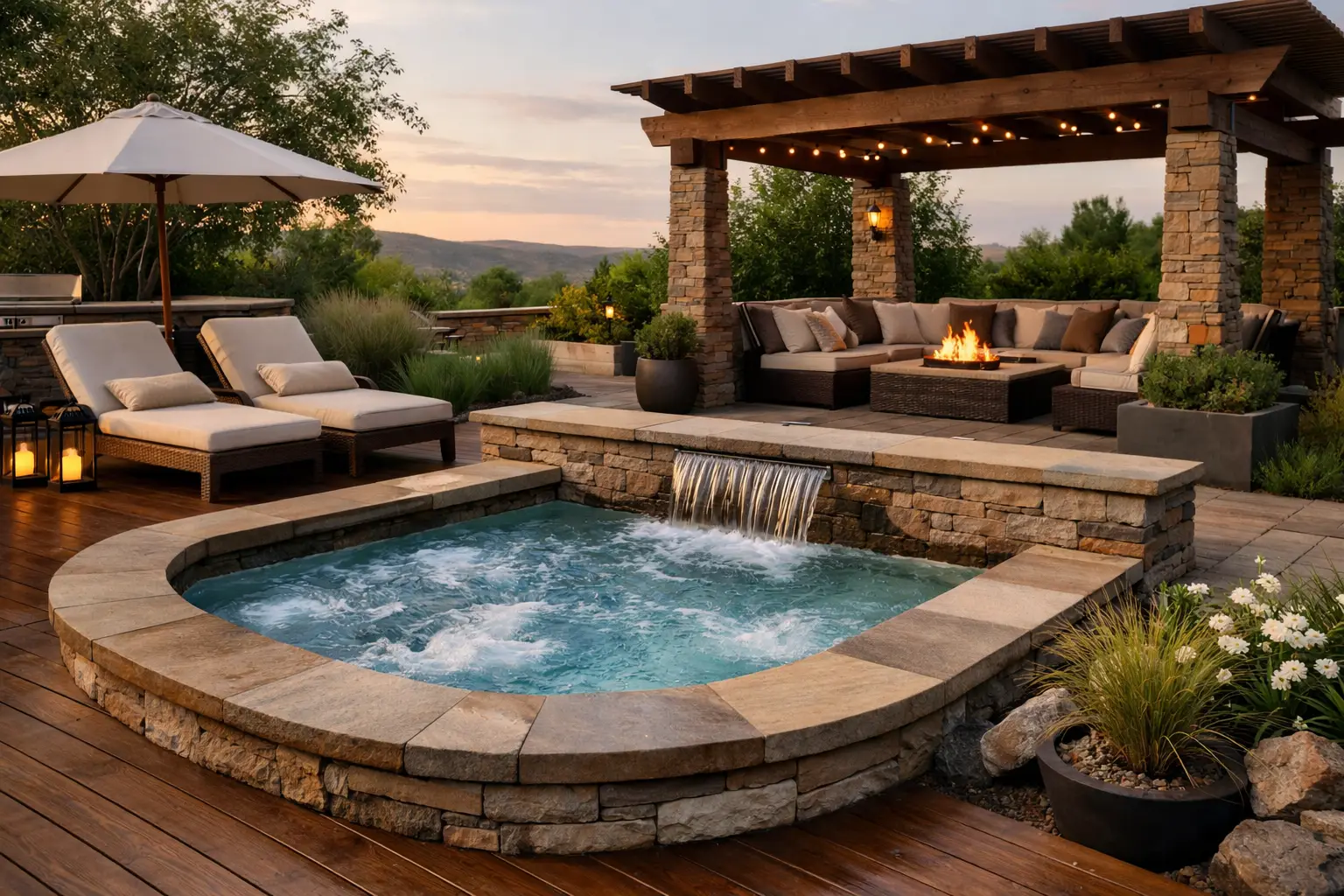
One of the most effective spa patio integration ideas is changing the spa height just enough to give it presence. A raised spa can become a focal point, especially when paired with stone facing or a spillway, while a flush spa keeps the patio looking open and understated.
Neither approach is automatically better. A raised spa adds visual interest and can help define the gathering area. It also creates opportunities for sound if you want water to cascade into a pool or basin nearby. A flush installation is quieter and often better for a clean, modern patio where easy movement matters most.
The key is moderation. Too much height can make a spa feel bulky and separate from the space around it. A modest elevation change usually feels more inviting and easier to integrate.
4. Add seating that supports the spa experience
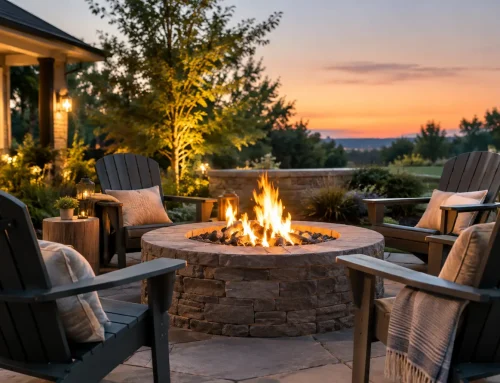
A spa is not only for the people in the water. It also becomes a social anchor, which is why surrounding seating matters. Built-in seat walls, a nearby fire pit lounge, or a small conversation area can make the patio feel active even when the spa is not in use.
This is where many backyards miss an opportunity. The spa gets installed, but there is nowhere comfortable to sit with a towel, set down a drink, or talk with family members who are not soaking. Integrated seating fills that gap and makes the whole area more useful.
Built-in seating often works especially well in custom designs because it can double as a retaining wall or edge definition. It keeps the patio looking clean while adding comfort and structure.
5. Use planting for privacy without closing the space in
Privacy is part of relaxation. Even a beautiful spa loses some of its appeal if it feels exposed to neighboring windows or busy sightlines. The answer is not always a tall fence line. Layered planting can create a softer, more peaceful sense of enclosure.
Ornamental grasses, palms, tropical shrubs, and selective screening trees can frame the spa while keeping the patio airy. In Southwest Florida, this can be especially useful because lush plantings support the resort-like feeling many homeowners want, but they still need to be chosen with maintenance and growth habits in mind.
Too much dense planting can trap debris and make a spa area feel crowded. Too little can leave it feeling bare. The right balance gives you privacy, movement, texture, and color without turning the space into a high-maintenance border.
Spa patio integration ideas for lighting and evening use
A spa earns its keep after sunset, so lighting deserves more thought than a single porch fixture. Good outdoor lighting makes the patio safer, but it also shapes the mood. Soft lighting on stone paths, low illumination in planting beds, and subtle accent lighting on water or rock features can make the entire area feel calm and inviting.
The best results usually come from layering. Path lights help with footing. Step lights define level changes. Accent lights add depth and draw attention to focal points. If the spa sits near a waterfall, fountain, or textured stone wall, lighting those elements can make the backyard feel more immersive at night.
Brightness should stay controlled. A spa area is meant to help you unwind, and harsh lighting can work against that. The goal is enough light to move safely and enjoy the space without losing the peaceful atmosphere.
6. Connect the spa to a larger outdoor living zone
A spa feels more integrated when it belongs to a broader outdoor lifestyle plan. That could mean placing it near an outdoor kitchen, under a covered patio extension, beside a pool, or within view of a fire feature. The point is not to crowd every amenity into one area. It is to create relationships between spaces so the backyard functions as a retreat rather than a set of separate destinations.
For families, this matters because different people use the yard differently. One person may be soaking in the spa while someone else is grilling dinner and kids are moving between the patio and pool. A connected layout supports that kind of real life while still feeling polished.
7. Let water features deepen the atmosphere
A spa already brings the sensory appeal of warm water, but nearby water features can heighten the experience. A fountain, spillway, pondless waterfall, or koi pond can add movement and sound that soften traffic noise and make the patio feel more secluded.
This only works when the elements are coordinated. Too many competing water sounds can feel busy instead of peaceful. The scale of the feature should match the size of the patio and the mood you want. In a smaller backyard, a modest spillover detail may be enough. In a larger custom retreat, more naturalistic rock work and layered water features can create a stronger sense of escape.
8. Plan for comfort outside the water
The moments before and after a soak shape how luxurious the spa feels. That is why the surrounding patio should support comfort in practical ways. Shade structures, towel storage, slip-resistant surfaces, and a nearby place to rinse off or cool down all make a difference.
This is especially true in warm climates. A spa patio in Fort Myers or Cape Coral may need a different shade strategy than one in a cooler region. Pergolas, covered lanais, and thoughtfully placed trees can keep the space usable through bright afternoons while preserving an open feel.
These details may not be the first thing people notice in photos, but they often define how often the space gets used.
9. Make the transition from house to spa feel easy
A spa that sits beautifully in the yard can still feel disconnected if getting to it is awkward. One of the best spa patio integration ideas is also one of the most overlooked: make the route from the home feel natural. A clear walkway, matching materials, and intentional sightlines can pull the spa into the daily life of the house.
If you can see the spa from inside, it becomes part of the home’s atmosphere even when no one is using it. If the path to it feels direct and inviting, people are more likely to step outside for a quiet evening soak or gather there when friends come over.
That ease is part of what turns a backyard into a personal retreat. Not dramatic features for the sake of showing them off, but thoughtful design choices that make relaxation feel close at hand.
A well-integrated spa patio should feel like it was always meant to be there – nestled into stone, framed by light, softened by planting, and ready for quiet mornings or long evenings with family. When every part of the space supports that feeling, the backyard becomes more than an upgrade. It becomes the place where your home exhales.