

A pond should be the part of the backyard that asks you to slow down: water moving over stone, koi gliding beneath lily pads, and a peaceful view from the patio at the end of the day. When the waterline keeps slipping lower, that calm can quickly turn into concern. Knowing how to repair pond leaks starts with finding the real source of water loss, not rushing to patch the first damp spot you see.
A leak may be in the liner, but it can also come from the waterfall, plumbing, a low edge, or ordinary evaporation made worse by Florida heat and wind. A careful process protects your fish, plants, stonework, and the investment you have made in your outdoor sanctuary.
First, Make Sure It Is Actually a Leak
Not every falling water level means your pond is damaged. Warm, sunny weather, splashing from a lively waterfall, and thirsty marginal plants can all reduce the water level. Still, if you are adding water every day or notice a steady, unusual drop, it is time to investigate.
Start by topping the pond off and marking the waterline with a small piece of tape, a grease pencil on the skimmer face, or a photo that clearly shows the level against a rock. Then turn off the pump for 24 hours. If you have fish, maintain aeration during the test and avoid leaving them without circulation longer than necessary, especially in warm weather.
If the level holds steady with the pump off, the pond basin is likely sound. The problem is more likely in the waterfall, stream, filter, plumbing, or a place where moving water is escaping. If the water continues to fall, the leak is likely in the pond itself.
This simple test prevents a common and costly mistake: draining a pond to repair a liner when the real issue is a loose fitting or a low spot in the waterfall.
How to Repair Pond Leaks by Finding the Source
Once you know whether the pump affects the water loss, follow the water. The point where the water stops dropping is one of the best clues you will get.
When the pond loses water with the pump off
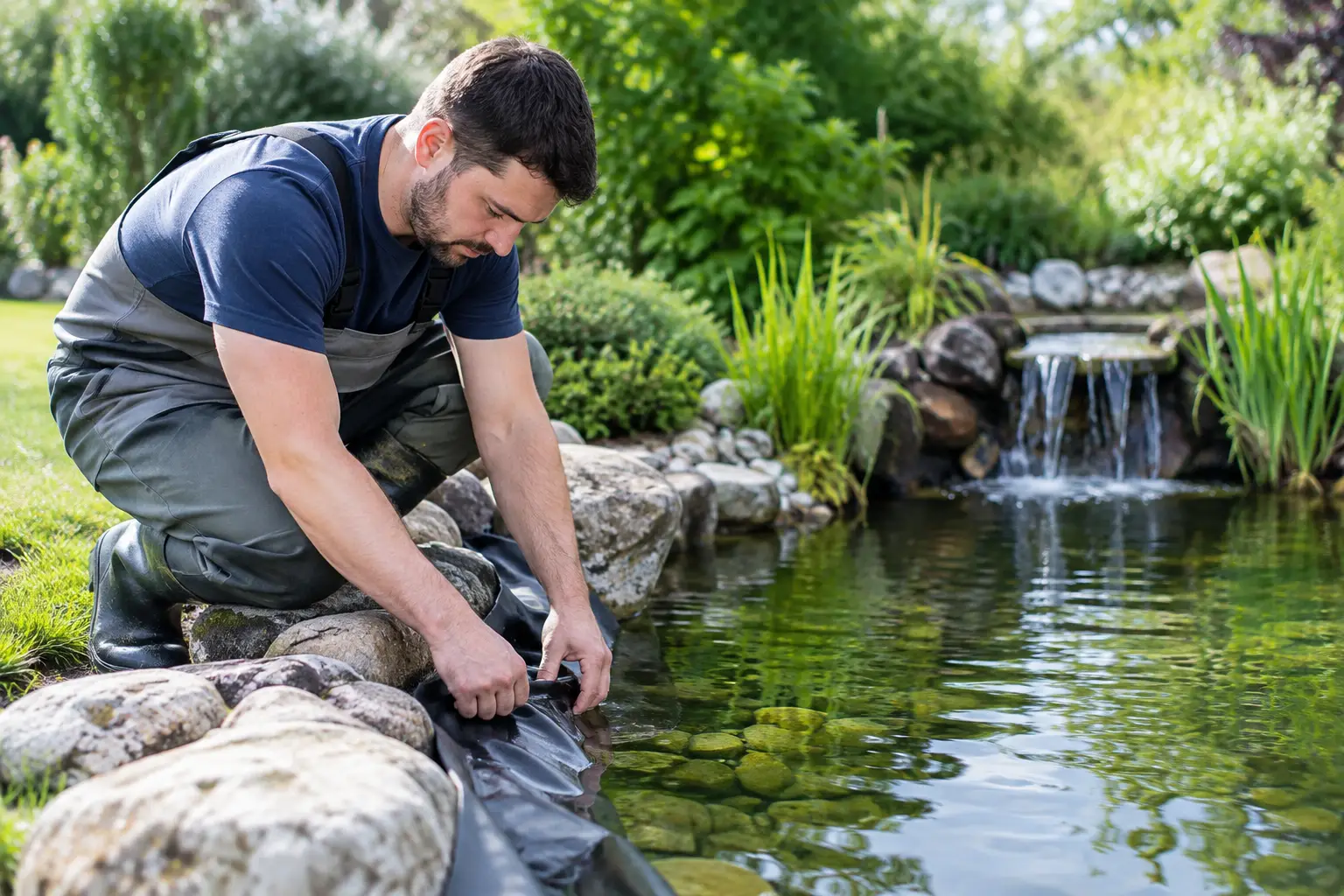
Let the level fall naturally while checking it several times a day. When it stops, inspect the liner and stone around that final waterline. Look closely for a small puncture, a separated seam, a wrinkle hiding damage, or a rock that has shifted and exposed the liner.
Also inspect the pond edge. An edge that sits lower than the rest can allow water to wick into the surrounding soil. This is especially common where mulch, grass, or planting soil touches the liner. Water can travel quietly beneath a boulder or through fabric and escape without leaving an obvious wet area.
Move loose debris gently and check under overhanging rocks. Do not drag stone across the liner or pull plants out aggressively. A small hole can become a much larger repair when the liner is stressed.
When the pond holds water with the pump off
Turn the pump back on and watch the waterfall, stream, filter box, and plumbing connections. Water often escapes at the outer curves of a waterfall, where a settling rock redirects flow over the liner. Splashing that looks harmless can become substantial water loss over a full day.
Check for wet soil, unusually green grass, or a damp patch behind the falls. Examine the plumbing at the pump, filter, and any visible unions or valves. A cracked pipe or loose connection may only leak while the system is running.
If your waterfall runs through a streambed, start at the top and work downward. Temporarily reduce the flow if possible. A lower flow can make it easier to see whether water is crossing the liner edge rather than returning to the pond.
Choose the Right Repair for the Pond Material
The proper repair depends on what your pond is built from. A patch that works beautifully on flexible EPDM liner may fail on PVC or damage a rigid surface.
For an EPDM rubber liner, clean the repair area thoroughly and dry it completely. Use a patch kit made specifically for EPDM, including the recommended primer and seam tape or cover patch. The patch should extend well beyond the damaged area on all sides. Press it firmly, following the product cure-time instructions before refilling the pond.
PVC liners need a compatible PVC repair product. Avoid guessing based on color or texture. If you do not know the liner material, take clear photos and consult a pond professional before applying adhesive. The wrong solvent or patch can create a larger problem than the original puncture.
For concrete or masonry ponds, a visible crack is not always the entire story. Surface sealants may help with a very minor defect, but recurring cracks can point to movement beneath the structure, plumbing pressure, or a failed waterproofing layer. These repairs deserve a professional assessment before you apply a coating that could trap moisture or complicate a lasting repair.
Leaks around skimmers, bottom drains, bulkheads, and return fittings should be handled with special care. Tightening a fitting too aggressively can crack the housing. In many cases, replacing a gasket or resealing the fitting is the correct fix, but the pond may need to be partially drained to do it safely.
Protect Fish and Plants During a Pond Leak Repair
A full drain is rarely the first answer. It adds stress for fish, disrupts the pond’s beneficial biology, and can turn a modest repair into a major reset. Keep as much water in place as the repair allows.
When a repair requires lowering the pond, move fish into a clean, covered holding tank with pond water, aeration, and protection from direct sun. Keep the water temperature as stable as possible. Use dechlorinator for any tap water added to the holding tank or pond.
Plants can usually remain in shallow water for a short repair, but do not allow their roots to bake in the sun. If shelves must be exposed for an extended period, place potted plants in tubs of pond water. This preserves both the plants and the living balance they bring to the feature.
Before restarting the system, remove tools, adhesive packaging, loose grit, and anything that could enter the pump. Refill gradually, treat new water as needed, and monitor fish behavior over the next day. Gasping at the surface, sudden hiding, or unusual lethargy calls for immediate attention to oxygen and water quality.
Fix the Waterfall Edge Before It Becomes a Bigger Problem
A waterfall leak often has more to do with construction than a hole. Water takes the easiest route. If an edge has settled, a liner fold has shifted, or a boulder channels water toward the soil, the stream can lose water every time the pump runs.
The repair may be as simple as repositioning a stone, lifting and re-tucking liner, or rebuilding a small section of the stream with proper support underneath. The goal is to create a contained path that returns every drop to the pond while still looking natural from the patio or garden.
This is where a rushed repair can affect the beauty of the feature. Rocks should feel anchored, liner should remain hidden, and the waterfall should sound inviting rather than splash excessively. For a custom pond with heavy stonework, a professional repair can preserve both the structure and the peaceful character that made the feature special in the first place.
When to Call a Pond Professional
A homeowner can often handle a clearly visible puncture or a simple edge adjustment. It is wiser to bring in a specialist when the leak cannot be located, plumbing is buried, the liner is old or brittle, or the pond contains valuable koi. The same applies to leaks beneath major boulders, around a skimmer, or within a concrete pond.
A qualified pond team can pressure-test plumbing, inspect waterfall construction, locate hidden liner failures, and make repairs without disturbing more of the landscape than necessary. For homeowners in Cape Coral, Fort Myers, and nearby Southwest Florida communities, this matters after seasonal downpours, ground settling, and long stretches of intense sun have tested every part of a water feature.
Uni-Scape approaches pond repairs with the full backyard in mind: the water, rock work, surrounding plantings, lighting, and the places where family and friends gather. A repair should restore more than the water level. It should restore the ease of stepping outside and hearing your backyard come back to life.
After the repair, keep a simple eye on the waterline for a week and inspect the waterfall after heavy rain or routine maintenance. That small habit can catch a shifting stone or low edge early, leaving your pond free to do what it was designed to do: bring a little more stillness, beauty, and connection to everyday life.